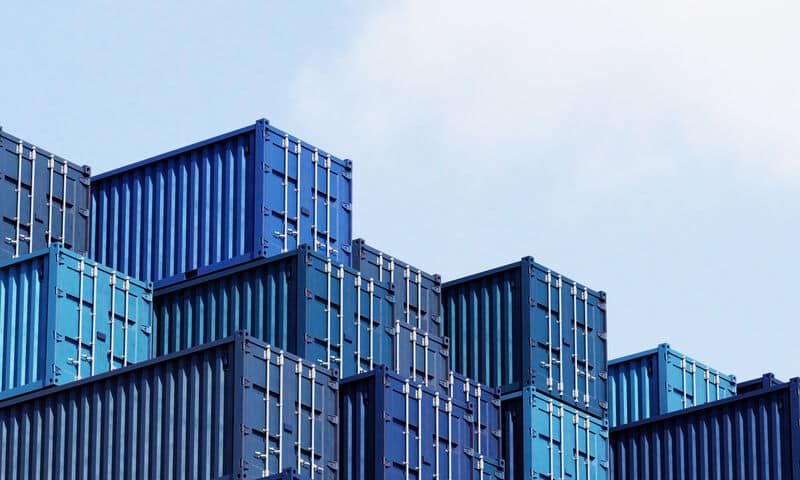



For transportation and logistics companies, the yard is often where risk concentrates.
Trailers sit unattended. Drivers come and go. Containers wait between moves. Drop lots fill up. Overnight activity slows down. And while cargo may be technically “secured,” it is often sitting in one of the most vulnerable places in the supply chain.
That is why yard security should be a top priority for logistics operators.
Many facilities already have cameras. But if those cameras are only recording what happened, they may not be enough to stop cargo theft before it turns into a major loss.
Modern logistics security camera monitoring gives operators a way to move beyond passive video footage. By combining cameras, AI detection, live monitoring, and real-time response protocols, logistics companies can better protect trailers, cargo, drivers, and facilities during the moments when risk is highest.
Why Logistics Yards Are Prime Targets
Logistics yards are designed for movement, not security.
Trailers move in and out. Drivers arrive at different hours. Contractors, employees, vendors, and third-party carriers may all need access. Inventory is staged, transferred, stored, or held temporarily before the next leg of the journey.
That constant movement creates opportunity.
For criminals, the yard is attractive because valuable cargo may be sitting still. A trailer parked in a yard can represent hundreds of thousands of dollars in goods. In some cases, a single trailer can contain cargo worth $500,000, $1 million, or more.
The yard also creates a visibility problem. Large lots, long fence lines, low-light areas, blind spots, and parked trailers can make it difficult for on-site teams to see what is happening in real time.
That matters because cargo theft is often fast.
A bad actor may enter the yard on foot, through a cut fence, or by vehicle. In some cases, criminals arrive with their own tractor, hook up to a loaded trailer, and leave before anyone realizes the cargo is gone.
By the time the loss is discovered, the only thing left may be recorded footage.
That is the core weakness of many traditional logistics video security programs: they document the theft, but they do not stop it.
The Hidden Risks of Drop Lots and Overflow Storage
Drop lots and overflow storage areas create even more risk.
These spaces are often used because primary facilities are at capacity or because trailers need a temporary location between routes, pickups, or deliveries. But temporary does not mean low value.
A trailer sitting in a drop lot may still contain high-value cargo. It may also have less protection than cargo stored inside a primary facility.
Common risks include:
- Limited lighting
- Minimal access control
- Gaps in perimeter fencing
- No on-site security staff
- Inconsistent camera coverage
- Delayed incident detection
- Limited after-hours visibility
The challenge is that these areas may not be treated with the same level of security as a warehouse or distribution center.
But from a theft perspective, a drop lot can be an ideal target.
The cargo is stationary. The location may be remote. Staffing may be minimal. And if monitoring is not in place, criminals may have more time to act before anyone responds.
This is where logistics security surveillance needs to be flexible. Operators need visibility not only at the main facility, but also around the lots, storage zones, and temporary staging areas where cargo is most exposed.
Common Cargo Theft Tactics in Logistics Yards
Yard theft is not always random.
In many cases, it is coordinated, planned, and supported by knowledge of the operation.
Common tactics include:
Unauthorized Yard Entry
Criminals may enter through weak access points, damaged fencing, unsecured gates, or low-visibility areas.
Once inside, they can move between trailers, identify targets, and leave quickly.
Tractor Hookup Theft
One of the most disruptive scenarios is full trailer theft.
A criminal enters the yard with a tractor, connects to a loaded trailer, and drives away. If the trailer is not actively monitored, the theft may not be detected until hours later.
Insider Coordination
Some thefts involve insider knowledge.
A bad actor may know which trailer contains high-value goods, when it will be staged, where it will be parked, and when security coverage is weakest.
This makes visibility and chain-of-custody especially important.
Staged Theft
In some cases, goods may be staged intentionally for theft. Cargo can be moved, loaded, or positioned in a way that makes it easier for an external accomplice to remove it later.
Fence-Line Breaches
Large yards often have long perimeters. If the fence line is not actively monitored, someone can cut through, enter on foot, access trailers, and leave undetected.
After-Hours Activity
Many yard incidents happen when staffing is lower, operations are slower, and response times are longer.
That is why overnight coverage is critical.
Why Overnight Monitoring Matters
Yard theft often happens when fewer people are watching.
For many logistics operations, the highest-risk window is overnight, especially when trailers are parked, gates are less active, and operations teams are not fully staffed.
The problem is not just that incidents happen at night.
The problem is that response often depends on someone noticing.
If a camera records a perimeter breach at 2:00 a.m., but no one reviews the footage until the next morning, the system has failed as a prevention tool.
Logistics live security monitoring changes that dynamic.
Instead of relying on after-the-fact video review, monitored systems can detect activity, verify the event, and initiate a response while the incident is still unfolding.
That response may include:
- Audio talk-downs
- Site contact notification
- Guard dispatch
- Law enforcement escalation
- Incident documentation
- Client-specific response protocols
This is the difference between knowing what happened and having a chance to stop it.
How Logistics Security Camera Monitoring Reduces Loss
The goal of logistics security camera monitoring is not simply to capture better footage.
The goal is to reduce loss.
That means the system needs to support action.
A modern monitored security program typically follows a clear process:
1. Detect the Activity
AI-enabled cameras or analytics identify motion, people, vehicles, or behavior that may indicate a threat.
This helps reduce reliance on manual observation and improves coverage across large yard environments.
2. Verify the Threat
A trained monitoring professional reviews the event to determine whether it is legitimate.
This is important because yards can generate a lot of activity. Not every movement is a threat. Verification helps reduce false alarms and ensures real incidents get attention.
3. Initiate the Right Response
Once a threat is verified, the monitoring team follows site-specific instructions.
For example, one facility may want a talk-down first. Another may want the on-site guard contacted immediately. Another may require escalation to law enforcement or a designated manager.
The right response depends on the site, the risk, and the operator’s protocol.
4. Document the Incident
Monitoring also supports reporting.
Security leaders need documentation to understand what happened, evaluate performance, support investigations, and make the case for future security investments.
For loss prevention teams, this matters because yard security is not just an operational issue. It is a financial issue.
Every prevented theft, avoided disruption, and faster response can help reduce the cost of doing business.
Creating a Monitored Perimeter Around Your Yard
A stronger yard security strategy starts with the perimeter.
If bad actors cannot enter undetected, they have fewer opportunities to steal cargo.
A monitored perimeter may include:
- Fixed cameras along fence lines
- Mobile surveillance units in vulnerable areas
- Cameras at gates and access points
- AI analytics to detect people and vehicles
- Lighting and audio deterrents
- Live monitoring during high-risk hours
- Custom escalation procedures
The goal is not just to watch the yard.
The goal is to create a security layer that can detect suspicious activity, verify threats, and trigger action before a theft is completed.
For some logistics operators, this may mean supplementing guards with remote monitoring. For others, it may mean reducing reliance on guards in certain areas or during certain hours.
In either case, the yard becomes more than a storage area.
It becomes a controlled, monitored environment.
Yard Security Is a Loss Prevention Strategy
A weak yard creates risk across the entire logistics operation.
When a trailer disappears, the impact goes far beyond the stolen cargo. It can disrupt delivery schedules, damage customer relationships, trigger insurance claims, affect margins, and create internal accountability issues.
That is why yard security should be treated as a core part of any logistics loss prevention strategy.
Traditional cameras may show what happened.
Logistics security camera monitoring helps teams act while something is happening.
For transportation and logistics operators facing organized theft, insider risk, drop lot exposure, and overnight vulnerabilities, that difference matters.
Because the biggest risk is not always when cargo is moving.
Sometimes, the highest-risk moment is when it stops.
Protect Your Yard Before Theft Becomes a Loss
Cargo theft doesn’t happen by accident.
It happens when visibility gaps go unnoticed, trailers sit unattended, and security teams lack the ability to respond in real time.
If your operation relies on yards, drop lots, overflow storage areas, or trailer staging zones, those locations deserve more than recorded video. They need active monitoring, real-time intervention, and a security strategy designed to prevent loss before it impacts your business.
ECAM helps transportation and logistics operators reduce cargo theft risk with AI-powered detection, live monitoring, mobile surveillance units, gate management, and customized response protocols tailored to each facility.
Whether you’re securing a distribution center, rail yard, drop lot, or trailer storage area, our team can help identify vulnerabilities and recommend a solution that aligns with your operational and security goals.