
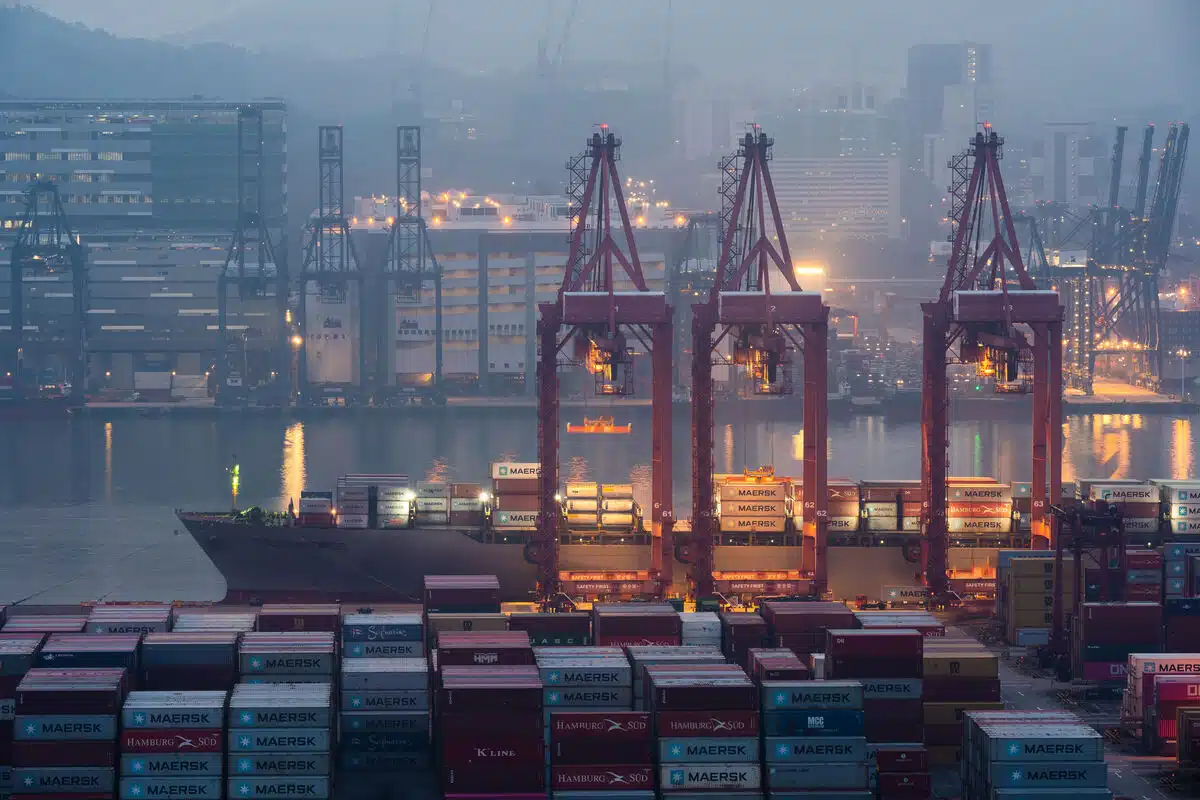



The U.S. Department of Transportation recently announced the launch of the American Supply Chain Sovereignty Initiative, a new effort designed to improve supply chain visibility, accelerate freight movement, reduce logistics costs, and strengthen the nation’s transportation network. At the center of the initiative is a high-visibility dashboard intended to connect major cargo hubs, ports, ocean carriers, railroads, trucking companies, and retailers through a shared operational view of freight movement across the country.
The announcement reflects a growing recognition that supply chain resilience has become a matter of both economic competitiveness and national security. In an era defined by cargo theft, labor shortages, geopolitical uncertainty, and increasing operational complexity, visibility is no longer a luxury. It is a necessity.
For organizations operating in transportation, logistics, supply chain management, and retail, the initiative could represent a significant step toward a more connected and efficient freight ecosystem. However, greater visibility alone does not eliminate risk. As supply chains become more transparent and interconnected, physical security remains a critical component of overall resilience.
A Deeper Focus on Supply Chain Visibility
According to the Department of Transportation, the American Supply Chain Sovereignty Initiative aims to prevent bottlenecks, move freight more efficiently, and lower costs throughout the supply chain. The initiative builds on lessons learned from the Freight Logistics Optimization Works (FLOW) program, launched by the Biden administration in 2022, which demonstrated how shared data and collaboration between public and private stakeholders can improve freight movement and operational planning.
The proposed dashboard will connect major transportation stakeholders, including ports, rail operators, trucking companies, ocean carriers, and large retailers. By creating a more comprehensive view of freight activity, organizations may be able to identify congestion, anticipate disruptions, and make faster operational decisions.
For transportation and logistics providers, this could mean improved route planning, better utilization of equipment, and fewer delays at critical handoff points. For retailers, enhanced visibility could support more accurate inventory planning and reduce the ripple effects of disruptions across distribution networks.
In many ways, the initiative reflects a broader trend taking shape across supply chains worldwide: the pursuit of end-to-end visibility.
Visibility Alone Does Not Equal Security
While improved operational awareness is valuable, visibility and security are not the same thing.
A dashboard may help organizations understand where freight is moving and where delays are occurring, but it does not physically protect cargo, facilities, vehicles, or infrastructure from criminal activity.
That distinction is becoming increasingly important.
Cargo theft continues to rise across North America. According to CargoNet, supply chain crime events reached 3,594 incidents in 2025, while total losses climbed approximately 60 percent to nearly $725 million. The average value of a cargo theft incident increased to nearly $274,000. These trends indicate that organized criminal groups are increasingly targeting high-value freight and exploiting vulnerabilities throughout the supply chain.
Today’s threats extend well beyond traditional cargo theft. Criminal organizations are leveraging digital tools, fraudulent identities, and coordinated theft schemes to target supply chains at multiple points simultaneously. Warehouses, distribution centers, truck yards, retail loading docks, and intermodal facilities have all become attractive targets.
As supply chains become more interconnected and data-driven, the need for physical security becomes even more critical.
The Expanding Attack Surface
One of the unintended consequences of greater connectivity is a larger attack surface.
Modern supply chains involve a vast network of facilities, transportation providers, warehouses, ports, distribution centers, and retail locations. Every transfer point, staging area, loading dock, and storage yard creates another opportunity for theft, trespassing, vandalism, or unauthorized access.
The American Supply Chain Sovereignty Initiative seeks to improve visibility across these networks. However, visibility does not prevent a criminal from entering a restricted area, stealing freight, or accessing valuable equipment.
What it does provide is context.
Organizations still need the tools and processes necessary to identify suspicious activity, verify threats, and respond quickly when incidents occur.
That’s where physical security technologies play an important role.
Why Live Video Monitoring Matters
For many transportation and logistics organizations, traditional security systems were designed primarily for documentation. Cameras recorded activity. Footage could be reviewed after an incident occurred.
Today’s threat environment requires a more proactive approach.
Live video monitoring combines AI-powered video analytics with trained security professionals who actively monitor properties, transportation facilities, and critical operational areas. Rather than simply recording events, these systems can identify suspicious behavior as it occurs and initiate an appropriate response.
For example, live monitoring can help organizations:
- Detect unauthorized access to warehouses, yards, and distribution facilities
- Identify suspicious activity around trailers, containers, and freight staging areas
- Monitor loading docks and restricted areas after hours
- Issue live audible warnings to deter trespassers and potential thieves
- Provide law enforcement with real-time information during active incidents
This ability to intervene during an event rather than after it has occurred is particularly valuable in transportation and logistics environments, where stolen cargo can disappear quickly once it leaves a facility.
Building a More Resilient Supply Chain
Ultimately, the American Supply Chain Sovereignty Initiative highlights an important reality: resilience depends on visibility.
Organizations cannot respond effectively to disruptions they can’t see, but visibility alone is only one part of the equation. True supply chain resilience requires organizations to combine operational intelligence with physical security. Understanding where freight is located and how it is moving is important. Protecting that freight from theft, disruption, and unauthorized activity is equally critical.
As the Department of Transportation works to create a more transparent and connected freight ecosystem, transportation providers, logistics companies, retailers, and supply chain operators should view security as a strategic component of that effort.
The future of supply chain management is about moving freight faster, more efficiently, and more securely.
Organizations that embrace both visibility and proactive security will be best positioned to protect assets, reduce disruption, and build resilient supply chains capable of meeting the challenges of the years ahead.
Learn more about how ECAM’s live video monitoring and surveillance solutions can help protect your supply chain at every link, or contact us now for a free consultation.
Build a Stronger Security Strategy

Download Security Guides
Practical ebooks to help you strengthen your security and solve your challenges.

Discover Industry Security Solutions
See how ECAM protects your industry with solutions designed to deter crime, reduce losses, and keep operations moving.