
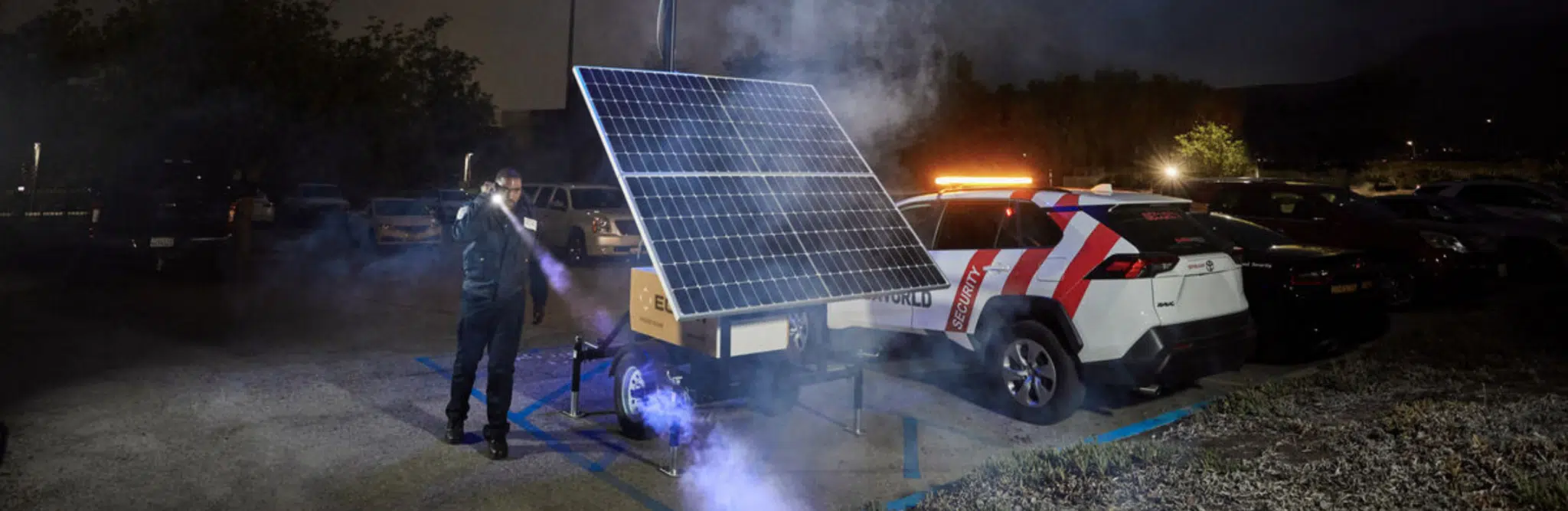



Large Yards Need More Than Periodic Checks
Logistics yards are difficult environments to secure. They often include large outdoor footprints, trailer storage, cargo movement, multiple access points, and overnight activity. That creates risk for theft, trespassing, vandalism, unauthorized access, and operational disruption.
For many logistics operators, patrol security has traditionally been the default approach. Remote monitoring offers a different model, built around continuous visibility, AI-powered detection, and real-time intervention.
If you’re comparing patrol security vs remote monitoring for logistics yards, the real question isn’t simply which option provides security coverage. It’s whether periodic patrols are enough, or whether your yard requires continuous awareness and faster response across the entire property.
This comparison is designed for logistics operators, transportation companies, distribution center managers, and security decision-makers evaluating how to protect cargo, equipment, trailers, and yard operations.
Key Differences at a Glance
- Patrol security provides periodic physical presence, while remote monitoring provides continuous visibility across the yard
- Patrol officers can only observe one area at a time, while monitored cameras can cover multiple areas simultaneously
- Remote monitoring combines AI detection with live human verification and intervention
- Patrol effectiveness depends on timing, routes, and staffing consistency
- Remote monitoring helps reduce gaps between patrol rounds
- Patrols provide on-site presence, while remote monitoring enables real-time audio deterrence and escalation
- Remote monitoring creates video evidence, event logs, and incident reporting
- Hybrid security can combine continuous monitoring with targeted patrol support
Breaking Down the Differences
| Category | Patrol Security | Remote Monitoring |
| Coverage Model | Periodic patrols across the yard | Continuous monitoring across cameras |
| Visibility | Limited to officer location and patrol timing | Broad yard visibility in real time |
| Detection | Manual observation during patrols | AI-powered detection with human verification |
| Response Model | On-site response when activity is observed | Live audio deterrence, escalation, and dispatch |
| Consistency | Varies by route, shift, and staffing | Standardized monitoring process |
| Scalability | Requires additional personnel | Scales through camera coverage and monitoring |
| Documentation | Written reports and incident notes | Video evidence, event logs, and reporting |
| Best Fit | Sites needing physical presence or operational support | Large yards needing continuous visibility and faster response |
Periodic Patrols vs Continuous Yard Visibility
Patrol security is built around physical movement through the property.
A patrol officer may:
- Check gates and access points
- Inspect fence lines
- Monitor trailer storage areas
- Look for trespassing or suspicious activity
- Respond to visible issues during patrol rounds
This physical presence can be valuable, especially for gate support, lock checks, and situations that require someone on-site.
The challenge is that patrols are periodic. Even a well-run patrol program can leave gaps between rounds, especially in large logistics yards where trailers, containers, equipment, and vehicles are spread across wide outdoor areas.
Remote video monitoring is built around continuous visibility.
With cameras positioned across key areas, operators can monitor activity throughout the yard instead of relying on what a patrol officer happens to see at a specific moment.
Modern remote monitoring can include:
- AI-powered detection
- Live human verification
- Real-time audio warnings
- Escalation to guards, management, or law enforcement
- Video documentation for investigations
This shifts the security model from scheduled observation to active, continuous awareness.
Discovery vs Real-Time Intervention
One of the biggest differences between patrol security and remote monitoring is timing.
With patrols, incidents may be discovered:
- During the next patrol round
- After cargo or equipment has already been accessed
- After damage or unauthorized entry has occurred
Remote monitoring is designed to shorten that window.
When suspicious activity is detected, operators can verify the situation and act immediately. That may include issuing live audio warnings, escalating to on-site personnel, or contacting law enforcement when needed.
For logistics yards, where theft or unauthorized access can unfold quickly, that response window matters. The difference between discovering an incident later and intervening in real time can directly affect loss, downtime, and liability.
Presence vs Coverage: A Simple Decision Lens
When comparing patrol security vs remote monitoring for logistics yards, the decision often comes down to:
Do you need periodic physical presence, or continuous yard-wide protection?
- If your priority is having personnel physically present for checks, gate support, or operational tasks, patrol security may be appropriate
- If your priority is continuous visibility, faster detection, and real-time intervention across a large property, remote monitoring often provides stronger coverage
This distinction becomes more important as yard size, cargo value, access points, and overnight risk increase.
When a Hybrid Approach Makes Sense
For logistics yards, hybrid security is often the strongest model.
A hybrid approach combines remote monitoring with targeted patrol or on-site personnel support. In this model, remote monitoring becomes the foundation of visibility and detection, while patrols are used where physical presence adds the most value.
Remote monitoring can provide:
- Continuous coverage across the yard
- AI-powered detection
- Live audio deterrence
- Immediate escalation
- Video evidence and reporting
Patrol personnel can support:
- Gate activity
- Physical lock checks
- Visitor or driver interaction
- Incident follow-up
- Targeted patrols in higher-risk areas
This allows logistics operators to reduce gaps between patrol rounds, improve response consistency, and use personnel more strategically.
Instead of relying on patrols as the primary line of defense, a hybrid model uses monitoring to maintain continuous awareness while reserving physical security resources for tasks that truly require someone on-site.
Choosing the Right Approach for Your Logistics Yard
Both patrol security and remote monitoring can play an important role in logistics yard protection.
Patrol security may be a strong fit if you:
- Need physical personnel for gate support or site checks
- Require on-site interaction with drivers, visitors, or staff
- Operate a smaller yard with limited coverage needs
- Need personnel for operational responsibilities beyond security
Remote monitoring may be a better fit if you:
- Need continuous visibility across a large outdoor yard
- Want real-time detection and intervention
- Need to monitor trailers, cargo, access points, and perimeter areas simultaneously
- Are looking to reduce theft, trespassing, and unauthorized access
- Want stronger documentation for investigations and claims
A hybrid approach may be the best fit if you:
- Need both physical support and continuous monitoring
- Operate a large or complex logistics yard
- Want to reduce patrol gaps without eliminating on-site personnel
- Need to optimize security spend while improving coverage
- Want monitoring to serve as the foundation, with patrols supporting specific operational needs
Two Approaches to Logistics Yard Security
Patrol security and remote monitoring both support logistics yard protection, but they solve different problems.
Patrols provide physical presence and scheduled site checks.
Remote monitoring provides continuous visibility, real-time detection, and active intervention across large outdoor environments.
For many logistics operators, the strongest approach is not patrol or monitoring alone. It is a monitoring-first strategy supported by targeted patrols where physical presence is truly needed.
What’s the Next Step?
If you’re evaluating logistics yard security options, the next step is understanding how different approaches apply to your yard layout, cargo exposure, operating hours, and risk profile.
If you’re ready to evaluate a more proactive approach, you can connect with an ECAM expert to review your yard and identify opportunities to improve coverage and reduce risk in real time.
Build a Stronger Security Strategy

Download Security Guides
Practical ebooks to help you strengthen your security and solve your challenges.

Discover Industry Security Solutions
See how ECAM protects your industry with solutions designed to deter crime, reduce losses, and keep operations moving.