
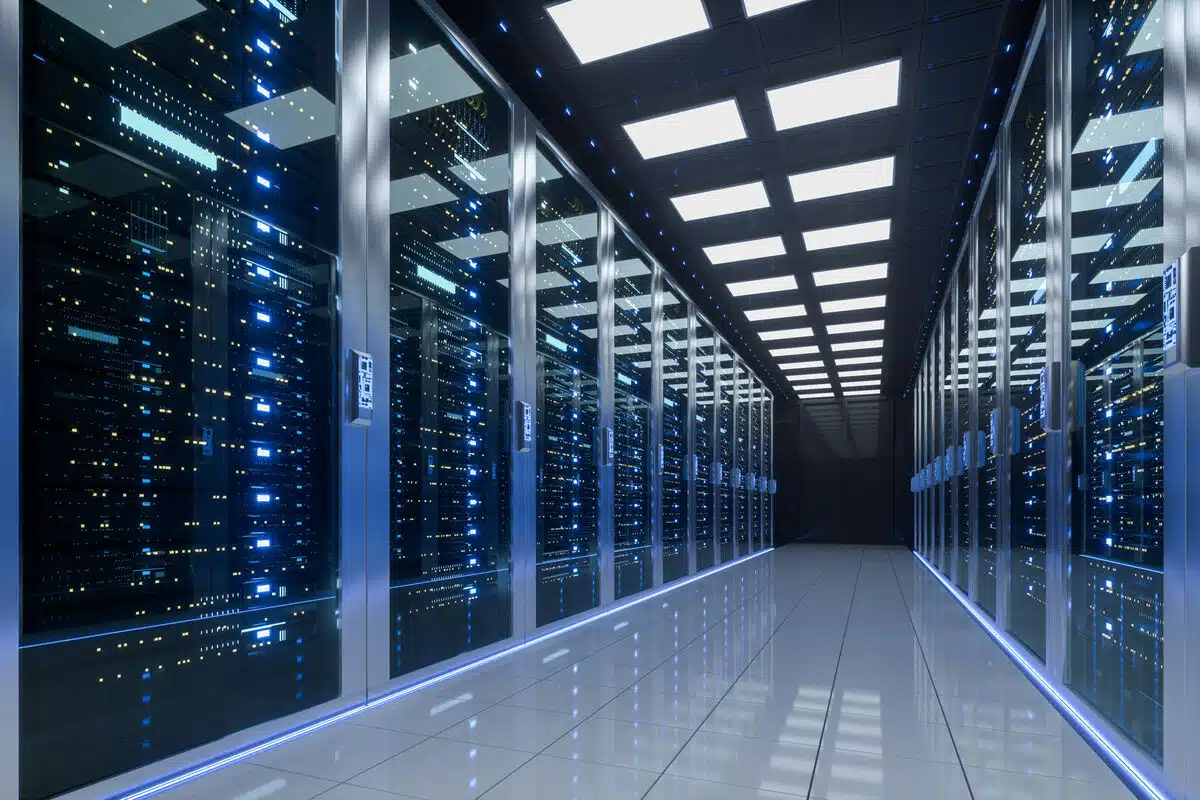



Artificial intelligence may be transforming the digital world, but the infrastructure supporting it is decidedly physical.
Behind every hyperscale data center, AI model, and cloud computing environment is an extensive network of manufacturers, warehouses, transportation providers, staging facilities, and construction sites. Together, these operations move the equipment and materials necessary to bring AI infrastructure online.
Yet conversations about AI infrastructure security often begin and end at the data center perimeter.
Fences, surveillance cameras, access control systems, and security personnel are essential to protecting operational facilities. However, these measures address only one stage in a much larger physical journey.
Long before a transformer reaches a data center or a server is installed, those assets may have traveled thousands of miles, passed through multiple facilities, and spent weeks in temporary storage.
Every transition creates potential security vulnerabilities.
As investment in AI infrastructure continues to grow, protecting the physical supply chain supporting these projects is becoming an increasingly important part of critical infrastructure security.
The Physical Supply Chain Behind AI Infrastructure
Artificial intelligence depends on far more than processors and software.
Modern data centers require a complex combination of electrical, mechanical, networking, and computing infrastructure to operate reliably.
That includes:
- Servers and advanced computing equipment
- Networking hardware and fiber infrastructure
- Transformers and switchgear
- Backup generators
- Batteries and energy storage systems
- Cooling equipment
- Copper wiring and electrical components
- Mechanical equipment
- Construction materials
Many of these components are expensive, highly specialized, and essential to meeting construction and commissioning schedules.
Before installation, they must move through an interconnected supply chain involving manufacturers, logistics providers, distribution centers, storage yards, and construction contractors.
That complexity introduces risk.
A stolen shipment can create significant financial losses. Equipment tampering can compromise valuable assets. Delayed deliveries can disrupt construction schedules, particularly when replacement components have lengthy manufacturing lead times.
For organizations developing AI infrastructure, these incidents can have consequences that extend far beyond the immediate value of the affected equipment.
Physical security must therefore account for the movement, storage, and handling of assets throughout the infrastructure development process.
Why Critical Infrastructure Security Must Extend Beyond the Perimeter
Traditional physical security strategies typically concentrate on a defined property or facility.
Security cameras monitor entrances and perimeters. Access control systems manage authorized entry. Monitoring professionals identify and respond to suspicious activity within established boundaries.
These measures remain essential, but they cannot protect assets that have not yet arrived.
Consider a high-value electrical component destined for a new data center.
Before reaching the construction site, it may be transported across several states, transferred between logistics providers, held temporarily at a distribution facility, and staged in an outdoor equipment yard.
During those transitions, the equipment remains outside the protection of the destination facility’s security infrastructure.
Each stop creates additional opportunities for unauthorized access, theft, tampering, or other disruption.
This highlights a fundamental limitation of treating the property line as the beginning of physical security.
Organizations need to identify where valuable assets become vulnerable before they reach the final destination and determine which locations require additional protection.
The objective is not necessarily to monitor every mile or install cameras at every point in the supply chain.
It is to establish visibility wherever physical security can meaningfully reduce risk.
From Asset Tracking to Asset Intelligence
Location tracking is an important component of logistics management.
Knowing where equipment is located helps organizations coordinate deliveries, manage schedules, and maintain visibility into the movement of critical materials.
However, location data alone does not provide a complete picture of security.
A tracking system may confirm that a trailer has reached a staging yard. It cannot necessarily explain what is happening around that trailer or whether unauthorized activity is taking place.
That distinction creates an important opportunity for video intelligence and physical security monitoring.
Rather than focusing exclusively on where an asset is located, organizations can begin evaluating the circumstances surrounding its movement and storage.
For example:
- Did the expected vehicle arrive?
- Was the delivery made during its scheduled window?
- Did the vehicle enter through the appropriate access point?
- Was the equipment staged in its designated location?
- Was there suspicious activity around the shipment?
- Did unauthorized individuals attempt to access the storage area?
- Was the asset still present when the next scheduled movement occurred?
These questions shift the focus from basic asset tracking toward greater situational awareness.
Video monitoring, license plate recognition, and event verification can provide useful evidence around specific activities, helping security and logistics teams understand what happened at critical points in the supply chain.
Importantly, these technologies complement traditional tracking rather than replacing it.
Together, location information and physical security intelligence can help organizations develop a more complete picture of asset movement and potential risk.
Why the Last Mile Creates Unique Security Challenges
One of the most vulnerable stages of the critical infrastructure supply chain may occur near the end of a shipment’s journey.
An asset can travel hundreds or thousands of miles without incident, only to arrive at a construction site where temporary security infrastructure, high vehicle traffic, and changing operational conditions introduce new risks.
Data center construction sites are particularly complex environments.
Large projects may involve multiple delivery entrances, rotating subcontractors, temporary storage locations, and extensive movement between buildings and staging areas.
When valuable equipment arrives, several questions become important.
Is the shipment expected? Has it reached the correct entrance? Is the driver authorized? Where should the equipment be unloaded? Who is responsible for receiving it?
Unexpected circumstances add complexity.
A delivery might arrive outside its scheduled window. A truck may approach the wrong gate. An unfamiliar vehicle could attempt to follow an authorized delivery onto the property.
These situations illustrate why effective gate security requires more than simply opening and closing an entrance.
The delivery gate is both an access-control point and an opportunity to verify the movement of critical assets.
Combining video monitoring, gate management technologies, and established access procedures can help organizations maintain better visibility into deliveries without unnecessarily disrupting construction operations.
Protecting High-Value Assets After Delivery
Reaching the construction site does not eliminate supply chain security risks.
In many cases, it introduces a different set of vulnerabilities.
Equipment may remain in temporary storage for days or weeks before installation. Components may be moved between buildings, transferred to different contractors, or relocated as construction progresses.
Meanwhile, site perimeters and access points may change throughout the project.
These conditions create opportunities for theft, unauthorized access, and equipment tampering.
Security strategies must therefore extend beyond verifying that a shipment arrived successfully.
Organizations also need to consider how valuable assets will be protected while they remain onsite.
Mobile Surveillance Units (MSUs) can provide flexible monitoring coverage for temporary equipment yards, changing perimeters, and storage areas where permanent infrastructure has not yet been installed.
Fixed surveillance cameras may offer additional coverage around established entrances and critical locations.
AI-powered video analytics can help identify suspicious activity, while trained monitoring professionals can verify events and initiate appropriate response procedures.
By combining these capabilities, organizations can maintain protection as equipment moves from delivery to storage, installation, and commissioning.
Temporary Security Infrastructure Can Protect Long-Term Investments
The temporary nature of a construction environment does not diminish the importance of the assets within it.
A staging yard may exist for only a few months. A temporary gate may serve one phase of construction. Mobile surveillance equipment may eventually be relocated when permanent systems become operational.
Nevertheless, these locations may contain equipment essential to completing an expensive and technically complex infrastructure project.
This creates a practical challenge for security planning.
Organizations need solutions capable of providing meaningful protection without depending entirely on permanent infrastructure that may not yet exist.
Mobile surveillance and temporary monitoring solutions can help address that need.
Their flexibility allows security teams to establish coverage around newly developed construction areas, adjust camera placement as site conditions change, and protect equipment storage locations that may only be used for limited periods.
For developers managing large or geographically distributed projects, this approach can help provide more consistent protection throughout the construction lifecycle.
Turning Gate Management Into a Source of Security Intelligence
As critical infrastructure projects become more complex, gate management can play an increasingly important role in connecting physical security with logistics operations.
Consider a scheduled equipment delivery.
A truck arrives at the construction entrance. License plate recognition may provide information about the vehicle. Video monitoring captures activity at the gate, while established access procedures determine whether entry should be permitted.
If the vehicle arrives as expected and follows the appropriate process, the delivery can proceed.
However, the situation changes if the vehicle arrives unexpectedly, attempts to use an unauthorized entrance, or exhibits behavior inconsistent with normal operations.
In those circumstances, video monitoring can provide additional context.
Trained monitoring professionals can assess the activity and escalate concerns according to established procedures.
This combination of access control, video intelligence, and human verification provides a more complete understanding of what occurs at critical entry points.
It also allows organizations to investigate irregularities using documented events rather than relying exclusively on access records or reports completed after the fact.
For high-value construction projects, the ability to verify activity around deliveries can strengthen both physical security and operational accountability.
How AI and Human Monitoring Work Together
Artificial intelligence is helping security teams manage increasingly complex physical environments.
Large infrastructure projects can involve extensive camera networks, multiple locations, and continuous movement of people and vehicles.
Manually reviewing every camera feed is not a practical way to identify every potential threat.
AI-powered video analytics can help prioritize activity that may warrant closer attention.
However, construction and logistics environments are full of legitimate activity that can appear unusual without additional context.
A vehicle parked in an unexpected location could indicate suspicious behavior, or it could belong to a contractor responding to a legitimate operational need.
A person entering a restricted area might represent an unauthorized intrusion, or they could be part of an approved work crew.
These differences matter.
Combining intelligent detection with trained human monitoring professionals helps organizations distinguish between events requiring intervention and normal business activity.
AI provides scalable detection capabilities. Human monitoring adds contextual evaluation, verification, and escalation.
Together, they help security teams focus their attention on potentially significant events while reducing unnecessary responses.
Why Security and Logistics Need Greater Coordination
Historically, logistics and physical security have often operated as separate functions.
Logistics teams focus on moving equipment efficiently and keeping projects on schedule.
Security teams focus on preventing unauthorized access, theft, and other incidents.
For AI infrastructure projects, those responsibilities increasingly overlap.
An unexpected delivery can create access-control challenges. A stolen component can delay construction. A compromised storage yard can disrupt installation schedules.
In each situation, the security issue can quickly become an operational problem.
Greater coordination allows organizations to approach these risks more comprehensively.
Security teams may be able to provide useful information about:
- Vehicle activity at delivery entrances
- Unauthorized access attempts
- Suspicious activity near equipment storage areas
- Incidents affecting staging locations
- Changes in security conditions around critical assets
When shared through appropriate operational processes, these insights can help logistics and construction teams investigate irregularities, respond to disruptions, and make more informed decisions.
This does not mean physical security systems replace shipment management or logistics platforms.
Instead, they add another layer of visibility where security and operational responsibilities intersect.
Building a More Resilient AI Infrastructure Supply Chain
Protecting the physical infrastructure behind artificial intelligence requires a security strategy that reflects the complexity of its supply chain.
Rather than viewing individual facilities, shipments, and construction sites as disconnected environments, organizations can evaluate where critical assets face the greatest exposure throughout their journey.
A risk-based approach should consider several priorities.
Identify high-value assets. Determine which equipment is particularly expensive, difficult to replace, or essential to maintaining project schedules.
Evaluate temporary storage locations. Assess staging yards, equipment storage areas, and other locations where valuable assets may remain before installation.
Strengthen delivery verification. Establish clear procedures for managing vehicles, deliveries, and access to critical construction areas.
Deploy adaptable security coverage. Use mobile surveillance and other appropriate technologies where permanent security infrastructure is unavailable or site conditions are changing.
Combine detection with verification. Support intelligent video analytics with trained monitoring professionals who can assess events and initiate established response procedures.
Connect security with operational planning. Encourage coordination between security, construction, and logistics teams when risks affect the movement or availability of critical equipment.
These considerations help organizations develop a more consistent approach to protecting high-value infrastructure without assuming that every location requires the same security measures.
Protecting the Physical Foundation of Artificial Intelligence
The AI economy depends on an extensive physical ecosystem.
Every new data center requires equipment to be manufactured, transported, delivered, stored, installed, and commissioned before it can support digital operations.
Each of those stages introduces potential security vulnerabilities.
For organizations investing in critical AI infrastructure, effective physical security should extend beyond the completed data center and account for the assets and environments that make its construction possible.
Mobile surveillance, AI-powered video analytics, gate management technologies, and human-verified remote monitoring can all contribute to that broader strategy.
The objective is not simply to track equipment or record incidents. It is to maintain meaningful visibility into critical activities, identify potential threats, and support informed responses where valuable infrastructure is most exposed.
Protecting the AI infrastructure of tomorrow requires protecting the physical supply chain that makes it possible today.
Build a Stronger Security Strategy

Download Security Guides
Practical ebooks to help you strengthen your security and solve your challenges.

Discover Industry Security Solutions
See how ECAM protects your industry with solutions designed to deter crime, reduce losses, and keep operations moving.