
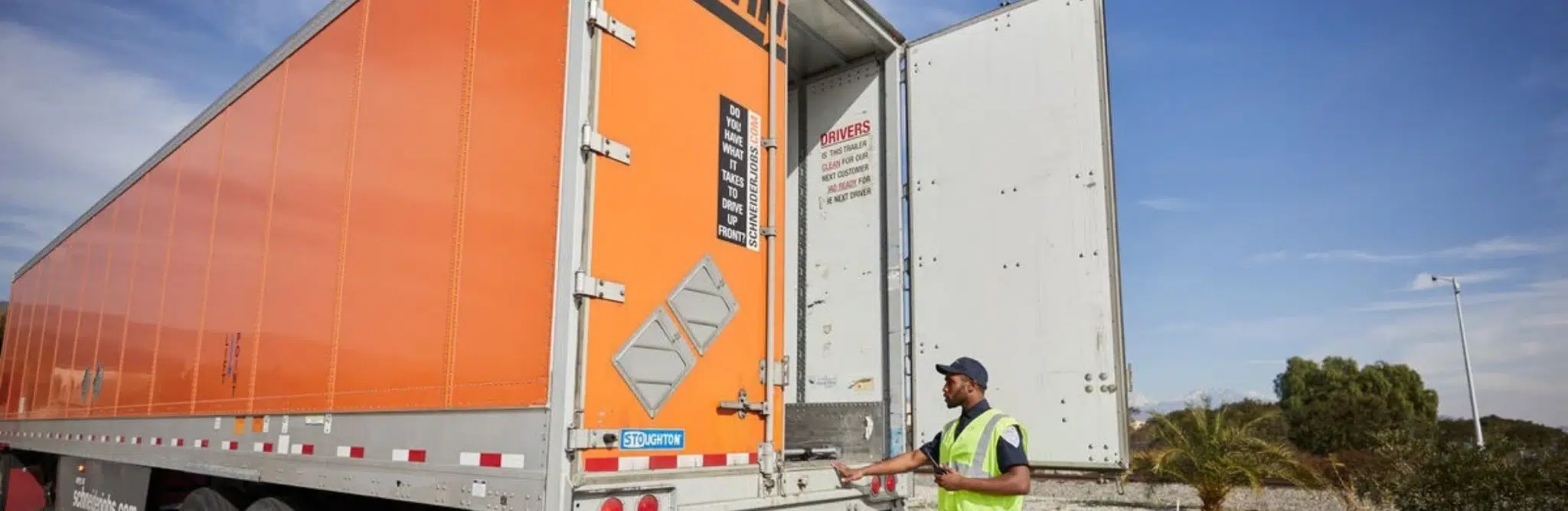



A shipment arrives at a distribution center. A driver checks in, the trailer enters the yard, and freight is eventually unloaded, staged, and prepared for its next destination. Hours later, another vehicle arrives to move the shipment along.
Between those moments, the freight may have passed through several areas, involved multiple employees and carriers, and changed hands more than once.
Now imagine something goes wrong.
A shipment is reported missing. A trailer seal appears to have been tampered with. Equipment is damaged, or a discrepancy is discovered between what arrived and what departed.
Where do you start looking?
For transportation and logistics operators, security isn’t simply about protecting a warehouse or keeping unauthorized people outside the fence. It’s about maintaining visibility across an operation where freight, vehicles, and people are constantly moving.
That’s why effective security camera systems for logistics should be designed around more than individual locations. They need to provide useful visual coverage at critical points throughout the movement of goods, helping operators understand what happened and supporting earlier intervention when suspicious activity is detected.
The objective isn’t to watch every shipment from beginning to end. It’s to make sure important security events don’t disappear into the gaps between operational processes.
The Security Risk Isn’t Always Where the Freight Sits
Traditional security planning often begins with physical locations.
Where are the entrances? Where are the loading docks? Which areas contain valuable inventory? Where should cameras be installed?
Those are important questions, but they don’t tell the whole story.
A logistics facility is fundamentally different from a building where valuable assets remain in relatively fixed locations.
Freight arrives, moves, waits, changes custody, and leaves. Trailers are repositioned. Drivers and contractors come and go. Employees work across multiple shifts, often with overlapping responsibilities.
The security environment changes as the operation moves.
A trailer parked in a designated staging area may be properly secured. But what happens when it’s moved to another section of the yard? What visibility exists when freight transitions from a trailer to a loading dock? Can the security system provide useful footage if a discrepancy is discovered after a shipment leaves?
These aren’t necessarily failures of individual cameras.
They’re questions about whether the overall surveillance strategy reflects how the business operates.
A facility can have cameras covering every major area and still struggle to reconstruct what happened between them.
That distinction matters when evaluating logistics security camera solutions.
Security Cameras for Logistics Should Follow the Freight
A practical way to evaluate camera coverage is to stop thinking exclusively about the property map and start thinking about the movement of goods.
Three questions can help guide that assessment.
Where Did It Come From?
Inbound activity creates the first opportunity to establish visual context.
Vehicle entrances, receiving areas, trailer staging locations, and loading docks may all play a role in documenting how freight enters the facility.
Security cameras can help capture relevant vehicle movements, activity around trailers, and interactions at critical access points.
The goal isn’t to replace transportation management systems, gate records, or receiving procedures.
It’s to provide visual information that can support those records when an incident or discrepancy requires investigation.
What Happened While It Was Here?
Once freight enters a logistics facility, it may move through several operational stages.
Trailers wait in the yard. Goods are unloaded. Materials are staged. Inventory moves through storage or processing areas. Outbound shipments are assembled.
Each transition creates a different security environment.
Useful security cameras for logistics should provide visibility around the activities and locations where security concerns are most likely to arise.
For example, coverage around trailer parking areas may help document activity near stored freight, while cameras at loading docks can provide context around vehicle and personnel movements.
The value comes from designing coverage around meaningful activity rather than simply placing cameras wherever installation is convenient.
Where Did It Go?
Outbound movements are another important part of the picture.
Trailers are connected to vehicles. Freight leaves staging areas. Trucks pass through facility exits.
If a discrepancy is discovered later, relevant video may help establish when certain movements occurred and what activity was visible.
But there’s an important limitation.
Security cameras don’t independently verify shipment contents, establish ownership, or maintain a formal chain of custody.
Those functions belong to operational processes and systems.
Video surveillance provides something different: visual evidence and context that can help operators understand events surrounding those processes.
A Camera at Every Critical Area Doesn’t Guarantee a Complete Picture
Consider a distribution center with cameras at its main entrance, vehicle gates, loading docks, warehouse, and trailer yard.
On paper, that sounds like comprehensive coverage.
But what happens when an incident needs to be investigated?
Can the team identify the relevant cameras?
Is the footage easy to retrieve?
Do camera angles provide enough detail to understand what occurred?
Are important movements obscured by parked trailers or equipment?
Can the system provide useful footage under nighttime conditions?
Do the cameras remain operational as the environment changes?
These questions reveal why logistics video camera security requires more than a camera count.
The purpose of a surveillance system isn’t simply to generate video. It’s to provide useful visibility when that information matters.
That requires thoughtful placement, appropriate fields of view, reliable connectivity, suitable image quality, and an understanding of how people and vehicles actually move through the facility.
It also requires recognizing that not every camera serves the same purpose.
Some cameras provide broad situational awareness. Others focus on specific entrances, approaches, or areas where greater detail is needed.
A successful system brings those different views together around the security requirements of the operation.
When Visibility Becomes Active Security
Recorded footage is valuable when something needs to be investigated.
But what if the security system could help identify relevant activity before the incident is over?
That’s where logistics security camera monitoring becomes important.
Modern video analytics can help detect defined activity, such as a person or vehicle entering a monitored area under conditions that warrant review.
Instead of requiring someone to continuously watch every camera, the system can surface relevant events to trained monitoring professionals.
Those professionals review the video, evaluate what is happening, and determine whether action is warranted under the site’s established response procedures.
For example, an individual approaching a parked trailer in a restricted yard area may require closer attention.
Depending on the situation and available capabilities, monitoring personnel may continue observing, initiate an audible warning, contact designated site personnel, or escalate verified activity.
The process connects several distinct functions:
Camera Visibility → Intelligent Detection → Human Verification → Defined Response
Each function contributes something different.
Cameras provide the visual information.
AI-assisted analytics help identify relevant activity.
Trained monitoring professionals provide human judgment.
Response protocols establish what happens next.
The difference between recording and monitoring isn’t that one uses cameras and the other doesn’t.
It’s that monitoring creates an opportunity to review and respond to relevant activity while it may still be occurring.
Not Every Movement Is a Security Event
Logistics facilities are active environments, often operating around the clock.
Drivers arrive overnight. Trailers are repositioned between loading areas. Employees move between shifts. Third-party carriers enter the property. Maintenance crews may work outside normal business hours.
Much of that activity is entirely legitimate.
That’s why effective logistics video security shouldn’t treat every detected person or vehicle as a security concern.
A truck entering a designated access point during an expected delivery window is different from an unexpected vehicle entering a restricted area.
A worker approaching a trailer during scheduled loading activity presents a different situation from someone attempting to access equipment in an area where they aren’t expected.
Context matters.
And context depends on how the individual facility operates.
Monitoring procedures should account for factors such as access restrictions, operating schedules, designated activity areas, and established escalation requirements.
AI can help identify activity that meets defined criteria, but a detected event isn’t automatically a verified threat.
Human review helps determine what the event means before an appropriate response is initiated.
For logistics operators, that distinction is especially important because normal operations already involve constant movement.
The objective is to identify activity that deserves attention without unnecessarily disrupting legitimate work.
The System Needs to Work When Operations Change
A logistics facility rarely operates exactly the same way throughout the year.
Freight volumes fluctuate.
Seasonal demand increases trailer traffic.
Yard configurations change.
Temporary storage areas are introduced.
New customers bring different operational requirements.
Facilities expand, and equipment is repositioned.
Those changes can affect the security environment even when the existing cameras continue functioning exactly as installed.
A camera that once provided a clear view of a staging area may become partially obstructed by a new trailer parking arrangement.
An expansion may introduce an additional perimeter or vehicle access point.
A temporary overflow yard may require coverage before permanent infrastructure is available.
This is where a flexible surveillance strategy becomes valuable.
Permanent cameras can provide consistent coverage across established facilities and infrastructure.
Mobile surveillance units can supplement that coverage in temporary, changing, or remote areas where permanent installation isn’t practical.
Remote monitoring can provide professional review of relevant activity across supported camera infrastructure.
The goal isn’t to use the same equipment everywhere.
It’s to maintain appropriate security visibility as operational requirements evolve.
Security should adapt to the way freight moves, not require the operation to work around the security system.
Security Video Should Be Useful Beyond the Security Team
Security footage often becomes especially valuable when an operational issue requires investigation.
A trailer is found damaged.
A discrepancy is discovered after unloading.
An unauthorized vehicle is reported in the yard.
A shipment is missing, and the team needs to understand what activity occurred around the relevant area.
In these situations, recorded video can provide information that operational records alone may not capture.
It may help establish when a vehicle arrived, whether activity occurred around a trailer, or what was visible near a loading area during a particular period.
That visual context can support incident investigations, internal reviews, and documentation.
But security video shouldn’t be confused with a warehouse management system, transportation management platform, or freight tracking solution.
Those systems manage operational information.
Security cameras provide visual information.
Used appropriately, the two can complement each other without performing the same job.
That is an important consideration when evaluating logistics security camera solutions.
The objective isn’t to turn a security system into an inventory management platform.
It’s to ensure that useful visual information is available when an event affecting the operation needs to be understood.
Design Security Around Movement, Not Just the Property Map
A logistics facility can have excellent camera coverage at individual locations and still lack visibility around important operational activity.
That’s why the strongest surveillance strategies begin with understanding how the facility functions.
Where do vehicles enter and leave?
Where does freight wait?
Where do people and equipment interact?
Which areas require greater visibility?
What activity should trigger review?
What happens when something suspicious is detected?
Can the system provide useful footage when an incident needs to be investigated?
Can coverage adapt when the operation changes?
These questions help connect cameras, analytics, professional monitoring, and response procedures into a more complete security strategy.
The goal isn’t to visually track every movement of every shipment.
It’s to provide useful security visibility around the activities and transitions that matter most.
For transportation and logistics businesses, that distinction can make the difference between a collection of cameras and a surveillance system designed around the realities of moving freight.
Can Your Security Cameras Follow the Operation?
A logistics facility can have extensive camera coverage and still lack useful visibility around critical freight and vehicle movements. Understanding where those gaps exist is the first step toward designing a more effective security strategy. Talk with ECAM about security camera systems for logistics that combine strategically designed coverage, intelligent detection, professional remote video monitoring, and flexible surveillance solutions to support your operation as it changes.
Build a Stronger Security Strategy

Download Security Guides
Practical ebooks to help you strengthen your security and solve your challenges.

Discover Industry Security Solutions
See how ECAM protects your industry with solutions designed to deter crime, reduce losses, and keep operations moving.