



Sustainability Impact & Operational Efficiency
Executive Summary
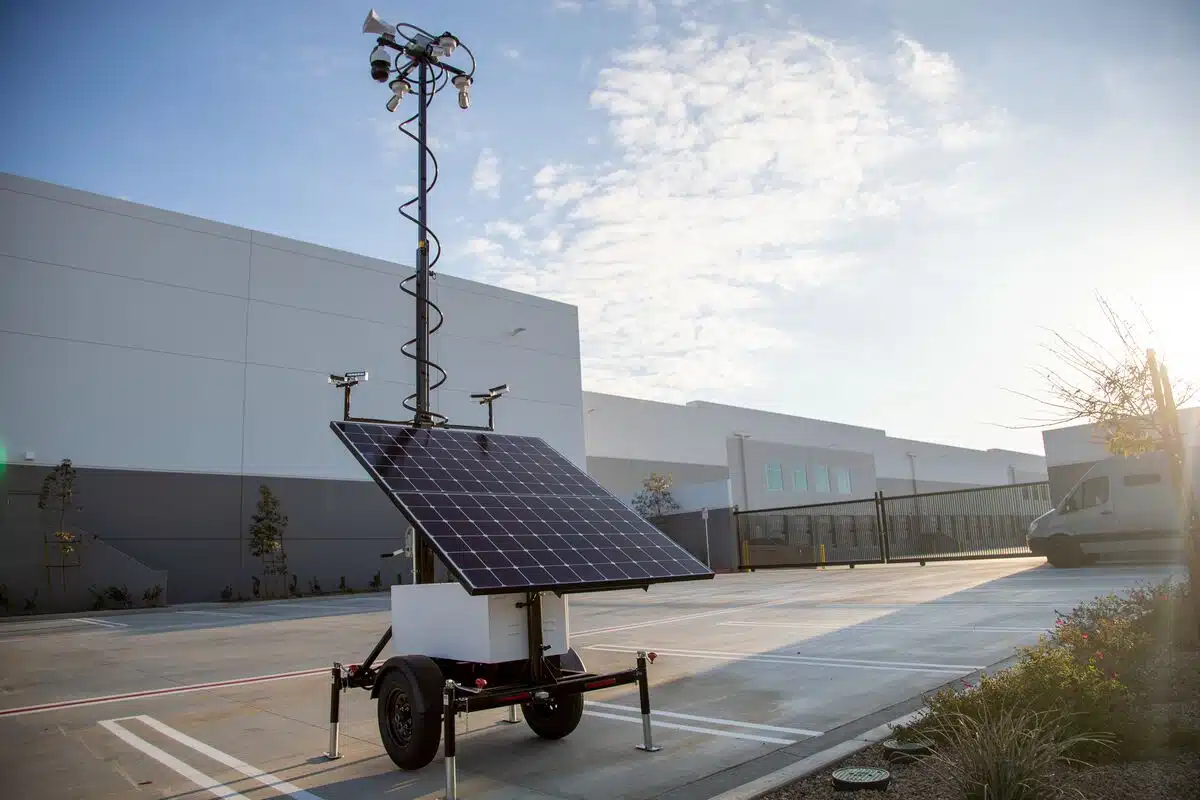
As enterprise organizations continue prioritizing sustainability initiatives and carbon reduction strategies, infrastructure decisions are increasingly being evaluated through both operational and environmental lenses. ECAM’s Solar Mobile Surveillance Units (MSUs) were designed to provide reliable mobile security infrastructure while reducing dependence on grid electricity and diesel-powered generation.
Based on ECAM deployment data, the company’s fleet of approximately 4,500 solar-powered mobile surveillance units currently avoids an estimated 2.96 million kWh of annual grid electricity consumption and approximately 1,123 metric tons of CO₂ emissions annually.
Additional modeling around temporary and remote jobsite deployments demonstrates further environmental benefits through reduced diesel generator usage. Across 100 modeled jobsites using 6 kW diesel generators, ECAM’s solar-powered systems are estimated to avoid approximately:
- 613,600 generator runtime hours annually
- 104,900 gallons of diesel fuel annually
- 1,068 metric tons of CO₂ emissions annually
These findings demonstrate how self-powered mobile surveillance infrastructure can contribute to broader enterprise sustainability initiatives while maintaining operational reliability and deployment flexibility.
Introduction
Organizations across logistics, transportation, construction, and distribution sectors are increasingly evaluating how operational infrastructure contributes to broader environmental objectives. As sustainability reporting and ESG initiatives become more prominent, companies are seeking technologies that reduce carbon impact without compromising operational performance.
For organizations operating large facilities, temporary sites, remote locations, and distributed logistics environments, mobile security infrastructure can represent an often-overlooked source of ongoing power consumption and emissions. Traditional deployments frequently rely on grid power connections or continuous diesel generator operation to maintain uninterrupted surveillance coverage.
ECAM’s Solar Mobile Surveillance Units were developed to reduce dependency on these traditional power sources through integrated solar and battery-powered operation. By operating independently from permanent utility infrastructure, the systems reduce both electrical grid demand and generator runtime requirements while maintaining continuous security operations.
This whitepaper summarizes sustainability metrics associated with ECAM’s deployed solar-powered mobile surveillance fleet and outlines the environmental and operational implications of self-powered surveillance infrastructure.
Sustainability Data Overview
ECAM conducted an analysis of its deployed Solar Mobile Surveillance Unit fleet to estimate the environmental impact associated with solar-powered operation versus traditional powered deployments.
The analysis was based on approximately 4,500 deployed solar mobile surveillance units operating continuously throughout the year.
Fleet Energy Impact
Using a modeled power consumption of 75 watts per unit operating continuously, the deployed fleet represents approximately:
- 657 kWh of annual electricity usage per unit
- 2,956,500 kWh of annual electricity usage across the deployed fleet
Because the units are powered through integrated solar and battery systems, this energy demand is largely offset from traditional grid electricity consumption.
Using an estimated grid emissions factor of 0.38 kg CO₂ per kWh, ECAM estimates the deployed solar fleet avoids approximately:
- 1,123,470 kg of CO₂ annually
- Approximately 1,123 metric tons of CO₂ annually
The analysis reflects the cumulative impact of thousands of deployed solar-powered surveillance systems operating independently from permanent utility infrastructure. The overall reductions demonstrate how distributed renewable-powered infrastructure can contribute to measurable reductions in energy demand and operational emissions at scale.
Reducing Grid Dependency
One of the primary sustainability advantages associated with solar-powered surveillance infrastructure is the reduction in dependency on grid electricity.
Traditional surveillance systems typically require permanent utility access or continuous external power generation to maintain uninterrupted operation. In large-scale deployments, this creates ongoing energy demand and associated emissions tied to electricity generation.
According to ECAM’s analysis, the deployed fleet of solar-powered surveillance units avoids nearly 3 million kWh of annual grid electricity usage.
Grid-powered infrastructure indirectly contributes to carbon emissions due to the methods used for electricity generation and distribution. By reducing reliance on traditional utility power, solar-powered surveillance infrastructure reduces the emissions associated with conventional energy consumption.
This reduction in grid dependency also creates operational advantages for distributed or temporary deployment environments where permanent power infrastructure may not yet exist.
Diesel Generator Runtime Reduction
In addition to reducing grid electricity demand, ECAM evaluated the impact of solar-powered surveillance units on diesel generator usage at temporary and remote jobsites.
Many construction and temporary operational environments operate without permanent utility infrastructure during large portions of the project lifecycle. In these scenarios, surveillance systems often rely on continuously operating diesel generators to maintain uptime.
ECAM modeled a deployment scenario involving 100 jobsites using 6 kW diesel generators.
Under traditional deployments, generators would be required to operate continuously to maintain security infrastructure after business hours and throughout weekends.
By utilizing solar-powered mobile surveillance units, ECAM estimated the following annual reductions:
- 613,600 avoided generator runtime hours
- Approximately 104,900 gallons of diesel fuel avoided
- Approximately 1,068 metric tons of CO₂ emissions avoided
The operational significance of these reductions becomes especially relevant in remote or temporary environments where utility infrastructure is unavailable or incomplete. In these environments, traditional surveillance deployments often require continuous generator operation to maintain uninterrupted coverage.
The analysis specifically modeled after-hours and weekend generator reduction, where sites would otherwise need to maintain continuous power generation solely for surveillance operations.
By reducing or eliminating the need for continuous generator operation, solar-powered surveillance systems can significantly reduce fuel consumption and associated emissions over the duration of a deployment.
Beyond emissions reduction, reduced generator usage can also contribute to lower fuel consumption, reduced maintenance requirements, lower operational noise, and reduced logistical complexity associated with fuel management.
Operational Reliability & Self-Powered Infrastructure
A key consideration in renewable-powered operational infrastructure is maintaining uninterrupted performance and reliability.
ECAM’s solar-powered surveillance units are designed to operate continuously using integrated solar and battery systems, reducing reliance on external utility infrastructure.
Operational independence from the electrical grid can also provide resiliency advantages, particularly in temporary or remote environments where utility access may be limited, unstable, or unavailable.
This operational independence can be particularly valuable in:
- Remote facilities
- Temporary logistics sites
- Construction environments
- Distributed distribution operations
- Locations without permanent utility access
- Environments requiring rapid deployment
By eliminating dependency on fixed infrastructure, organizations can deploy surveillance systems more flexibly while maintaining sustainability objectives.
Relevance to Enterprise Sustainability Initiatives
Large enterprise organizations are increasingly incorporating sustainability metrics into procurement, operational planning, and ESG reporting initiatives.
These organizations are continuously evaluating infrastructure vendors not only through operational performance, but also through measurable environmental contribution and alignment with broader sustainability initiatives.
As transportation and logistics organizations continue pursuing emissions reduction strategies across vehicle fleets, facilities, and operational infrastructure, self-powered technologies can contribute incremental sustainability improvements across the broader operational ecosystem.
This trend aligns with broader enterprise transitions toward low-emission operational infrastructure, including renewable energy integration, fleet electrification, and distributed energy reduction initiatives.
While surveillance infrastructure may represent a relatively small percentage of total enterprise emissions, cumulative reductions across distributed infrastructure deployments can support broader environmental objectives.
Future Outlook
As sustainability expectations continue increasing across logistics, transportation, and operational infrastructure sectors, renewable-powered technologies are likely to become more prominent within mobile and distributed security environments.
Self-powered surveillance infrastructure provides a framework for reducing dependence on fixed utility infrastructure while supporting operational continuity and sustainability objectives simultaneously.
ECAM’s current deployment footprint demonstrates that renewable-powered surveillance systems can operate at a meaningful scale while contributing measurable reductions in both electrical consumption and diesel generator usage.
Future developments in battery storage, solar efficiency, backup power technologies, and energy management systems may further reduce the environmental footprint associated with mobile security infrastructure.
Conclusion
ECAM’s analysis of its Solar Mobile Surveillance Unit fleet demonstrates measurable environmental benefits associated with renewable-powered surveillance infrastructure.
Based on current deployment estimates, the company’s solar-powered units contribute to:
- Reduced grid electricity consumption
- Reduced diesel generator dependency
- Reduced fuel consumption
- Reduced operational emissions
- Increased deployment flexibility
- Continued operational reliability
Across approximately 4,500 deployed units, ECAM estimates annual reductions of approximately:
- 2.96 million kWh of grid electricity usage
- 1,123 metric tons of CO₂ emissions from avoided grid electricity consumption
- 613,600 generator runtime hours
- 104,900 gallons of diesel fuel
- 1,068 metric tons of CO₂ emissions associated with generator reduction
As enterprise organizations continue expanding sustainability initiatives, renewable-powered operational infrastructure may play an increasingly important role in supporting both environmental objectives and operational performance requirements.
Sources & Methodology
This whitepaper was developed using:
- ECAM sustainability calculations for deployed Solar Mobile Surveillance Units
- Operational deployment assumptions based on current ECAM field infrastructure
- Internal sustainability modeling for grid electricity reduction and diesel generator displacement
All sustainability figures represent modeled estimates based on current deployment counts and operational assumptions.
Build a Stronger Security Strategy

Download Security Guides
Practical ebooks to help you strengthen your security and solve your challenges.

Discover Industry Security Solutions
See how ECAM protects your industry with solutions designed to deter crime, reduce losses, and keep operations moving.