



Quick Answer
A mobile surveillance unit (MSU) is a rapidly deployable security system that combines elevated cameras, power, connectivity, video analytics, and remote monitoring capabilities in a portable platform. MSUs can provide proactive surveillance in locations where permanent camera infrastructure is unavailable, impractical, or unable to provide enough coverage.
When paired with live monitoring, an MSU does more than record activity. AI-powered analytics can identify potential threats, trained monitoring professionals can verify what is happening, and operators can intervene through live audio or escalate verified incidents according to established response procedures.
Key Takeaways
- Mobile surveillance units provide rapidly deployable security camera coverage without requiring a permanent installation.
- MSUs typically combine cameras, power, connectivity, analytics, and monitoring capabilities in one platform.
- Solar power, batteries, and backup power options can allow units to operate where permanent electricity is unavailable.
- AI-powered analytics help identify activity that requires attention, while trained monitoring professionals verify potential threats.
- MSUs can be relocated as security risks, property layouts, or operational needs change.
- They are commonly used at construction sites, parking lots, automotive dealerships, logistics yards, vacant properties, retail centers, and remote infrastructure.
- MSUs can operate independently or complement fixed cameras and security guards as part of a broader security strategy.
What Is a Mobile Surveillance Unit?
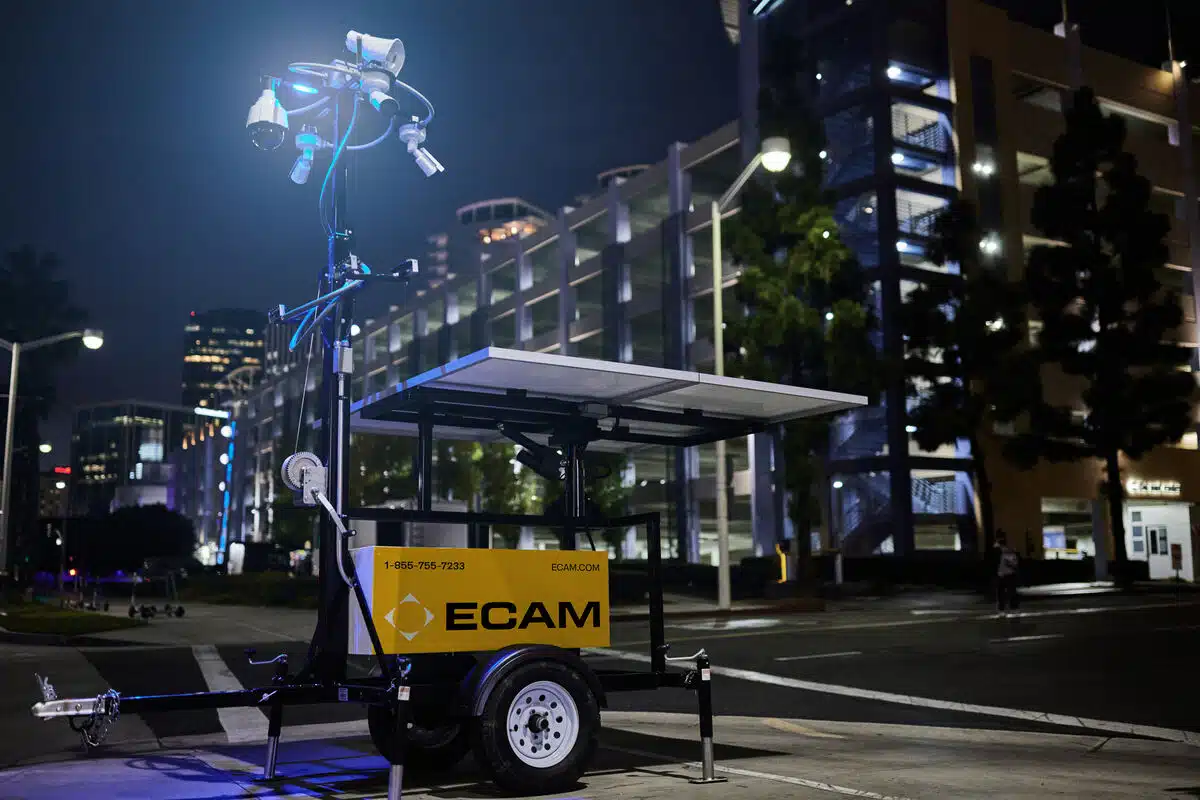
A mobile surveillance unit is a portable security platform designed to bring surveillance, intelligent threat detection, and remote monitoring to locations that need flexible or temporary security coverage.
The exact configuration varies, but an MSU generally consists of a mobile base with an elevated mast supporting one or more security cameras. The platform can also incorporate its own power supply, wireless connectivity, video analytics, speakers, and other security technology.
You may also hear similar systems described as:
- Mobile security towers
- Mobile surveillance towers
- Security camera trailers
- Surveillance trailers
- Remote surveillance trailers
- Portable security towers
What distinguishes an MSU from simply placing a temporary camera on a property is the combination of technologies working together.
The cameras provide visibility. Analytics help detect activity. Connectivity sends relevant information to a monitoring center. Trained security professionals verify events and determine what should happen next.
The result is a deployable security system designed to provide proactive protection rather than passive recording alone.
What Equipment Is Included in a Mobile Surveillance Unit?
An MSU combines the equipment needed to establish surveillance coverage into a single deployable platform.
Depending on the unit and application, components may include:
Elevated Security Cameras
Cameras mounted on an extendable mast provide visibility across large outdoor areas.
Different camera configurations can be used depending on the site’s requirements, including fixed and pan-tilt-zoom cameras.
AI-Powered Video Analytics
Analytics evaluate video for predefined activity that may indicate a security concern.
Power System
Units may use solar panels, onboard batteries, direct power, generators, or a combination of power sources.
Remote Connectivity
Cellular or other wireless connections allow video and alerts to reach a remote monitoring center without relying entirely on a property’s existing network infrastructure.
Audio Capabilities
Speakers can allow monitoring professionals to issue live warnings when unauthorized individuals are detected.
Mobile Platform
The system is designed to be transported and positioned where surveillance coverage is needed.
Together, these components allow an MSU to establish security coverage much faster than many permanent installations.
How Does a Mobile Surveillance Unit Work?
A professionally monitored MSU follows a detect, verify, and respond process that combines technology with trained security professionals.
Step 1: The MSU Is Positioned Strategically
The unit is deployed where its cameras can provide useful visibility across high-risk areas.
That might include:
- Property entrances
- Perimeters
- Equipment
- Material storage
- Vehicle lots
- Loading areas
- Other valuable assets
Proper placement is important because the objective is to maximize useful surveillance coverage, not simply place a unit somewhere on the property.
Step 2: Cameras Monitor the Site
Once deployed, elevated cameras provide visibility across the designated surveillance area.
The height of the mast can help cameras see across obstacles that may limit lower-mounted cameras, including parked vehicles, fencing, equipment, and stored materials.
Step 3: Video Analytics Detect Relevant Activity
AI-powered analytics can continuously analyze camera feeds for predefined events.
Depending on the system, that can include:
- A person entering a restricted area
- After-hours movement
- Loitering
- Perimeter intrusion
- Unauthorized vehicle activity
When activity matches the system’s established rules, an alert can be generated.
Step 4: Monitoring Professionals Verify the Event
A trained operator reviews the alert to determine what is actually happening.
The operator may determine that the activity involves an authorized employee or normal site operations.
If the activity appears suspicious, the operator can begin the site’s established response process.
Step 5: Operators Intervene or Escalate
Depending on the situation, operators may:
- Issue a live audio warning
- Continue observing the individual
- Notify designated site contacts
- Escalate a verified threat to law enforcement
- Document the incident
This ability to respond while an event is unfolding is what separates a monitored MSU from a portable camera that simply records video.
How an MSU Works
| Stage | What Happens | Security Purpose |
| Deploy | MSU is positioned near priority areas | Establish coverage quickly |
| Monitor | Elevated cameras observe the property | Maintain visibility |
| Detect | Analytics identify relevant activity | Find potential threats early |
| Verify | Trained operators review alerts | Add human judgment |
| Respond | Operators intervene or escalate | Help prevent a loss |
| Document | Event information is retained | Support reporting and investigation |
How Are Mobile Surveillance Units Powered and Connected?
MSUs can operate independently of permanent site infrastructure, making them useful for remote, temporary, and developing properties.
Depending on the configuration, power may come from:
- Solar panels
- Battery storage
- Direct electrical connections
- Generator backup
- Hybrid power systems
Solar-powered MSUs do not depend on sunlight every moment they operate. Solar panels recharge onboard batteries, which can continue powering the system when solar generation is unavailable.
Connectivity can similarly be designed around the site’s conditions.
Cellular and other wireless communication options can connect the MSU with a monitoring center without requiring an established wired network.
This combination is particularly valuable for locations such as construction sites, where permanent power and internet service may not yet exist.
What Can a Mobile Surveillance Unit Detect?
MSUs equipped with video analytics can help identify predefined activity associated with common commercial security threats.
Depending on system capabilities and configuration, that may include:
- Trespassing
- Perimeter breaches
- Loitering
- After-hours activity
- Unauthorized vehicles
- Activity near high-value assets
- Entry into restricted areas
Detection capabilities should be configured around the property’s actual risks.
For example, a construction site may prioritize equipment and material storage after hours, while an automotive dealership may focus on vehicle inventory and perimeter activity.
AI provides the first layer of detection, but human verification remains important.
AI identifies activity that may require attention. Trained security professionals determine what that activity means and how to respond.
Where Are Mobile Surveillance Units Used?
MSUs are most valuable in environments where security needs are outdoor, temporary, remote, or likely to change.
Construction Sites
MSUs can be deployed before permanent utilities are available and repositioned as equipment, materials, access points, and the site perimeter change throughout construction.
Automotive Dealerships
Units can monitor vehicle inventory, perimeter areas, and overflow lots.
Transportation and Logistics
MSUs can provide visibility across trailer yards, outdoor storage, loading areas, and other large spaces.
Retail and Shopping Centers
Mobile units can extend surveillance into parking lots, perimeter areas, or locations where additional temporary coverage is needed.
Parking Lots
Elevated cameras can provide broad visibility across vehicles and pedestrian activity.
Vacant Properties
An MSU can establish surveillance without requiring a major permanent security installation at a property that may not be continuously occupied.
Energy and Utilities
Remote substations, solar facilities, equipment, and other critical infrastructure can benefit from security systems that do not depend entirely on existing site infrastructure.
What Are the Benefits of Mobile Surveillance Units?
The value of an MSU comes from combining mobility with proactive security capabilities.
Rapid Deployment
Because the major components are already integrated into the unit, surveillance can be established without waiting for a complete permanent camera installation.
Flexible Coverage
The unit can move when security priorities change.
This is especially useful on construction sites and other dynamic properties.
Independent Operation
Power and connectivity options can allow MSUs to protect areas without permanent utilities.
Elevated Visibility
Camera height can improve visibility across large outdoor areas and around potential obstructions.
Proactive Response
When paired with professional monitoring, suspicious activity can trigger verification and intervention rather than simply being recorded.
Scalability
Organizations can add, remove, or relocate units as their coverage requirements change.
Key Insight
Mobility is valuable because security risk isn’t always permanent. An MSU allows surveillance coverage to move with the assets, perimeter, and threats a business needs to protect.
How Are MSUs Different From Fixed Security Cameras?
The primary difference between an MSU and a fixed camera system is flexibility.
| Mobile Surveillance Unit | Fixed Security Cameras |
| Rapidly deployable | Permanently installed |
| Can be relocated | Remain in established positions |
| Independent power options | Typically use property infrastructure |
| Wireless connectivity options | Often use existing networks |
| Well suited to temporary and changing sites | Well suited to established properties |
| Elevated outdoor coverage | Indoor and outdoor configurations |
| Integrated mobile platform | Cameras installed throughout property |
Neither is universally better.
A permanent commercial facility may benefit from an integrated fixed surveillance system.
A construction site may need mobile units early in the project before transitioning toward fixed cameras as permanent infrastructure becomes available.
Other properties can use both, adding MSUs to fill temporary coverage gaps or protect areas outside an existing camera system.
When Should You Consider a Mobile Surveillance Unit?
An MSU may be a strong fit when your property needs surveillance but a permanent camera installation is unavailable, impractical, or insufficient.
Consider an MSU if:
- Permanent power isn’t available
- Wired internet isn’t available
- Your site’s layout frequently changes
- You need security deployed quickly
- You have large outdoor areas
- Valuable assets are stored outside
- You need temporary surveillance coverage
- Your existing cameras leave important blind spots
- Security needs change seasonally or by project phase
- You need additional after-hours protection
The decision should ultimately start with the security problem rather than the equipment.
If the primary need is broad visibility, intelligent detection, and remote intervention across an outdoor or changing environment, an MSU can provide a highly flexible way to establish that coverage.
Frequently Asked Questions
Is a mobile surveillance unit the same as a security camera trailer?
The terms are often used to describe similar deployable security platforms. Mobile surveillance units, mobile security towers, surveillance trailers, and security camera trailers can vary in configuration depending on the provider.
Do mobile surveillance units need electricity?
Not always. MSUs can use solar panels, battery storage, direct power, generator backup, or hybrid configurations depending on the system and site requirements.
Do mobile surveillance units require Wi-Fi?
Not necessarily. Many systems can use cellular or other wireless connectivity to communicate with remote monitoring centers.
Are mobile surveillance units monitored by people?
Professionally monitored MSUs combine analytics with trained monitoring professionals. AI helps identify activity that requires attention, while operators verify alerts and determine the appropriate response.
Can an MSU work at night?
Yes. MSUs can use cameras designed to provide nighttime and low-light surveillance, making after-hours protection one of their primary applications.
Can mobile surveillance units replace security guards?
Sometimes, depending on the security requirement. MSUs can provide broad surveillance, detection, and remote intervention, while guards remain valuable when physical access control, face-to-face interaction, or an immediate on-site presence is necessary. Some properties benefit from combining both.
How quickly can a mobile surveillance unit be deployed?
Deployment times vary based on provider, location, site preparation, availability, and system requirements. Because MSUs consolidate major surveillance components into a mobile platform, they can generally be deployed much faster than building a comparable permanent surveillance system from scratch.
Bottom Line
A mobile surveillance unit is a rapidly deployable security platform that brings cameras, power, connectivity, intelligent detection, and remote monitoring to the places that need protection.
Its greatest advantage is flexibility.
An MSU can establish surveillance where permanent infrastructure does not exist, move as risks change, and extend coverage into areas that fixed cameras may not reach. When combined with AI-powered analytics and trained monitoring professionals, it can also help businesses move beyond simply recording incidents toward detecting and responding to threats while they are happening.
For construction sites, parking lots, automotive dealerships, logistics yards, vacant properties, remote infrastructure, and other large outdoor environments, that combination of mobility and proactive monitoring makes MSUs a valuable alternative or complement to traditional security infrastructure.
Build a Stronger Security Strategy

Download Security Guides
Practical ebooks to help you strengthen your security and solve your challenges.

Discover Industry Security Solutions
See how ECAM protects your industry with solutions designed to deter crime, reduce losses, and keep operations moving.