
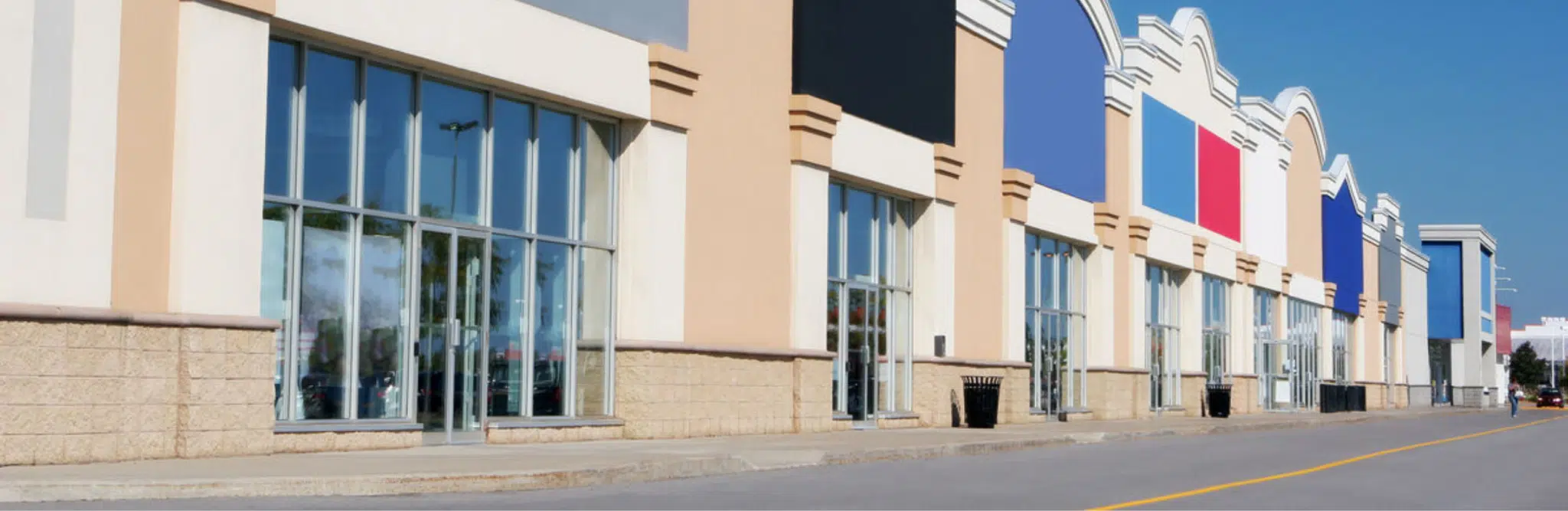



A commercial property doesn’t become fundamentally different the moment the last tenant leaves.
The doors are still there. The parking lot hasn’t moved. The perimeter hasn’t changed. Existing cameras may still be operating exactly as they did before.
But something important has disappeared: people.
Employees no longer arrive each morning. Customers stop visiting. Deliveries become less frequent. Cleaning crews may no longer walk the building every evening. Property managers and maintenance teams spend less time onsite.
All of those people provided something that rarely appeared in the property’s formal security plan: natural visibility.
Someone noticed the unfamiliar vehicle parked behind the building. Someone reported the damaged gate. Someone realized a service door hadn’t closed properly. Someone saw that lights were unexpectedly on after hours.
When a property becomes vacant, those informal layers of oversight disappear with the occupants.
That’s why vacant property monitoring shouldn’t simply be the security program you had before, minus the people. Vacancy changes how a property operates, which means it should also change how the property is protected.
When Occupied: People Provide More Security Than You Think
Think about a typical day at an occupied commercial property.
Employees arrive throughout the morning. Vendors make deliveries. Maintenance personnel move between buildings. Customers or visitors enter and leave. Property managers conduct routine inspections.
None of these people may have security responsibilities, but their presence creates constant opportunities for something unusual to be noticed.
An unfamiliar person trying a locked door stands out.
So does a vehicle parked in an unusual location.
A broken section of fencing might be reported quickly because someone walks past it every afternoon.
Even ordinary business activity creates a kind of passive oversight.
The property is being seen.
That changes when occupancy does.
When Vacant: Those Eyes Disappear
Now picture the same property several weeks after everyone has left.
The parking lot sits mostly empty.
Deliveries have stopped.
Interior spaces remain dark.
Property visits may occur only periodically.
An unfamiliar vehicle can remain onsite longer before anyone questions it. A damaged fence might sit unnoticed between inspections. An unsecured entrance may stay unsecured overnight. Illegal dumping can accumulate. Unauthorized activity that might have been noticed quickly at an occupied building can continue without drawing attention.
The building hasn’t necessarily become harder to secure.
It has become easier for activity to go unnoticed.
That’s an important distinction.
The challenge of vacancy isn’t simply that an empty property may attract unwanted activity. It’s that fewer people are present to recognize when conditions change.
Effective vacant property security has to replace some of that lost visibility.
Vacancy Changes What’s “Normal”
One of the most important changes after a property becomes vacant is surprisingly simple:
Normal activity changes.
Consider a vehicle arriving at 9:30 p.m.
At a busy multifamily property, hotel, distribution facility, or late-night retail location, that may mean absolutely nothing.
At a commercial building that has been vacant for three months, the same vehicle may deserve a closer look.
The activity didn’t change.
The context did.
That distinction matters when designing vacant property CCTV and remote video monitoring strategies.
A system configured around the activity patterns of an occupied property may no longer reflect how the site operates today. Monitoring procedures, camera coverage, and response protocols should account for the property’s current status rather than assuming yesterday’s patterns still apply.
Modern analytics can help surface activity that warrants review, while trained monitoring professionals can evaluate what they’re seeing against the site’s expected conditions and established response plan.
That allows monitoring to account for something a camera alone cannot fully understand: what “normal” looks like for this property right now.
A Vacant Property Needs Visibility From the Inside Out
Once regular occupancy disappears, it’s worth reconsidering where visibility matters.
Start inside the building.
Existing cameras may continue providing useful coverage of entrances, corridors, lobbies, equipment rooms, or other interior areas. But camera placement originally designed around employee or customer activity may need to be reassessed when the property is no longer being used the same way.
Then move outward.
Loading areas, service entrances, gates, utility infrastructure, HVAC equipment, storage locations, and other exterior assets may become higher priorities when fewer people are onsite.
Finally, consider the property’s boundary.
Perimeter security systems can help identify activity before someone reaches the building itself, providing another opportunity to recognize unauthorized access while an event is developing.
The objective is to think beyond the building and understand the property as a whole.
An Empty Parking Lot Can Tell You a Lot
Parking areas deserve particular attention after a property becomes vacant.
When a building is occupied, vehicles constantly enter and leave. Determining whether one vehicle belongs on the property may require significant context.
Vacancy changes that equation.
An otherwise empty lot makes unusual vehicle activity easier to distinguish from normal operations, but only if someone or something is paying attention.
Parking lot security cameras can extend visibility across these areas, while parking lot surveillance paired with active monitoring can help determine when vehicle or pedestrian activity warrants additional review.
A parking lot monitoring system may also provide valuable context around where someone entered the property, how long they remained, and whether activity extended toward the building or other protected areas.
The parking lot isn’t simply an empty space surrounding a vacant building.
It can become an important early layer of the property’s security strategy.
The Vacancy Reset: Four Questions to Ask When Occupancy Changes
When tenants leave, security shouldn’t continue on autopilot.
Instead, treat the transition as an opportunity to reset the strategy around the property’s new reality.
1. What’s Still Valuable?
A vacant building isn’t an empty building.
HVAC components, copper wiring, electrical equipment, fixtures, appliances, stored materials, and other infrastructure can remain valuable even after occupants have left.
Identify what remains and whether existing surveillance provides meaningful coverage of those assets.
2. Where Can Someone Enter?
Reassess doors, gates, fencing, loading areas, vehicle entrances, roof access, and other potential entry points.
A route that received little attention while a property was occupied may become more significant once normal activity disappears.
3. Where Did Natural Visibility Disappear?
Think beyond physical vulnerabilities.
Which areas were previously seen every day because employees, customers, maintenance personnel, or tenants regularly passed through them?
Parking areas?
Loading zones?
Service corridors?
Rear entrances?
Those locations may require additional consideration now that routine oversight is gone.
4. Who Knows When Something Happens?
This may be the most important question.
If someone enters the property at 2 a.m., when will anyone know?
Immediately?
When an automated alert is reviewed?
When the property manager arrives the next morning?
During next week’s scheduled inspection?
The answer reveals whether the property has cameras or whether it actually has awareness.
Not Every Vacancy Requires the Same Approach
“Vacant property” describes a condition, not a single type of property.
A building may be empty for three weeks between tenants.
Another may be partially occupied while several floors await leasing.
A seasonal operation may close for months at a time.
A commercial property may be awaiting renovation or redevelopment.
Another may have no defined timeline for occupancy.
Those situations shouldn’t automatically receive identical security strategies.
For a short-term vacancy, organizations may want to supplement existing systems without making significant permanent investments. A longer-term vacancy may justify changes to camera coverage, monitoring procedures, perimeter protection, or other infrastructure.
Properties in transition can also benefit from mobile surveillance units when monitored coverage is needed quickly or permanent installation isn’t practical. Mobile systems can provide cameras, connectivity, and monitoring in areas such as parking lots or exterior perimeters without requiring the property owner to redesign permanent infrastructure for a temporary condition.
The security strategy should fit both the property and the expected duration of the vacancy.
The Building Didn’t Change. Its Security Environment Did.
When a property becomes vacant, it’s tempting to think security requirements have decreased because fewer people are onsite.
In many ways, the opposite is true.
The people who once provided everyday visibility are gone. Activity patterns have changed. Issues can remain undiscovered longer. Areas that once received constant informal oversight may now sit unseen between scheduled visits.
That’s why vacant property monitoring isn’t simply about adding more cameras to an empty building.
It’s about replacing the visibility, context, and early awareness that occupancy used to provide.
The building may look exactly the same from the outside.
The way you protect it shouldn’t.
Your Building Is Vacant. Is Your Security Plan Still Built for an Occupied Property?
If your cameras, monitoring procedures, response plan, and perimeter strategy haven’t changed since the last tenant left, the property may be operating under a security plan designed for conditions that no longer exist.
Build a Stronger Security Strategy

Download Security Guides
Practical ebooks to help you strengthen your security and solve your challenges.

Discover Industry Security Solutions
See how ECAM protects your industry with solutions designed to deter crime, reduce losses, and keep operations moving.