
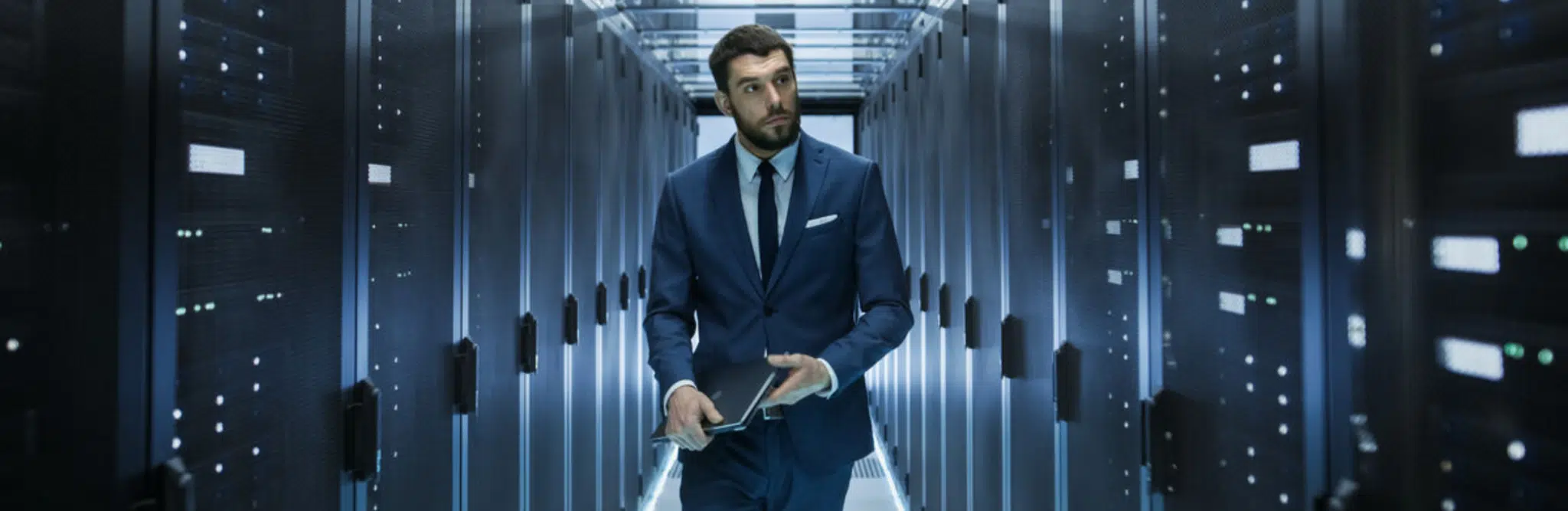



Understanding the Different Types of Data Centers and Their Unique Physical Security Requirements
Data centers have become the foundation of today’s digital economy.
From cloud computing and artificial intelligence to financial transactions, healthcare systems, and manufacturing operations, nearly every industry depends on data centers to keep critical services running. But while every facility shares the same goal—ensuring uptime—the security challenges vary significantly depending on the type of data center.
An enterprise data center faces different risks than a hyperscale campus. An unmanned edge facility requires a different approach than a highly regulated government or healthcare data center.
Understanding these differences is essential for building a physical security strategy that protects critical infrastructure while supporting operational continuity.
Why Physical Security Matters Across Every Data Center
Regardless of size or purpose, modern data centers face an expanding range of physical security threats, including:
- Unauthorized access
- Trespassing
- Copper theft
- Vandalism
- Insider threats
- Tailgating
- Cargo theft during construction or expansion
- Thermal risks involving electrical infrastructure and battery systems
Protecting against these threats requires more than perimeter fencing or surveillance cameras.
Modern facilities need intelligent security systems capable of detecting, verifying, and responding to incidents in real time while providing continuous operational visibility.
1. Enterprise Data Centers
Enterprise data centers are privately owned facilities that support an organization’s internal business operations.
They commonly host:
- Corporate applications
- Financial systems
- Manufacturing operations
- Intellectual property
- Business-critical infrastructure
Because these facilities directly support day-to-day operations, downtime can quickly affect productivity, customer service, and revenue.
Security Priorities
Enterprise facilities typically benefit from security strategies focused on:
- Perimeter intrusion detection
- Live video monitoring
- Access point verification
- Parking lot and loading dock surveillance
- Tailgating prevention
- Thermal monitoring of critical electrical infrastructure
Thermal imaging can provide early warning of abnormal heat signatures associated with:
- UPS systems
- Electrical panels
- Battery backup systems
- HVAC failures
- Overheating equipment rooms
Identifying these issues before failure helps reduce downtime and improve operational resilience.
2. Colocation Data Centers
Colocation providers host equipment for multiple customers within a shared facility.
Unlike enterprise environments, colocation operators must secure both the building itself and the assets belonging to individual tenants.
This creates additional operational complexity.
Security Priorities
Physical security programs should emphasize:
- Shared access point monitoring
- Contractor verification
- Loading dock security
- Equipment staging areas
- Parking facilities
- Exterior perimeter protection
Live video monitoring helps identify issues such as:
- Unauthorized after-hours activity
- Suspicious loitering
- Fence line breaches
- Unauthorized deliveries
- Access control violations
Recorded video verification also strengthens audit trails while improving customer confidence and accountability.
3. Hyperscale Data Centers
Hyperscale data centers support cloud providers, AI platforms, and some of the world’s largest technology companies.
These campuses often span hundreds of acres and include:
- Multiple data halls
- Electrical substations
- Fiber entry points
- Fuel storage
- Construction zones
- Employee parking
- Material laydown yards
Because these environments operate continuously, security must be highly scalable.
Security Priorities
Modern hyperscale environments benefit from:
- AI-powered perimeter monitoring
- Intrusion detection
- Vehicle monitoring
- Construction site security
- Remote substation monitoring
- Critical access corridor protection
AI-powered analytics can help identify:
- Fence climbing
- Vehicle breaches
- Unauthorized access
- Suspicious behavioral patterns
Thermal analytics add another layer of protection by helping detect:
- Equipment overheating
- Transformer abnormalities
- Battery thermal events
- Cooling system failures
For hyperscale operators, proactive monitoring supports both uptime and business continuity across large, distributed campuses.
4. Edge Data Centers
Edge data centers bring computing resources closer to end users to reduce latency and support real-time applications.
Unlike traditional facilities, many edge deployments are:
- Remote
- Unmanned
- Geographically distributed
- Located near telecommunications or utility infrastructure
Managing security across dozens or hundreds of remote sites presents unique challenges.
Security Priorities
Remote facilities often require:
- Live video monitoring
- Virtual guarding
- AI-powered intrusion detection
- Audio intervention
- Remote access verification
- Thermal event monitoring
Rather than relying solely on alarm notifications, operators gain visual intelligence that helps determine:
- Whether an event is legitimate
- If law enforcement or field personnel should be dispatched
- Whether an equipment issue is developing
This allows organizations to efficiently manage large edge networks without staffing every location.
5. Specialized Data Centers
Some industries require significantly higher levels of physical security due to regulatory requirements, operational sensitivity, or national security concerns.
These facilities commonly support:
- Healthcare
- Government
- Banking
- Artificial intelligence
- Defense
- Research institutions
Because these environments often contain highly sensitive systems and information, physical security must support strict accountability and compliance.
Security Priorities
Organizations typically focus on:
- Advanced perimeter monitoring
- Access accountability
- Video verification
- Incident documentation
- Compliance reporting
- Safety monitoring
Thermal imaging is particularly valuable in high-density computing environments where overheating can impact critical systems and create costly operational disruptions.
Beyond Surveillance: Building Intelligence Into Data Center Security
Regardless of facility type, modern data center security has evolved beyond passive surveillance.
Today’s operators require:
- Real-time situational awareness
- AI-assisted threat detection
- Verified response workflows
- Thermal risk monitoring
- Operational intelligence
- Continuous monitoring
These capabilities help organizations:
- Reduce downtime
- Improve perimeter security
- Strengthen access control
- Protect critical infrastructure
- Support business continuity
Security is no longer just about documenting what happened.
It is about identifying risks early enough to prevent operational disruption.
Choosing the Right Security Strategy for Your Data Center
While every data center serves a different purpose, they all share one common objective: maintaining continuous availability.
The most effective security strategies are those designed around each facility’s specific operational requirements, risk profile, and business objectives.
Whether protecting a corporate enterprise facility, a hyperscale AI campus, or a network of unmanned edge locations, organizations need security solutions that combine intelligent technology, continuous visibility, and rapid response.
Because the future of digital infrastructure depends on uptime.
And uptime depends on proactive, intelligence-driven physical security.
Build a Stronger Security Strategy

Download Security Guides
Practical ebooks to help you strengthen your security and solve your challenges.

Discover Industry Security Solutions
See how ECAM protects your industry with solutions designed to deter crime, reduce losses, and keep operations moving.