



Construction firms were already managing elevated material prices when the Federal Reserve added another potential source of pressure.
On September 16, 2026, the Federal Reserve raised its target range for the federal funds rate by 25 basis points to between 3.75% and 4%. The decision marked the Fed’s first rate increase since 2023.
A recent Construction Dive report examined what the increase could mean for construction. Higher borrowing costs may make some planned commercial projects less financially viable, delay payments on active projects, or cause owners to pause or abandon work altogether.
Those outcomes are primarily financial and operational, but they also carry an important security implication: when a construction schedule changes, the site’s risk profile changes with it.
Reduced activity, delayed installations, idle equipment, valuable materials, and incomplete security infrastructure can create vulnerabilities that the original jobsite security plan was not designed to address.
Construction Is Facing Pressure From Multiple Directions
The rate increase does not affect every construction project equally.
Projects using floating-rate construction loans could experience an immediate increase in borrowing costs. Long-term commercial real estate financing depends more heavily on Treasury yields, meaning the broader effect of the Fed’s decision will depend on how financial markets respond.
Still, the rate increase arrives while contractors and developers are already contending with significantly higher input costs.
An Associated Builders and Contractors analysis of U.S. Bureau of Labor Statistics Producer Price Index data found that construction input prices increased 1.2% in August 2026. Overall construction input prices were 8.9% higher than one year earlier, while nonresidential construction input prices were up 8.8%.
When material costs, labor expenses, and financing costs rise together, owners may have to reconsider project scope, timing, or viability. According to Construction Dive, projects near the edge of their profitability targets may no longer move forward, while projects already underway could face payment delays, temporary holds, or abandonment.
Not every project will experience these outcomes. However, contractors should be prepared for schedules and site conditions to change quickly when financial pressure increases.
A Construction Delay Is Also a Security Change
Construction site security plans are often developed around an expected schedule.
A project may begin with mobile surveillance units covering an open property, transition to fixed cameras as structures take shape, and expand access controls as more trades and materials arrive. Monitoring schedules, camera placement, lighting, perimeter protection, and escalation protocols may all evolve alongside construction.
When the project schedule changes, that progression can break down.
A two-week pause may leave materials onsite longer than anticipated. Delayed utility work may prevent permanent cameras, lighting, or access controls from being activated. Reduced staffing may eliminate the natural oversight created by workers, supervisors, deliveries, and subcontractors moving throughout the property.
Meanwhile, the site may still contain:
- Copper wire and electrical components
- Lumber and other building materials
- Tools and portable equipment
- Heavy machinery
- Fuel
- Appliances and fixtures awaiting installation
- Partially completed mechanical systems
The project may be moving more slowly, but its exposure to theft, vandalism, trespassing, fire, and property damage does not pause with it.
Idle Jobsites Can Leave Valuable Assets Exposed
A site with less activity can look like an easier target.
Fewer workers may mean fewer people noticing an unfamiliar vehicle, an open gate, a damaged fence, or someone entering a restricted area. A temporary shutdown can also create longer stretches when no authorized personnel are present.
The site itself may remain incomplete. Open structures, temporary fencing, changing access points, stored materials, and limited lighting can all make traditional perimeter controls difficult to maintain.
These conditions do not guarantee that a theft or intrusion will occur. They do, however, change the opportunities available to someone looking for an accessible target.
Contractors should therefore treat an unexpected slowdown as a reason to reassess construction site security, not simply project scheduling.
Questions to consider include:
- Will valuable materials remain onsite longer than originally planned?
- Are cameras still positioned around the areas of greatest exposure?
- Have new structures, containers, or equipment created blind spots?
- Are temporary gates and fences still secure?
- Will power, connectivity, and lighting remain available during the delay?
- Who will respond if suspicious activity is detected after hours?
- Are emergency contacts and escalation protocols still current?
- Does the security plan account for days or weeks with minimal onsite staffing?
A plan built for an active jobsite may not provide the same protection when work slows or stops.
Rising Material Costs Can Increase the Consequences of Theft
Higher construction input prices affect more than budgets. They can also increase the cost of replacing stolen or damaged materials.
When prices rise, the same physical loss may carry a larger financial impact than it did when the project was estimated. Replacement materials may also be subject to longer procurement timelines or availability constraints, compounding the original theft with additional delays.
The full cost can extend beyond the value of the stolen property. A construction loss may also involve:
- Replacement labor
- Equipment rental extensions
- Schedule disruption
- Subcontractor rescheduling
- Expedited shipping
- Insurance deductibles
- Damage to unfinished structures
- Missed contractual milestones
For projects already under financial pressure, an avoidable security incident can make a difficult situation worse.
This is particularly important when high-value materials arrive before they can be installed. If the construction sequence changes, materials that were expected to move quickly into a secured building may instead remain in trailers, containers, staging areas, or partially enclosed structures.
Security Must Adapt With the Construction Schedule
Construction sites are temporary environments that change constantly. Their security systems must be able to change with them.
A permanent system designed for the finished property may not be ready early enough to protect the project during site preparation, structural work, or temporary interruptions. Conversely, cameras installed for an earlier phase may no longer cover the areas where materials and equipment have moved.
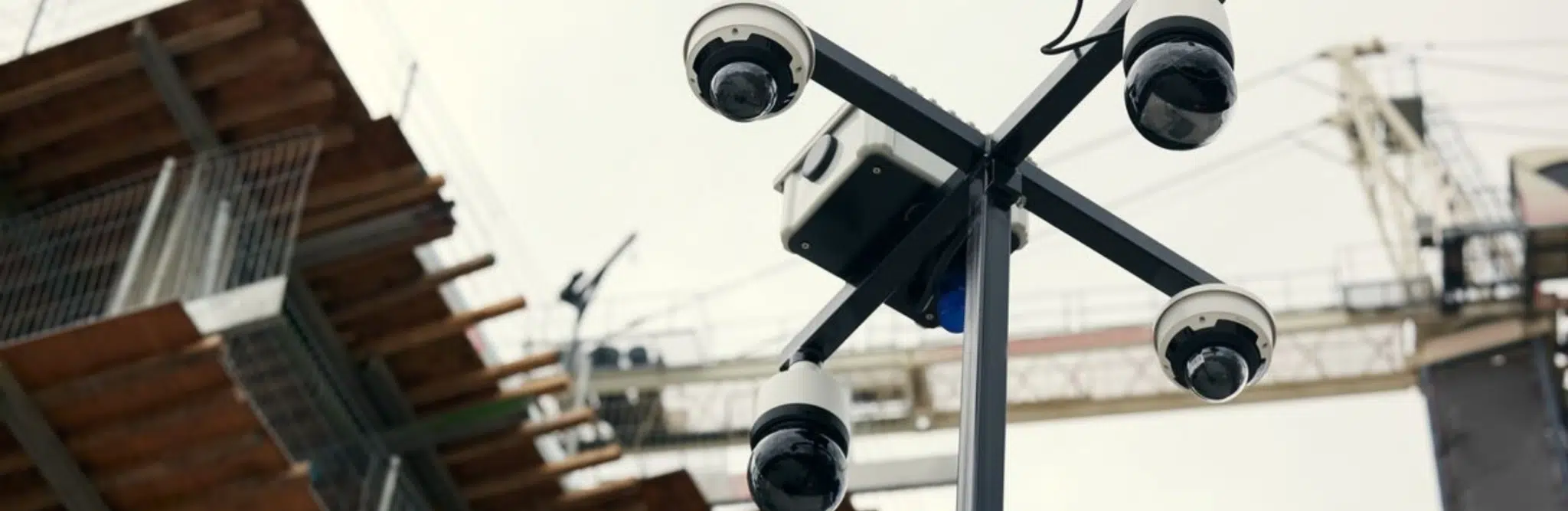
Mobile surveillance units can provide coverage when permanent infrastructure is unavailable, incomplete, or no longer aligned with current conditions. Units can be repositioned as access points, storage areas, and work zones change.
However, camera coverage alone does not create an active response.
Recorded video may help document when a theft occurred, but it does not necessarily give anyone an opportunity to stop it. With AI-assisted live video monitoring, suspicious activity can be identified and reviewed by trained monitoring specialists as it occurs.
Depending on the site’s protocols and the nature of the activity, the response may include issuing a live audio warning, contacting designated site personnel, or escalating the incident to law enforcement.
This combination of flexible coverage and active intervention is especially valuable when the site has fewer people present to recognize and respond to unusual behavior.
Project Holds Require More Than Turning Off the Lights
If financial conditions force a project to pause, security responsibilities should be clearly defined before crews leave.
A temporary hold should trigger a formal site review that documents:
- Materials, tools, and equipment remaining onsite
- Current entry and exit points
- Fence, gate, lock, and lighting conditions
- Camera coverage and blind spots
- Power and connectivity requirements
- Authorized personnel and vehicles
- Monitoring hours
- Emergency contacts
- Incident escalation procedures
- Fire, water, and environmental risks
Contractors should also determine who is responsible for reviewing the site while work is suspended. Ownership, general contractors, subcontractors, and security providers should not assume another party is handling a vulnerability.
The longer a project remains inactive, the more important recurring inspections become. Weather, attempted entry, shifting materials, equipment movement, or damage to temporary infrastructure can introduce new gaps after the initial shutdown.
Security Decisions Can Protect More Than Materials
Construction security is often framed around theft prevention, but the financial stakes can be much larger.
An undetected fire, major water event, or severe act of vandalism can damage completed work and create the potential for a catastrophic or total loss. Unauthorized individuals may also create safety and liability exposure if they enter an incomplete structure and are injured.
That makes security part of broader project risk management.
Video documentation can help establish what occurred, when it happened, and how the site responded. This information may support internal investigations, police reports, insurance claims, and discussions with Builders Risk carriers.
Monitoring cannot eliminate every construction risk or resolve the financial pressures affecting a project. It can help prevent those pressures from being compounded by an intrusion or loss that might have been detected earlier.
Cost Pressure Makes Preventing Avoidable Losses More Important
The Federal Reserve’s rate increase may affect projects differently depending on their financing structure, sector, and stage of development. Data centers, semiconductor facilities, and projects supported by substantial corporate capital or government incentives may be better insulated than housing and private commercial development, according to the economists interviewed by Construction Dive.
Still, the wider construction market is entering a period where cost control and adaptability matter.
When financing becomes more expensive and materials cost more, security should not be treated as a static line item established at the beginning of the project. It should be adjusted as timelines, staffing, site conditions, and asset exposure change.
A delayed project already carries financial consequences. A flexible construction site security strategy can help prevent theft, vandalism, trespassing, or catastrophic damage from adding another setback.
Keep Your Construction Site Protected Through Every Project Phase
ECAM helps construction teams maintain visibility as jobsites evolve through AI-assisted live video monitoring, mobile surveillance units, live audio intervention, and customized escalation protocols. Whether a project is beginning, entering a new phase, or experiencing an unexpected delay, speak with an ECAM expert about adapting security coverage to the site’s current risks.
Build a Stronger Security Strategy

Download Security Guides
Practical ebooks to help you strengthen your security and solve your challenges.

Discover Industry Security Solutions
See how ECAM protects your industry with solutions designed to deter crime, reduce losses, and keep operations moving.