



Most security systems are designed around permanence.
Cameras are installed in fixed positions. Coverage is planned around stable layouts. Infrastructure is built with the assumption that the environment itself will remain relatively unchanged over time.
But many environments do not operate that way.
Construction sites evolve weekly. Parking patterns shift across commercial properties. Industrial yards expand and contract based on operational demand. Temporary projects, remote locations, and transitional spaces often change faster than traditional security infrastructure can adapt.
This is where mobile video surveillance systems have become increasingly valuable.
Rather than forcing security to remain static, they allow visibility to move alongside the environment itself.
The Problem with Fixed Coverage
Traditional camera systems work best when the areas they protect remain predictable.
Once cameras are installed, their effectiveness is tied to the layout they were originally designed around. When operations shift, new blind spots can emerge, traffic patterns can change, and areas of importance may move outside the system’s original coverage plan.
In many environments, this creates a mismatch between where security exists and where visibility is actually needed.
Expanding or adjusting fixed systems can also be resource-intensive. Relocating cameras may require new infrastructure, trenching, power access, or network changes, all of which increase cost and slow deployment.
As a result, organizations are often forced to choose between maintaining outdated coverage or investing in additional infrastructure every time conditions change.
How Mobile Video Surveillance Systems Change the Model
Mobile video surveillance systems approach security differently.
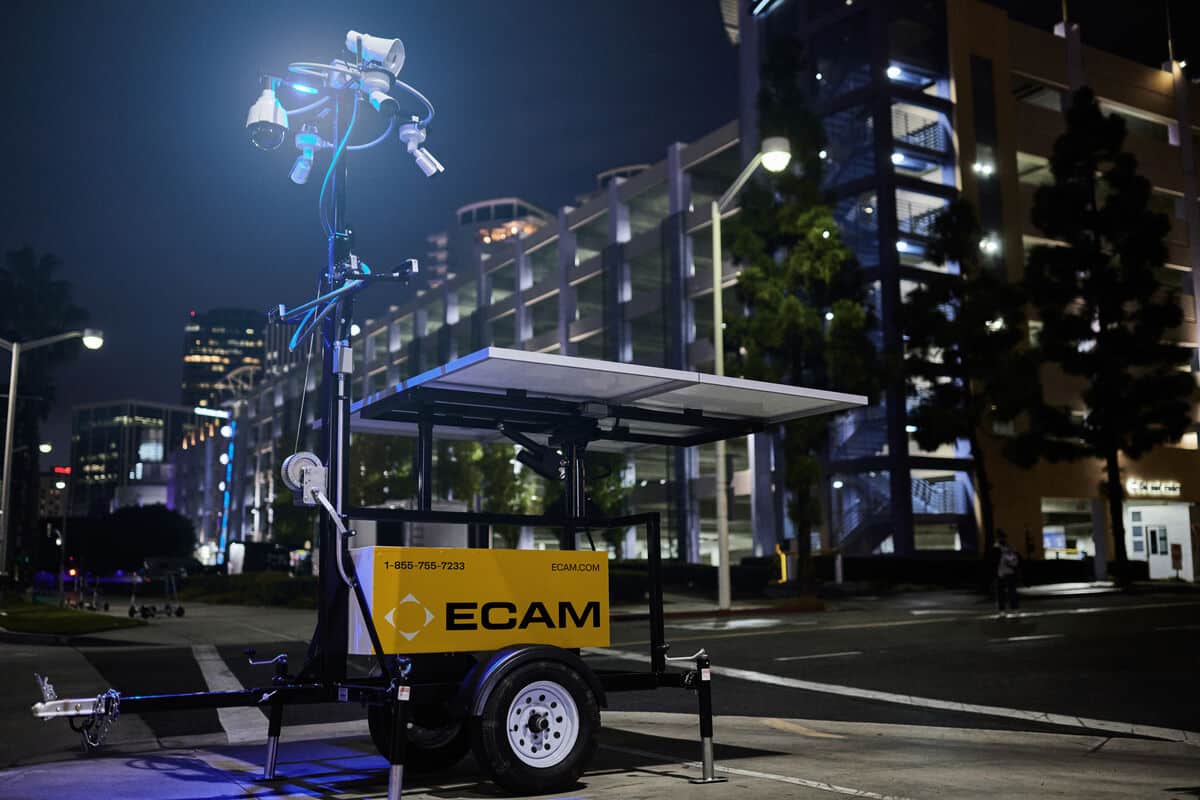
Instead of treating coverage as permanent, they are designed to adapt alongside the environment. Cameras, connectivity, power, and monitoring capabilities are integrated into mobile platforms that can be repositioned as operational needs evolve.
This flexibility changes how organizations think about deployment.
Security no longer needs to be tied to fixed infrastructure in order to maintain continuity. Coverage can move to where risk, activity, or operational focus currently exists.
In practice, this allows organizations to respond more quickly to changing conditions without rebuilding security systems each time the environment shifts.
Mobility Is About More Than Deployment Speed
Mobile surveillance systems are often associated with rapid deployment, but speed is only part of their value.
The larger advantage is adaptability.
A mobile video surveillance system can continue evolving alongside the site it protects. As traffic patterns change, projects progress, or operational priorities shift, coverage can be repositioned without requiring significant infrastructure changes.
This becomes especially important in environments where temporary conditions often become long-term realities. What begins as a short-term deployment may ultimately require months or years of evolving coverage.
Fixed systems are not designed for that level of flexibility.
Mobile systems are.
Why Live Monitoring Matters in Mobile Security
Mobility alone does not create awareness.
A mobile camera system that only records footage still operates reactively. While it may improve coverage, it does not necessarily improve response.
This is why many mobile video surveillance systems now incorporate live video monitoring capabilities.
By combining mobile infrastructure with remote monitoring, organizations can actively observe changing environments in real time. Monitoring teams can verify activity, identify emerging issues, and respond while situations are still developing.
This transforms mobile surveillance from a movable recording tool into an active security operation.
The Role of Mobile Video Guards
One of the reasons organizations are increasingly adopting mobile video guard solutions is their ability to extend oversight without scaling physical security personnel at the same rate.
Rather than relying exclusively on on-site presence, monitoring teams can oversee multiple mobile deployments simultaneously, applying consistent response workflows across locations.
This creates a more scalable security model.
Coverage expands through visibility and centralized monitoring, rather than through proportional increases in staffing.
For organizations managing multiple sites or rapidly changing environments, this can significantly improve both operational flexibility and resource efficiency.
Where Mobile Surveillance Creates the Most Value
The value of mobile surveillance is not limited to one industry or use case.
Its effectiveness comes from its ability to adapt to environments where security needs are fluid rather than fixed.
This may include:
- Sites where layouts change frequently
- Locations without existing security infrastructure
- Environments with temporary or seasonal activity
- Properties requiring flexible coverage across multiple areas
In each case, the core advantage remains the same: security can evolve alongside the environment instead of lagging behind it.
Rethinking Security as Adaptive Infrastructure
Many organizations still approach security as something installed once and maintained over time.
But environments change faster than infrastructure.
Mobile video surveillance systems represent a shift toward more adaptive security models, where visibility can move, scale, and respond alongside operations themselves.
As environments become more dynamic, the ability to maintain that flexibility becomes increasingly important.
Next Steps
Fixed systems are designed around stable environments. Many real-world environments are anything but stable. The more operations change, the more valuable adaptable visibility becomes. Connect with ECAM to explore how mobile video surveillance can support changing security needs.
Build a Stronger Security Strategy

Download Security Guides
Practical ebooks to help you strengthen your security and solve your challenges.

Discover Industry Security Solutions
See how ECAM protects your industry with solutions designed to deter crime, reduce losses, and keep operations moving.