
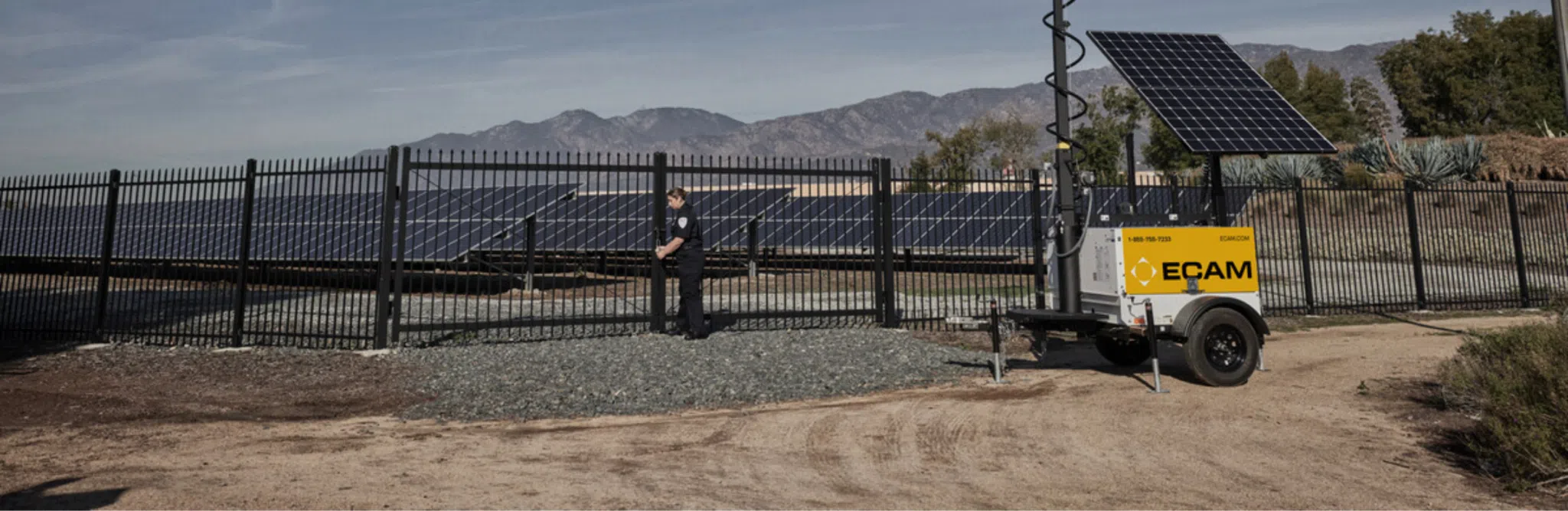



Security at energy sites has traditionally been measured in coverage. More guards, more patrols, more hours on site.
But as energy infrastructure expands across larger and more remote environments, the question is starting to change.
It is no longer just about how to secure a site. It is about how to do it efficiently, consistently, and at scale.
Energy operators today are under increasing pressure to manage operational costs while maintaining strong protection across substations, solar farms, and distributed assets.
Energy security camera monitoring is becoming a key part of that shift, helping organizations rethink how security resources are deployed.
Myth: More Coverage Always Means Higher Cost
A common assumption in energy security is that improving coverage requires increasing spend.
More guards, additional patrol shifts, and extended overnight coverage all come with significant operational costs. In large or remote energy environments, those costs can scale quickly.
However, cost is not only determined by headcount. It is influenced by how efficiently coverage is delivered.
Energy security camera solutions allow operators to expand visibility across entire sites without proportionally increasing on-site staffing.
Reality: Cost Efficiency Comes From Smarter Coverage
Energy sites often span large geographic areas with multiple critical zones.
Maintaining consistent oversight through physical patrols alone can be both expensive and inconsistent. Guards may cover the same routes repeatedly while other areas receive less attention.
Energy live security camera surveillance provides continuous visibility across multiple zones at once, allowing operators to monitor:
- Perimeter access points
- Equipment and infrastructure areas
- Remote sections of large sites
- Locations that are difficult to patrol regularly
By improving how coverage is distributed, energy operators can reduce inefficiencies while strengthening overall security.
Myth: Reducing On-Site Presence Increases Risk
There is often concern that reducing on-site personnel will weaken security.
In reality, risk is more closely tied to visibility and response than physical presence alone.
A guard can only observe one area at a time. In contrast, energy live security camera monitoring enables simultaneous visibility across multiple parts of a site.
This allows for earlier detection of:
- Unauthorized access
- Suspicious activity near critical equipment
- Perimeter breaches
- Safety issues in restricted areas
In many cases, improving visibility reduces risk even as on-site staffing models evolve.
Reality: Energy Security Guard Replacement Is Part of a Larger Cost Strategy
Energy security guard replacement is often discussed as a primary benefit of surveillance, but it is more accurately part of a broader cost optimization strategy.
Rather than fully eliminating guards, many operators are shifting toward hybrid models that combine:
- Remote monitoring
- Targeted on-site response
- Reduced reliance on continuous patrols
This approach allows organizations to allocate resources more effectively, focusing personnel where they are most needed while maintaining consistent visibility across the site.
Where Costs Add Up in Traditional Energy Security Models
Security costs in energy environments are not limited to staffing alone.
They often include:
- Overtime and shift coverage for remote locations
- Travel time between dispersed sites
- Limited coverage efficiency in large environments
- Redundant patrol routes
- Increased risk of missed incidents
Energy CCTV security camera solutions help address these challenges by providing centralized monitoring and reducing the need for repetitive physical coverage.
Scaling Security Across Expanding Energy Infrastructure
As energy networks grow, security strategies must scale with them.
Adding new substations, solar installations, or storage facilities increases the complexity of maintaining consistent protection.
Energy security camera monitoring allows operators to extend coverage across multiple sites without scaling costs at the same rate.
Remote monitoring capabilities enable centralized oversight, making it possible to manage security across distributed infrastructure more efficiently.
Rethinking Security as an Operational Investment
Energy security is no longer just a cost center. It is part of broader operational performance.
When security strategies improve visibility, reduce inefficiencies, and support faster response, they contribute to:
- Reduced loss and damage
- Improved operational continuity
- Better resource allocation
- Lower long-term security costs
Energy security camera monitoring supports this shift by aligning security with both protection and operational efficiency.
Security costs are rising. Efficiency matters more than ever.
For energy operators managing large or remote sites, the challenge is not just maintaining security. It is doing so without unnecessary cost and complexity. Understanding where resources are overextended or underutilized is the first step toward building a more efficient security strategy.
Build a Stronger Security Strategy

Download Security Guides
Practical ebooks to help you strengthen your security and solve your challenges.

Discover Industry Security Solutions
See how ECAM protects your industry with solutions designed to deter crime, reduce losses, and keep operations moving.