
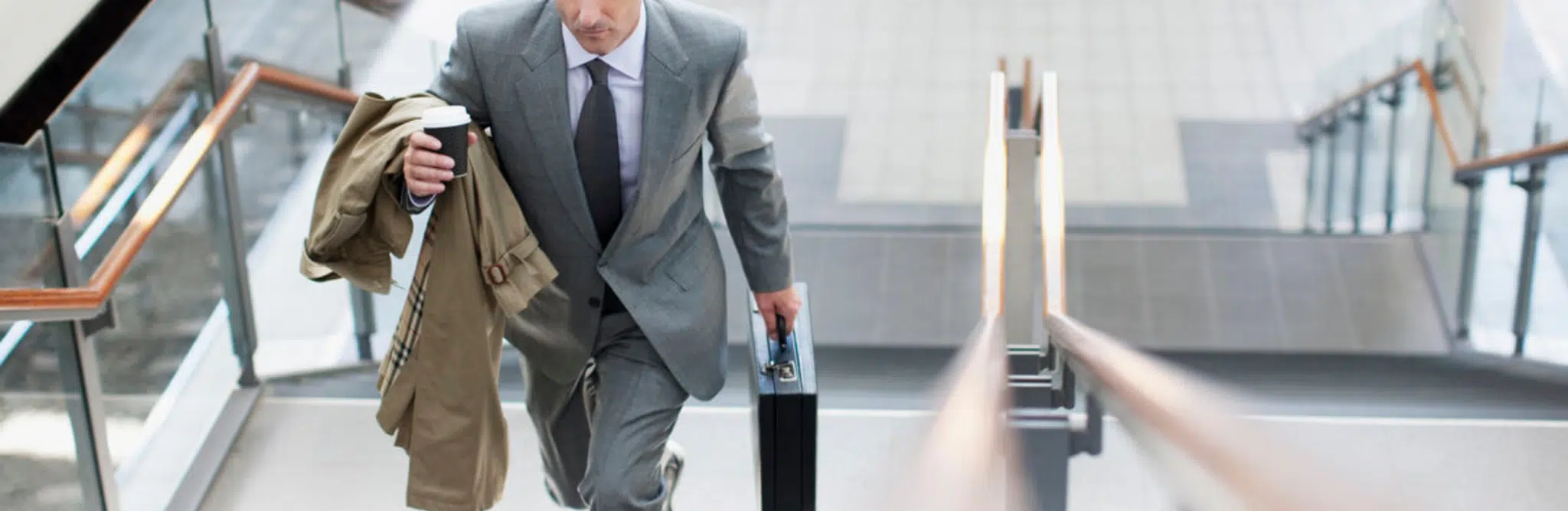



For much of the past five years, conversations surrounding commercial office real estate have focused on one question: Will employees ever return to the office?
While hybrid work remains firmly established across many industries, recent market indicators suggest the conversation is shifting. Rather than debating whether offices still matter, organizations are increasingly asking what kind of workplaces employees are willing to return to and what investments are necessary to support them.
One of the strongest signals comes from San Francisco, a market that has long been viewed as a bellwether for the national office sector.
According to a recent JLL report, companies are expected to lease approximately 10 million square feet of office space in San Francisco during 2026, the highest annual demand since 2019. Leasing activity has already reached 5.5 million square feet through the first half of the year, while the city has recorded four consecutive quarters of positive net absorption, reducing available office inventory for the first time in years.
While San Francisco remains a unique market, it reflects a broader national trend. Office demand is no longer recovering evenly, but companies are making deliberate investments in high-quality workplaces that support collaboration, innovation, and employee experience.
As organizations continue bringing employees back into physical workspaces, another conversation deserves equal attention.
How do you secure offices that are becoming busier, more dynamic, and increasingly occupied after years of fluctuating attendance?
Return-to-Office Is Reshaping Commercial Properties
Return-to-office mandates have generated plenty of headlines, but they have also fundamentally changed how commercial buildings operate.
Instead of maintaining predictable five-day occupancy patterns, many office buildings now experience highly variable traffic throughout the week. Tuesdays, Wednesdays, and Thursdays often resemble pre-pandemic activity, while Mondays and Fridays remain comparatively quiet.
According to the Kastle Back to Work Barometer, occupancy across thousands of U.S. office buildings recently reached its highest post-pandemic level, with Class A office properties averaging nearly 79% occupancy while overall office occupancy climbed to 56.3%, the strongest weekly average since 2020.
These fluctuating occupancy patterns create new operational challenges.
Buildings must now secure environments that transition rapidly between periods of high activity and relative emptiness. Employees, visitors, vendors, contractors, food delivery drivers, and service providers all move throughout properties on varying schedules, making it more difficult to distinguish normal building activity from suspicious behavior.
The result is a more complex security environment than many office buildings were originally designed to support.
Modern Offices Have Become Mixed-Use Ecosystems
Modern commercial office properties have evolved beyond simply being places where employees work from nine to five.
Now, campuses frequently include:
- Retail and restaurant space
- Fitness centers
- Parking garages
- Conference facilities
- Outdoor gathering areas
- Shared tenant amenities
- Package and delivery rooms
As companies compete to attract employees back into the workplace, these amenities have become increasingly important.
Ironically, they also expand the property’s security footprint.
Each entrance, parking structure, loading dock, lobby, amenity area, and tenant suite represents another point where unauthorized access, theft, vandalism, or workplace violence could occur.
Traditional security strategies built around locked doors and passive surveillance cameras have become insufficient for managing these increasingly active environments.
Office Buildings Are Becoming Busier Again
The renewed demand for premium office space is an encouraging sign for the commercial real estate industry. As more organizations invest in bringing employees back to the workplace, office buildings are beginning to regain the energy and activity that defined them before the pandemic. While this resurgence presents significant opportunities for property owners and managers, it also introduces a new set of operational and security considerations.
Higher occupancy naturally leads to increased activity throughout a building. Employees return to the office on varying schedules, clients and business partners visit for meetings, contractors complete tenant improvements, vendors make routine service calls, and food delivery drivers, couriers, and maintenance personnel move through the property throughout the day. Common areas, conference facilities, fitness centers, parking garages, and other shared amenities experience greater use as buildings become more active.
Each of these interactions represents a normal part of a thriving commercial property. At the same time, every additional person entering the building creates another opportunity for unauthorized access, theft, workplace disruptions, or other security incidents if activity is not properly monitored.
This changing environment requires property owners to strike a careful balance. Modern office buildings must remain welcoming and accessible while maintaining the security measures necessary to protect tenants, employees, visitors, and assets. Creating that balance is increasingly important as organizations work to encourage employees back into physical workplaces.
Today’s employees have different expectations than they did just a few years ago. They are returning to offices that have been redesigned around collaboration, flexibility, and employee experience. They expect buildings that are clean, professionally managed, technologically advanced, and above all, safe. Whether arriving before sunrise, working late into the evening, meeting with clients, or utilizing shared amenities throughout the day, employees want confidence that the spaces they occupy are actively protected.
As a result, security has become more than an operational necessity. It’s become an integral part of the workplace experience and an increasingly important component of tenant satisfaction. For property owners competing to attract and retain high-quality tenants, demonstrating a visible commitment to safety goes beyond simply being a best practice. Instead, it’s a competitive advantage that both reinforces confidence in the property, and supports long-term occupancy.
Today’s Security Risks Extend Beyond Theft
Commercial office security has traditionally been centered on protecting buildings after hours. Security programs were primarily designed to deter burglary, prevent unauthorized entry during evenings and weekends, and document incidents that occurred when properties were largely unoccupied.
Today’s threat landscape is far more complex.
Modern commercial properties deal with a broad spectrum of security challenges that extend far beyond overnight break-ins. Property managers are responsible for protecting busy, highly active environments where hundreds or even thousands of people move throughout the building each day. Employees, visitors, contractors, vendors, delivery drivers, and service providers all require varying levels of access, making it increasingly difficult to distinguish routine activity from behavior that could pose a security risk.
As a result, security teams must be prepared to address a wide range of concerns, including unauthorized access to tenant spaces, workplace violence, vehicle break-ins, package theft, trespassing, vandalism, homeless encampments near building entrances, parking garage incidents, loading dock activity, and contractor verification. Each of these risks presents unique operational challenges, and many require a different response than traditional after-hours security measures were designed to provide.
Perhaps more importantly, many of today’s security incidents occur during normal business hours rather than in the middle of the night.
An individual might “tailgate” through a secured entrance by following an employee into the building without presenting credentials. A visitor dispute in the lobby may escalate into a physical confrontation. An unauthorized person may attempt to access tenant suites by posing as a contractor or delivery driver. Suspicious activity around loading docks or parking structures can develop while employees are arriving, leaving, or moving throughout the property.
These incidents often unfold in a matter of minutes, leaving little time for property staff to recognize a developing situation, verify what is happening, and determine the appropriate response.
This shift has fundamentally changed what organizations should expect from their security programs. While surveillance footage remains valuable for investigations, recorded video alone does little to prevent an incident already in progress. Effective security today depends on situational awareness in real time. Property teams need the ability to identify suspicious behavior as it develops, assess the level of risk, and respond before a situation escalates into a larger safety concern.
That’s why so many commercial property owners are moving beyond passive surveillance toward proactive security solutions that combine intelligent technology with human oversight. Real-time monitoring enables trained security professionals to evaluate context, distinguish between legitimate activity and potential threats, and coordinate an appropriate response when intervention is necessary. In today’s commercial office environment, that ability to move from observation to action has become one of the most important components of an effective security strategy.
Why Passive Surveillance Alone Is No Longer Enough
Generally, today’s commercial buildings already have some kind of cameras- the question is whether someone is actively watching them. Traditional CCTV systems are able to provide valuable documentation, but only after an incident occurs.
Unfortunately, reviewing footage rarely prevents property damage, protects employees, or stops theft already in progress.
Live video monitoring fundamentally changes that equation.
By combining AI-powered analytics with trained security professionals, suspicious activity can be identified, verified, and addressed as it happens.
Rather than waiting for a tenant to report suspicious behavior, monitoring specialists can assess unusual activity immediately.
If intervention is appropriate, operators can:
- Issue live audible warnings
- Notify onsite security
- Contact property management
- Coordinate directly with law enforcement
- Provide responding officers with continuous situational updates
This proactive approach helps interrupt incidents before they escalate into larger security events.
They will be the ones that create environments where tenants, employees, and visitors feel confident that both their workplace and their wellbeing are being actively protected.
The Future of Office Security: More Than Protecting Property
Commercial office buildings represent significant financial investments, but their greatest value has always been the people who work, visit, and conduct business within them. As organizations continue encouraging employees to return to the workplace, creating an environment where people feel safe has become just as important as providing modern amenities, collaborative workspaces, and premium tenant services.
Today’s office employees have choices about where and how they work. For many organizations, encouraging employees to spend more time in the office depends on delivering an experience that is productive, engaging, and secure. Safety is no longer an assumed feature of the workplace. It is an expectation that influences how employees perceive both their employer and the building itself.
When people feel confident that the environments they occupy are actively protected, they are more likely to fully engage with the workplace by:
- Utilizing shared amenities like fitness centers, cafés, and outdoor spaces
- Working later when projects or meetings require extended hours
- Participating in in-person meetings, collaboration sessions, and workplace events
- Welcoming clients, partners, and visitors with confidence
- Recommending their employer and workplace as an attractive place to build a career
These perceptions extend beyond employees. Tenants increasingly evaluate office properties based on the quality of day-to-day building operations, responsiveness to security concerns, and the visible commitment property management demonstrates toward protecting occupants. In a competitive leasing environment, where employers are carefully selecting office space to support recruitment and retention goals, a property’s security program has become part of its overall value proposition.
This represents a significant shift in how commercial office security should be viewed. Rather than functioning solely as an operational expense or a response to liability concerns, security has become an important contributor to tenant satisfaction, employee experience, and long-term asset performance.
The commercial office market is also entering a new chapter. While hybrid work is likely to remain a permanent part of the workplace landscape, recent leasing activity and return-to-office initiatives demonstrate that physical offices continue to play an essential role in fostering collaboration, innovation, and organizational culture. Companies are making substantial investments in renovating office environments, upgrading technology, and creating workplaces that employees genuinely want to use.
Those investments deserve an equally modern approach to protection.
Just as smart building technologies, occupancy analytics, connected building systems, and digital access control are reshaping how office properties operate, security strategies have to be designed to support these increasingly dynamic environments. Property owners and managers are recognizing that passive surveillance alone is no longer sufficient. Instead, they are shifting toward proactive risk management strategies that combine intelligent technology with real-time human oversight to identify suspicious activity, verify threats, and intervene before incidents escalate.
Modern security programs are designed to provide continuous situational awareness, helping property teams recognize developing risks, support faster decision-making, and create safer environments for everyone who enters the building.
As office attendance continues to increase and commercial properties become more active, the most successful buildings will not be defined solely by premium amenities, modern architecture, or high occupancy rates. They will be distinguished by their ability to deliver a workplace where tenants, employees, and visitors feel confident that their safety is a priority and where proactive security supports the overall experience of coming to the office.
Build a Stronger Security Strategy

Download Security Guides
Practical ebooks to help you strengthen your security and solve your challenges.

Discover Industry Security Solutions
See how ECAM protects your industry with solutions designed to deter crime, reduce losses, and keep operations moving.