
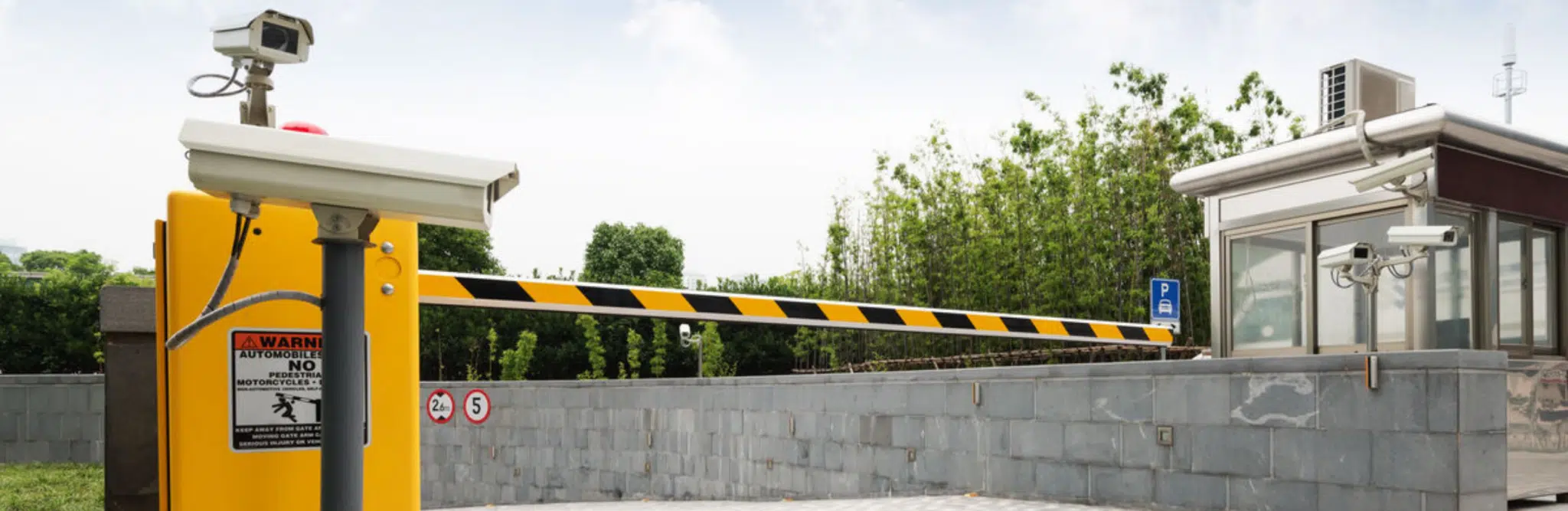



How Integrated Video Monitoring Helps Facilities Secure the Flow of People, Vehicles, and Products
Food processing facilities, distribution centers, cold storage warehouses, and agricultural operations depend on one thing above all else: the continuous flow of people, vehicles, and inventory.
Employees need access. Contractors need to work. Trucks need to arrive and depart. Products need to move through facilities without unnecessary delays.
But every movement through a gate, door, loading area, or restricted zone creates a security decision.
Who is entering? Are they authorized? Where are they going? And perhaps most importantly, can the organization verify that what the access control system recorded is what actually happened?
Traditional access control security can answer part of that equation. Integrated video monitoring adds the visibility and context needed to understand the entire event.
The Limitations of Traditional Access Control
Access control systems are essential for determining who should be allowed into a facility or restricted area.
But credentials only establish permission.
A badge reader can confirm that an authorized credential was used. It cannot necessarily confirm that the authorized employee was the person who actually entered.
Similarly, an automated gate may recognize an approved vehicle, but that information alone does not provide complete visibility into the driver, passengers, surrounding activity, or what happens after the gate opens.
This creates a fundamental distinction between controlling access and understanding access.
Modern facilities need both.
From Access Control to Access Intelligence
Entrances are not static security checkpoints.
They are dynamic operational environments experiencing constant activity from:
- Shift changes
- Contractor arrivals
- Deliveries
- Visitors
- Equipment outages
- Peak production periods
- Employee movement
- Vehicle traffic
That complexity creates opportunities for security procedures to break down.
Potential risks include:
- Tailgating and piggybacking
- Shared or borrowed credentials
- Propped-open doors
- Unauthorized vehicle access
- Visitors entering restricted areas
- Unauthorized after-hours activity
- Temporary access workarounds
- Suspicious activity around gates and perimeters
The challenge is often not that an organization lacks an access control system.
The challenge is determining whether that system is working as intended in the real world.
Why Video Monitoring Is the Validation Layer
Combining access control with intelligent video monitoring creates a more complete picture of activity throughout a facility.
The relationship is straightforward:
- Access control establishes permission
- Video establishes visibility
- AI provides context
- Monitoring enables response
Instead of viewing an access event as an isolated transaction, security teams can evaluate the complete sequence of activity.
A credential is presented.
A door opens.
A person enters.
Someone follows behind.
Or perhaps a vehicle passes through a gate and moves somewhere it should not.
Individually, these events provide limited information. Viewed together, they provide context.
That is the difference between knowing a door opened and understanding what happened when it opened.
How AI Adds Context to Access Control Security
Large facilities may generate thousands of access events every day, making it impractical for security personnel to manually review every movement.
AI-powered video analytics can help identify events that warrant additional attention.
Depending on the environment and systems deployed, intelligent monitoring can help security teams identify activity such as:
- Unexpected movement around access points
- Activity in restricted areas
- After-hours access
- Perimeter activity
- Unusual vehicle behavior
- Access events that require further verification
AI security software helps narrow the field of activity that requires human attention.
Trained monitoring professionals can then evaluate the context surrounding an event and determine whether intervention or escalation is appropriate.
This human-guided approach allows organizations to benefit from automation without relying exclusively on automated decision-making.
Protecting Operational Flow Without Creating Friction
Security cannot become the bottleneck.
In high-volume environments, excessive manual checkpoints and security procedures can slow employees, drivers, contractors, and products.
When security creates too much friction, it can also encourage people to find workarounds that undermine the controls organizations are trying to enforce.
Intelligent video monitoring provides another approach.
Rather than relying exclusively on additional onsite personnel or manual verification, organizations can maintain continuous visibility around critical access points while allowing normal operations to continue.
The objective is not to stop the flow.
It is to make that flow more visible, more controlled, and more intelligent.
Why Gate Security Requires More Than Access Authorization
Vehicle gates present many of the same challenges as pedestrian access points, often at a much larger operational scale.
A gate system may authorize a truck to enter, but effective gate security requires understanding the broader event.
Organizations may need visibility into:
- The vehicle
- The driver
- Arrival and departure activity
- Surrounding conditions
- Loading and unloading activity
- Movement after entry
Gate management technology and video monitoring can provide this additional verification while helping facilities maintain efficient traffic flow.
For distribution centers and other high-volume supply chain environments, that balance is particularly important.
A secure gate should not unnecessarily slow operations, but efficient operations should not come at the expense of security.
Connecting Security, Operations, and Compliance
The value of integrated video intelligence extends beyond preventing unauthorized access.
Video can also help organizations:
- Investigate incidents
- Validate access events
- Identify operational vulnerabilities
- Review security procedures
- Reconstruct events
- Create stronger records of what occurred
This becomes particularly important when an organization needs to demonstrate that an access-control policy was not simply established, but actually followed.
Questions may include:
Who entered?
When did they enter?
Where did they go?
What happened after access was granted?
Were established procedures followed?
If something went wrong, can the organization reconstruct the event?
Integrated video monitoring helps transform those questions from assumptions into evidence.
Building a More Complete Physical Security Strategy
The future of access control security is not about choosing between access control and video surveillance.
It is about bringing them together.
Access control provides the permission layer.
Video provides the visibility layer.
AI provides the intelligence layer.
Real-time monitoring provides the response layer.
Together, these capabilities create a more comprehensive approach to protecting the movement of people, vehicles, products, and assets throughout a facility.
The Future of Access Control Is Access Intelligence
Modern physical security requires organizations to understand more than who has permission to enter.
They need visibility into what happens when that permission is used.
By combining access control with video intelligence, AI-powered analytics, and real-time monitoring, organizations can gain greater context around access events without creating unnecessary friction for normal operations.
For supply chain environments, that visibility begins at one of the most important control points in the entire operation: the gate.
Because the question is no longer simply, “Who has access?”
It is, “Can we see, understand, and respond to what happens when that access is used?”
Build a Stronger Security Strategy

Download Security Guides
Practical ebooks to help you strengthen your security and solve your challenges.

Discover Industry Security Solutions
See how ECAM protects your industry with solutions designed to deter crime, reduce losses, and keep operations moving.