


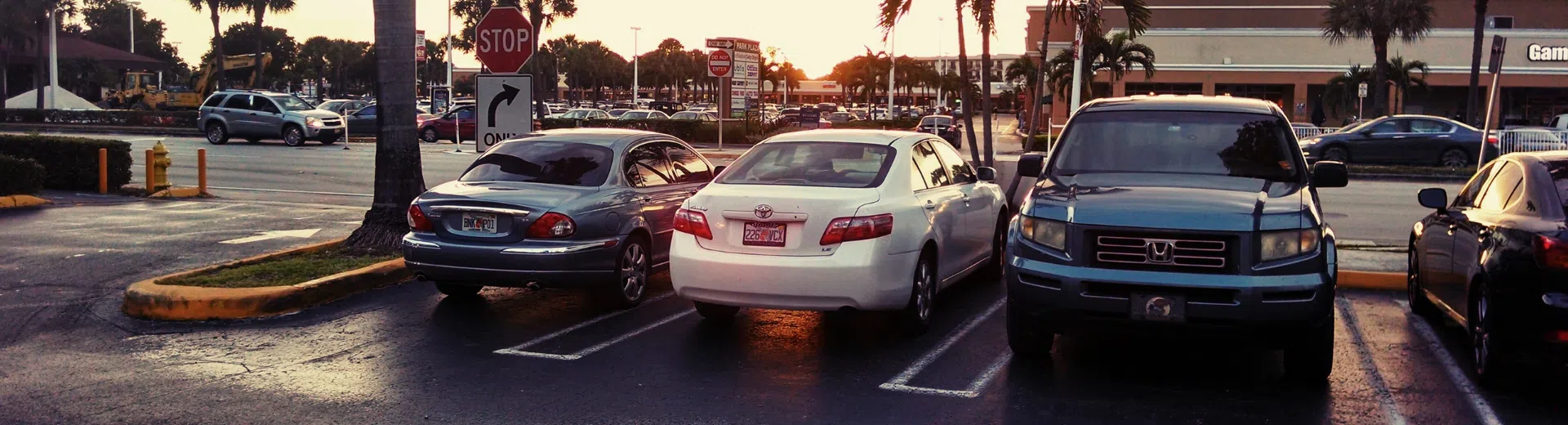


A commercial property can have security cameras throughout its parking lot, warning signs posted at every entrance, and regular security patrols. From the outside, it may appear to have a comprehensive security program.
But what happens when someone begins checking vehicle doors after hours? Or when an unauthorized individual enters a restricted parking area? What if suspicious activity is captured on camera, but nobody becomes aware of it until the following morning?
The issue isn’t necessarily a lack of security equipment. It’s whether the different security measures are designed to work together.
Effective parking lot security systems do more than capture video or establish a visible security presence. They connect coverage, intelligent detection, professional verification, and appropriate response procedures into a coordinated approach to property protection.
For commercial property owners, facility managers, and security directors, understanding how those elements work together is essential to choosing a system that addresses the property’s actual risks.
Buying Security Equipment Isn’t the Same as Building a Security System
Parking lots present a unique security challenge because they combine open access, valuable personal property, pedestrian activity, and frequent vehicle movement.
Depending on the property, the same lot may serve employees, customers, residents, delivery drivers, contractors, and visitors. Activity can vary significantly throughout the day, and some areas may remain accessible even when the associated business is closed.
Common concerns include vehicle break-ins, theft, vandalism, trespassing, unauthorized vehicle activity, and property damage.
Addressing those risks often involves multiple security measures. Cameras provide visibility. Lighting improves the environment for occupants and surveillance equipment. Security personnel can provide an onsite presence. Access restrictions and established procedures help define how different areas should be used.
But installing these elements independently doesn’t necessarily create a coordinated security program.
Consider a property with cameras recording activity throughout the parking lot. If nobody reviews relevant footage until an incident has already been reported, the system may provide valuable evidence but limited opportunity for earlier intervention.
Similarly, a security patrol may provide an important physical presence but cannot continuously observe every corner of a large property.
The question isn’t whether those measures have value. They do.
The question is whether the overall security approach accounts for what happens when suspicious activity is identified.
What Should Parking Lot Security Systems Actually Accomplish?
Before choosing equipment or comparing parking lot security services, businesses should establish what they expect the system to accomplish.
Three fundamental capabilities provide a useful starting point.
Visibility: Can the System See What Matters?
Security coverage should reflect the property’s layout, access points, operating conditions, and known vulnerabilities.
That might include entrances and exits, vehicle parking areas, pedestrian routes, loading zones, or locations with limited natural visibility.
The goal isn’t necessarily to watch every square foot of pavement. It’s to establish useful coverage of areas and activities relevant to the property’s security needs.
Verification: Can the System Determine What Deserves Attention?
Parking lots are active environments.
People walk between vehicles. Drivers wait for passengers. Employees arrive early or leave late. Deliveries occur outside standard operating hours.
Those activities aren’t inherently suspicious.
A capable security operation needs a way to distinguish routine activity from events that may warrant closer attention.
AI-assisted video analytics can help identify defined activity, while trained monitoring professionals provide the judgment needed to evaluate relevant events in context.
Response: What Happens When a Concern Is Confirmed?
Visibility and verification become more valuable when they’re connected to an appropriate response.
Depending on the situation and available capabilities, that response might involve continued observation, activating an onsite audio warning, contacting designated property personnel, or escalating verified activity to law enforcement.
The procedures should be established before an incident occurs.
The effectiveness of a security system depends not only on what it detects, but also on what happens after that activity is identified.
These three functions provide a practical framework for evaluating the technologies and services available for parking lot protection.
Fixed Security Cameras: The Foundation of Parking Lot Visibility
Permanent security cameras are a common component of commercial surveillance systems.
Installed around buildings, parking structures, entrances, or other established locations, fixed cameras can provide consistent coverage of important areas.
They can support incident investigations, document activity, and provide video to professional monitoring personnel when integrated with compatible systems.
But camera effectiveness depends on more than installation.
Placement, field of view, image quality, lighting conditions, and environmental obstructions all influence what the system can capture.
A camera overlooking a vehicle entrance may provide useful visibility into arriving and departing traffic, while another positioned near a pedestrian access point may serve a different purpose.
Likewise, a camera capable of producing clear images during daylight may face additional challenges in poorly illuminated areas or under changing nighttime conditions.
These considerations make professional system design important.
A well-designed camera network should reflect how the property is used rather than simply maximizing the number of devices installed.
However, even a properly designed camera system has limitations if its only function is recording.
Video footage can help explain what happened after an incident. When paired with intelligent detection and professional remote monitoring, the same camera infrastructure may also support earlier awareness of relevant activity.
Parking Lot Security Towers: Extending Coverage Where Fixed Cameras Fall Short
Not every parking lot can be effectively covered using permanent cameras alone.
Large outdoor properties, temporary parking areas, overflow lots, and locations with changing layouts may present installation challenges.
Running permanent cabling across these environments can be impractical, particularly when the security requirement is temporary or the location lacks suitable infrastructure.
Mobile surveillance units, sometimes referred to as parking lot security towers, provide an alternative approach.
Depending on their configuration, these systems can combine elevated cameras, power infrastructure, connectivity, video analytics, and professional monitoring capabilities in a relocatable platform.
For example, a retail center may need additional surveillance around a seasonal overflow lot. An industrial property may require temporary coverage while construction changes vehicle access patterns. A large commercial parking area may have a section where existing fixed cameras provide limited visibility.
Mobile units can help address these situations without requiring the same permanent installation approach.
They’re also useful as supplemental coverage.
A business may use fixed cameras around established entrances and buildings while deploying mobile surveillance units to extend visibility into outdoor areas where conditions change.
The objective isn’t to replace permanent cameras whenever a mobile option is available.
It’s to choose infrastructure that matches the property’s security requirements and operational realities.
And just like fixed surveillance systems, mobile units provide greater operational value when relevant video activity can be reviewed and acted upon through professional monitoring.
Professional Monitoring: Turning Camera Activity Into Security Awareness
Imagine an individual enters a commercial parking lot after the associated business has closed.
The person begins moving between parked vehicles, stopping near several doors.
A recording-only camera system may capture the activity, preserving footage that can be reviewed if an incident is later reported.
A professionally monitored system can support a different process.
AI-assisted analytics may identify activity that meets established detection criteria and generate an event for review.
A trained monitoring professional can then assess the footage and determine whether the behavior requires attention under the property’s monitoring procedures.
If the activity warrants intervention, the operator can initiate the appropriate response.
That might include an audible warning through an onsite speaker, notifying a designated property contact, or escalating a verified event according to established protocols.
The security process connects four functions:
Camera Coverage → Intelligent Detection → Human Verification → Defined Response
Each serves a distinct purpose.
Cameras capture the activity. Analytics help identify relevant events. Monitoring professionals evaluate the situation. Response procedures establish the next steps.
This distinction is particularly important for parking lot security because legitimate activity can resemble suspicious behavior when viewed without context.
Someone approaching multiple vehicles might be looking for a misplaced car. A person remaining in a parked vehicle may be waiting for another individual. A delivery driver may enter a property outside its standard business hours.
An automated alert alone doesn’t establish that a threat exists.
Professional verification helps determine which events warrant attention and which do not.
And when an event does require action, established response procedures help ensure the operator knows how to proceed.
Where Do Parking Lot Security Guard Services Fit?
Security personnel remain an important consideration for properties that require a physical onsite presence.
Depending on the assignment, parking lot security guard services may support access management, patrol activity, direct assistance, enforcement of property rules, or other responsibilities that require someone to be physically present.
Remote video monitoring serves a different purpose.
A professionally monitored surveillance system can provide visibility across designated camera locations, identify relevant activity through analytics, and support verification and response without requiring a guard to physically observe every area.
Neither approach fulfills every security requirement.
For example, a property that regularly requires personnel to interact with visitors or manage a controlled entrance may need onsite staffing.
Another property may primarily need surveillance of a large outdoor parking area after hours, where professionally monitored cameras can provide a practical approach to identifying and addressing suspicious activity.
Some properties may benefit from combining both capabilities.
In a hybrid security model, remote monitoring can support broader surveillance while onsite security personnel handle responsibilities that require a physical presence.
Monitoring professionals may also be able to communicate verified events to designated onsite personnel when the service model and response procedures support that coordination.
The goal isn’t to choose between guards and cameras based on a universal assumption about which is better.
It’s to understand the responsibilities each solution needs to fulfill.
When evaluating parking lot security, businesses should determine which activities require physical presence, which require continuous video visibility, and how those capabilities should work together.
Why Response Procedures Matter More Than Equipment Lists
Consider two commercial parking lots equipped with comparable cameras, analytics, and professional monitoring capabilities.
At the first property, suspicious activity generates an alert, but the response expectations haven’t been clearly established.
Should the monitoring professional issue an audio warning? Contact property management? Continue observing? Escalate immediately?
Without appropriate site-specific procedures, the next steps may be unclear.
At the second property, the monitoring program includes established instructions for evaluating relevant activity and determining the appropriate response.
Restricted areas have been identified. Property contacts are documented. Escalation requirements are defined. The monitoring team understands which situations warrant intervention and what actions are authorized.
The technology may be similar, but the security operations are not.
This is why response planning deserves attention during system design, not just after an incident occurs.
A useful monitoring program should account for the property’s operating hours, authorized activity, restricted locations, access expectations, and communication requirements.
It should also establish what happens when suspicious activity cannot be immediately verified or when a designated contact is unavailable.
The precise procedures will vary by property and service agreement.
A retail parking lot, for example, may have different access expectations from a gated industrial facility or a multifamily residential garage.
The monitoring approach should reflect those differences.
A security system becomes more effective when the people responsible for monitoring and response understand what they’re expected to do before an incident happens.
That coordination is what connects individual security technologies into a more complete protection strategy.
How to Evaluate Parking Lot Security Services
A property owner comparing security providers may receive proposals involving different combinations of cameras, mobile surveillance units, monitoring services, and onsite personnel.
Those proposals can be difficult to evaluate if the comparison focuses primarily on equipment or staffing levels.
A more useful approach is to assess how each solution addresses the property’s actual security requirements.
| Evaluation Area | What to Look For |
| Coverage | A surveillance design that addresses relevant access points, activity areas, and known visibility limitations |
| Detection | Technology capable of identifying defined activity that may warrant review |
| Verification | Trained personnel who can assess relevant video events before determining whether action is necessary |
| Response | Established procedures for warnings, notifications, escalation, and other authorized actions |
| Physical presence | An understanding of which responsibilities require onsite security personnel |
| Flexibility | Options for adapting coverage when layouts, access patterns, or operating requirements change |
| Maintenance | Clear responsibility for equipment performance, connectivity, and ongoing support |
| Service accountability | Defined ownership of installation, monitoring, response procedures, and system maintenance |
It’s also worth considering how the property may change.
A retail center may expand parking capacity. A warehouse may introduce additional trailer parking. A multifamily property may experience changes in vehicle access or common-area use.
Security requirements should be reassessed when those operational conditions change.
Businesses should also understand whether a proposed provider handles only one part of the system or can support multiple functions, including design, installation, monitoring, and maintenance.
A coordinated service model can simplify accountability, although the appropriate arrangement depends on the property’s existing infrastructure, staffing, and security objectives.
The most valuable proposal isn’t necessarily the one with the longest equipment list.
It’s the one that clearly explains how the proposed capabilities address the property’s risks and who is responsible for keeping the system effective.
The Best System Is the One That Connects Coverage to Action
There is no single parking lot security configuration that makes sense for every commercial property.
A small office parking area has different requirements from a large distribution center, regional shopping center, or multifamily residential complex.
Some properties may need permanent camera coverage and recorded footage.
Others may benefit from intelligent detection and professional remote video monitoring.
Temporary or changing outdoor areas may require mobile surveillance units. Locations with responsibilities that demand physical presence may also need onsite security personnel.
The right combination depends on how the property operates and which risks need to be addressed.
But regardless of the specific equipment or services selected, the underlying principles remain consistent.
The system should provide useful visibility into relevant activity.
Potential threats should be evaluated with appropriate context.
And verified events should be connected to clearly defined response procedures.
When those functions work together, parking lot security becomes more than a collection of cameras, towers, and patrols.
It becomes a coordinated approach to identifying and addressing security concerns.
The question isn’t simply what security equipment a parking lot has. It’s whether that equipment is connected to a process that can turn relevant activity into appropriate action.
Build a Parking Lot Security System Around Your Property’s Risks
Every parking lot presents different challenges, from unauthorized access and vehicle-related incidents to changing traffic patterns and areas with limited visibility. ECAM helps businesses evaluate their security needs and develop solutions combining strategically designed camera coverage, intelligent detection, professional remote video monitoring, and flexible mobile surveillance. Speak with an ECAM expert about the right security approach for your property.
Build a Stronger Security Strategy

Download Security Guides
Practical ebooks to help you strengthen your security and solve your challenges.

Discover Industry Security Solutions
See how ECAM protects your industry with solutions designed to deter crime, reduce losses, and keep operations moving.


