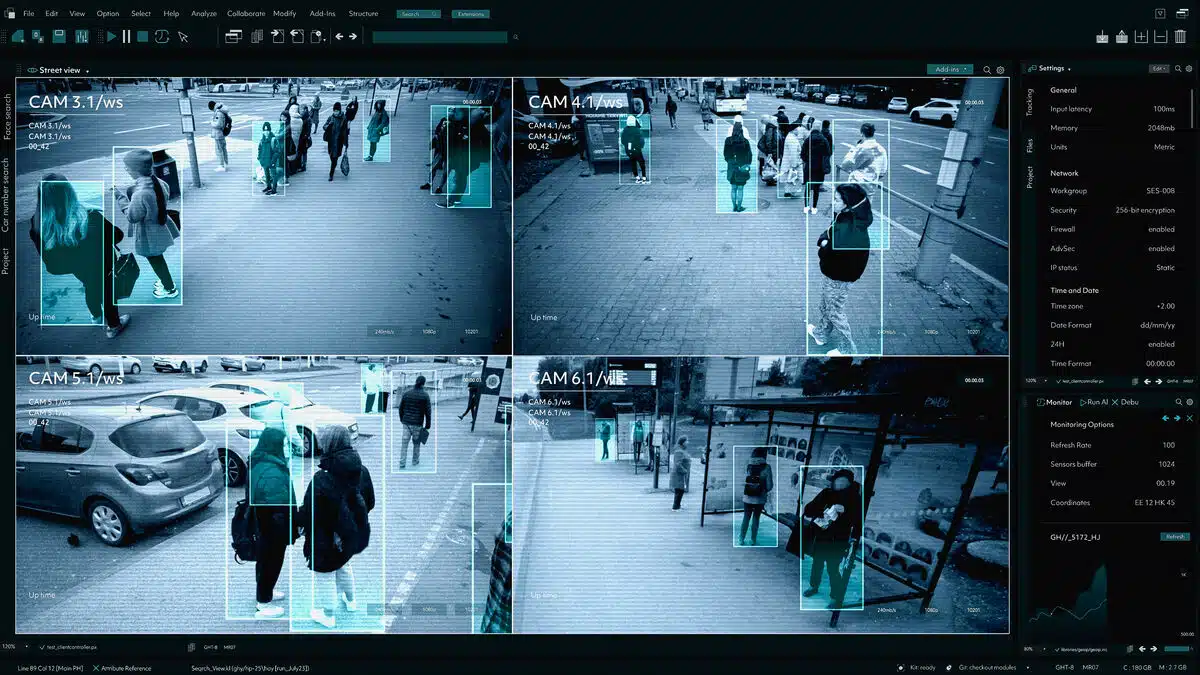


Cameras produce video. Security systems generate alerts. Intelligence connects events to decisions.
As investment in data centers, power infrastructure, and other critical assets accelerates, the physical security challenge is becoming more complex. Organizations are no longer protecting individual buildings or defined perimeters alone. They are responsible for an interconnected network of construction sites, equipment yards, transportation routes, substations, warehouses, and operational facilities.
Each environment presents different risks, but the consequences of a security failure can extend well beyond the location where an incident occurs. A stolen transformer can disrupt construction schedules. Unauthorized access to an equipment yard can put valuable assets at risk. A delayed response to a perimeter breach can leave critical infrastructure exposed.
Traditional video surveillance provides visibility into these environments, but visibility alone does not guarantee protection.
Security intelligence builds on that foundation by connecting detection, verification, context, decision-making, and coordinated response. The goal is not simply to capture more footage or generate more alerts. It is to understand what is happening, determine its significance, and take appropriate action before a manageable incident becomes a costly disruption.
Moving Beyond Traditional Video Surveillance
For decades, video surveillance has been a foundational component of physical security. Cameras provide visibility, recorded footage supports investigations, and monitoring teams respond to observed activity.
These capabilities remain essential. However, the ability to see an event does not necessarily mean an organization can respond to it effectively.
Consider a camera monitoring a construction site entrance. It captures an unfamiliar vehicle entering the property after hours, and an analytics platform generates an alert.
That information alone does not establish whether the vehicle represents a genuine threat, which assets may be at risk, or what action should follow.
Was the vehicle expected? Is the driver associated with an authorized contractor? Is valuable equipment stored nearby? Has similar activity occurred before?
And if the situation requires intervention, who is responsible for coordinating the response?
Without a process for evaluating these questions, organizations may have extensive surveillance coverage but limited ability to translate what they observe into effective decisions.
Security teams need more than footage and notifications. They need actionable information that connects an event to an operational decision.
This is where artificial intelligence, human verification, and coordinated response capabilities begin to change the equation.
The Evolution From Video to Security Intelligence
A comprehensive physical security strategy should follow a connected progression:
Video → Detection → Verification → Context → Decision → Response → Intelligence
Each stage builds on the previous one, creating a process that moves from observing activity to understanding its significance, responding appropriately, and applying what was learned.
Video: Establishing Visibility
Video provides the visual foundation for physical security.
Surveillance cameras allow security teams to observe entrances, perimeters, equipment yards, restricted areas, and other locations where unauthorized activity may occur.
Recorded footage can also provide evidence for investigations, incident reviews, and operational assessments.
However, capturing video is only the starting point. The information becomes more valuable when organizations can identify which activity deserves attention.
Detection: Identifying Potential Threats
AI-powered video analytics help security teams monitor large volumes of footage and identify activity that may warrant investigation.
Depending on the environment and system capabilities, this may include perimeter breaches, unauthorized access, suspicious movement, or unexpected activity around critical assets.
Rather than relying exclusively on personnel continuously watching camera feeds, intelligent analytics can direct attention toward events that meet defined security criteria.
Detection helps establish what deserves further investigation, but it does not necessarily confirm that an incident has occurred.
Verification: Separating Meaningful Events From False Alarms
Not every security alert represents a genuine threat.
Weather conditions, wildlife, authorized employees, maintenance activity, and operational exceptions can all generate alerts requiring additional review.
Human verification helps distinguish these situations.
Trained monitoring professionals can examine an event, evaluate the available evidence, and determine whether further action is necessary.
This step helps reduce unnecessary responses while allowing legitimate security concerns to receive appropriate attention.
Context: Understanding the Significance of an Event
Verification establishes what is happening. Context helps determine why it matters.
An individual approaching a perimeter fence may not indicate an immediate security concern.
However, the circumstances change if that person is approaching a restricted area containing high-value electrical equipment following an earlier unauthorized access attempt.
Time, location, observed behavior, access activity, and surrounding events can all influence the significance of a potential incident.
By considering these factors, security professionals can better distinguish routine activity from situations requiring intervention.
Decision: Determining the Appropriate Action
Once an event has been verified and evaluated, security teams must determine the appropriate response.
That decision should follow established procedures and reflect the circumstances of the incident.
Depending on the situation, the next step may involve issuing a live audio warning, notifying onsite personnel, dispatching a mobile patrol, contacting law enforcement, or escalating the matter to designated operational stakeholders.
The objective is to make informed decisions based on verified information rather than responding automatically to every alert.
Response: Turning Information Into Action
Detection and verification have limited value if a developing threat is not addressed.
Effective response requires clear escalation procedures, defined responsibilities, documented communication, and coordination between the appropriate parties.
Security teams need to understand who should be contacted, what information should be communicated, and how the incident should be documented.
Consistent reporting also allows organizations to review what occurred, evaluate whether established procedures worked as intended, and identify any unresolved concerns.
The goal is to close the gap between recognizing a potential threat and taking meaningful action.
Intelligence: Learning From Security Outcomes
The final stage extends beyond the individual incident.
Documented events, responses, and outcomes can contribute to a clearer understanding of recurring vulnerabilities, security patterns, and operational performance.
Repeated unauthorized access attempts at a particular entrance may indicate a need to review access procedures. Recurring suspicious activity near an equipment yard may suggest that additional surveillance coverage is warranted.
Over time, these insights can help organizations refine security procedures, prioritize resources, and make better-informed decisions.
This is what distinguishes security intelligence from traditional surveillance.
The objective is not simply to generate more alerts. It is to create a more effective process for identifying threats, coordinating responses, evaluating outcomes, and improving security performance.
Why Security Intelligence Must Follow the Asset Lifecycle
Critical infrastructure security cannot begin and end at the permanent facility perimeter.
Consider the lifecycle of a data center.
During construction, valuable copper, generators, transformers, heavy equipment, and other materials may be distributed across a large property. Temporary access points, changing perimeters, and rotating contractors introduce additional security considerations.
As equipment moves through the supply chain, risks extend to warehouses, transportation routes, staging yards, and delivery locations. Theft, tampering, or unauthorized diversion can affect equipment availability, project costs, and construction schedules.
As the facility approaches commissioning, security priorities change again. Permanent perimeter protection, access controls, restricted areas, and operational procedures become increasingly important.
These environments are connected, but they do not necessarily require identical security measures.
A lifecycle approach recognizes that physical security must adapt as assets move, construction progresses, and operational requirements evolve.
Mobile surveillance may be appropriate for temporary equipment yards or changing construction zones. Fixed camera systems and access controls may become more important as facilities approach operational readiness.
Across these stages, video analytics, human verification, and documented response procedures can provide a consistent foundation for identifying and managing security events.
For organizations overseeing multiple facilities or construction projects, coordinated monitoring and reporting can also help maintain visibility across geographically distributed locations.
Rather than treating each deployment as an isolated system, organizations can develop a broader strategy that connects protection throughout the infrastructure lifecycle.
The Role of AI and Human Verification in Physical Security
Artificial intelligence is making it possible to evaluate surveillance activity at a scale that would be difficult to achieve through manual observation alone.
AI-powered analytics can identify patterns, recognize defined events, and help monitoring professionals prioritize activity requiring attention.
However, detection should not be confused with a complete security response.
An algorithm may recognize a potential perimeter breach, but that does not guarantee the event has been interpreted correctly, the appropriate stakeholder has been contacted, or the situation has been resolved.
Physical environments introduce complexities that automated systems cannot always evaluate independently.
Construction schedules change. Authorized personnel enter areas outside normal working hours. Weather affects visibility, and multiple activities may occur simultaneously.
Human verification helps account for these conditions.
Combining AI-powered detection with trained monitoring professionals allows organizations to evaluate potential threats within their operational context and initiate appropriate escalation procedures.
This approach also changes how security performance should be evaluated.
The number of cameras installed or alerts generated may demonstrate system activity, but those figures alone do not establish whether a security program is effective.
More meaningful considerations include:
- The accuracy and quality of verified detections
- The consistency of incident escalation
- The timeliness of response
- The resolution of security incidents
- The ability to identify recurring vulnerabilities
- The effectiveness of established security procedures
These measures shift the conversation from how much activity a security system generates to what that activity accomplishes.
A security event should not be considered complete simply because an alert was issued or a guard was contacted.
The outcome matters.
Turning Security Intelligence Into Operational Value
When security information contributes to operational decisions, its value extends beyond detecting intrusions or preventing theft.
For organizations managing complex infrastructure, verified security events can provide meaningful insights across several functions.
Construction leaders can use incident reporting to identify recurring vulnerabilities that may threaten project schedules or expose valuable equipment.
Supply chain and logistics teams can benefit from visibility into security events around monitored storage facilities, staging locations, and delivery areas.
Security leadership can review documented incidents across multiple properties to identify recurring concerns, evaluate response procedures, and determine where resources may be needed.
Executive teams can use security reporting to better understand how physical risks affect asset protection, business continuity, and operational resilience.
These benefits depend on connecting security information with established operational processes.
Video monitoring does not replace construction management, logistics platforms, or enterprise risk management systems. However, it can provide valuable context that helps stakeholders investigate incidents and understand how physical security conditions affect their operations.
For organizations investing in large-scale AI infrastructure, this connection becomes increasingly important.
A security incident may occur at one facility, but the resulting disruption can affect equipment availability, construction milestones, and operational readiness elsewhere.
Understanding those connections helps elevate physical security from a reactive function to a more informed contributor to operational resilience.
How ECAM Helps Connect the Security Lifecycle
Effective physical security requires more than installing technology and waiting for an alarm.
ECAM combines AI-powered video analytics, professional live video monitoring, human verification, and coordinated response capabilities to help organizations protect critical assets across dynamic environments.
Depending on the requirements of a project or facility, these capabilities may include:
- Mobile Surveillance Units: Flexible monitoring coverage for temporary equipment yards, construction sites, and changing security requirements.
- Fixed camera systems: Persistent visibility around established entrances, critical equipment, and other high-priority areas.
- AI-powered video analytics: Identification of relevant activity that may require further investigation.
- Temporary gate management and access control: Support for authorized entry and vehicle activity throughout evolving construction environments.
- Live video monitoring: Human verification of potential threats and escalation according to established response procedures.
- Incident documentation and reporting: Records of verified events, actions taken, and information relevant to operational review.
As infrastructure projects evolve, these solutions can be adapted to support changing site conditions and security requirements.
AI-assisted detection helps identify potentially significant activity, while trained monitoring professionals provide verification, context, and coordinated escalation.
Consistent incident documentation helps organizations understand not only what occurred, but also how the situation was addressed and whether additional action may be necessary.
For hyperscalers, data center developers, general contractors, and infrastructure operators, this approach supports a more connected security strategy across construction, logistics, commissioning, and ongoing operations.
The objective is to move beyond isolated security deployments toward a scalable approach that connects monitoring technology, professional judgment, and response procedures throughout the asset lifecycle.
The Future of Physical Security Is Intelligence
The next generation of physical security will not be defined solely by the number of cameras installed or alerts generated.
It will depend on how effectively organizations connect what they observe to what they understand and how they respond.
Video provides visibility. AI helps identify activity that deserves attention. Human verification establishes confidence and context. Defined response procedures turn informed decisions into action, while documented outcomes help organizations improve over time.
Together, these capabilities create a connected progression:
Video → Detection → Verification → Context → Decision → Response → Intelligence
As the physical infrastructure supporting AI, cloud computing, and critical operations continues to expand, organizations need security strategies that can adapt throughout the asset lifecycle.
The goal is not simply to see more.
It is to understand what matters, respond effectively, and use what is learned to make better security decisions.
Build a Stronger Security Strategy

Download Security Guides
Practical ebooks to help you strengthen your security and solve your challenges.

Discover Industry Security Solutions
See how ECAM protects your industry with solutions designed to deter crime, reduce losses, and keep operations moving.