


Quick Answer
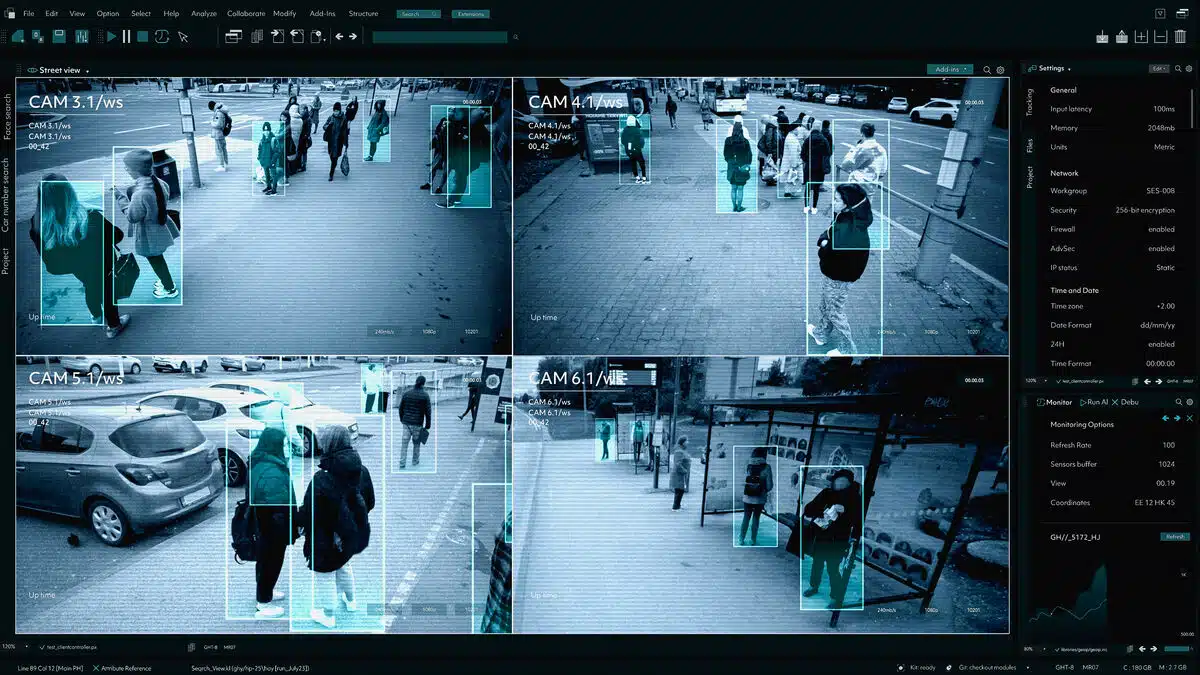
A virtual security guard is a security solution that combines surveillance cameras, AI-powered video analytics, and trained remote monitoring professionals to detect, verify, and respond to security threats in real time. Unlike a traditional security guard who must physically patrol a property, a virtual security guard can continuously monitor multiple areas simultaneously, intervene through live audio, and coordinate an appropriate response when suspicious activity is detected.
Key Takeaways
- A virtual security guard uses technology and trained professionals to monitor properties remotely.
- AI identifies suspicious activity, while human operators verify alerts and determine the appropriate response.
- Virtual security guards are commonly used to supplement or enhance traditional security, not necessarily replace it.
- They are particularly effective for after-hours protection, large outdoor areas, and remote sites.
- Businesses across construction, logistics, retail, automotive, multifamily, energy, and commercial real estate use virtual security guards to improve visibility and response times.
Table of Contents
- What is a virtual security guard?
- How does a virtual security guard work?
- How is a virtual security guard different from a traditional security guard?
- What can a virtual security guard do?
- When should businesses use a virtual security guard?
- Can a virtual security guard replace on-site guards?
- Frequently asked questions
- Bottom line
What Is a Virtual Security Guard?
A virtual security guard is a remote security service that actively monitors a property using surveillance cameras, AI, and trained security professionals instead of relying solely on physical patrols.
While the term “virtual” may suggest automation alone, modern virtual security guard solutions combine intelligent technology with human decision-making.
A typical solution includes:
- Commercial security cameras
- AI-powered video analytics
- A professional remote monitoring center
- Live audio communication
- Defined incident response procedures
- Real-time event documentation
The objective isn’t simply to observe activity, it’s to detect threats early and respond before they escalate.
Quick Answer
Is a virtual security guard a real person?
Yes. While AI helps identify suspicious activity, trained security professionals review alerts, assess situations, and initiate appropriate responses. Technology supports the process, but people remain responsible for making security decisions.
How Does a Virtual Security Guard Work?
A virtual security guard follows a structured process that combines continuous monitoring with real-time intervention.
Step 1: Cameras Monitor the Property
Strategically placed cameras observe entrances, parking lots, perimeters, loading areas, common spaces, and other high-priority locations.
Step 2: AI Detects Suspicious Activity
Video analytics continuously analyze camera feeds for events such as:
- Trespassing
- Loitering
- Unauthorized vehicle access
- Perimeter breaches
- After-hours movement
Rather than requiring someone to watch every camera, AI identifies events that require human review.
Step 3: Security Professionals Verify the Event
When an alert is generated, trained monitoring operators determine whether the activity represents:
- Normal operations
- Authorized personnel
- Environmental conditions
- A legitimate security threat
This verification process helps reduce unnecessary responses while ensuring genuine threats receive immediate attention.
Step 4: Appropriate Action Is Taken
Depending on the situation, operators may:
- Issue live audio warnings
- Notify designated contacts
- Contact law enforcement
- Continue monitoring until the situation is resolved
- Document the event for future reporting
How a Virtual Security Guard Works
| Step | Action | Purpose |
| Detect | Cameras and AI identify unusual activity | Continuous awareness |
| Verify | Monitoring professionals assess the alert | Reduce false alarms |
| Respond | Operators intervene or escalate | Real-time protection |
| Document | Incident reports and video are generated | Evidence and reporting |
How Is a Virtual Security Guard Different From a Traditional Security Guard?
Both approaches play an important role in commercial security, but they provide different capabilities.
| Virtual Security Guard | Traditional Security Guard |
| Monitors remotely | Patrols on-site |
| AI-assisted detection | Human observation |
| Continuous camera visibility | Limited line of sight |
| Can oversee multiple locations | Assigned to one property |
| Uses live audio intervention | Face-to-face interaction |
| Provides digital documentation | Manual incident reporting |
The biggest difference is that virtual security guards rely on technology to maintain continuous visibility, while traditional guards rely on physical presence.
Key Insight
A virtual security guard doesn’t simply watch cameras, it actively identifies, verifies, and responds to security events using both AI and trained security professionals.
What Can a Virtual Security Guard Do?
Depending on the system and response plan, virtual security guards can assist with:
- Detecting trespassing
- Monitoring after-hours activity
- Identifying perimeter breaches
- Protecting valuable equipment
- Watching parking lots and vehicle inventory
- Monitoring loading docks
- Observing restricted areas
- Issuing live audio warnings
- Coordinating emergency response
- Recording and documenting incidents
These capabilities help organizations improve both security and operational awareness.
When Should Businesses Use a Virtual Security Guard?
Virtual security guards are particularly valuable when organizations need consistent visibility across large or unattended properties.
Common applications include:
Construction Sites
Protect equipment, tools, and materials after hours.
Transportation & Logistics
Monitor warehouses, trailer yards, and loading docks.
Automotive Dealerships
Protect vehicle inventory and perimeter areas overnight.
Retail Centers
Monitor parking lots, storefronts, and service areas.
Multifamily Communities
Observe entrances, amenities, parking lots, and shared spaces.
Commercial Real Estate
Secure office parks, business campuses, and parking structures.
Energy & Utilities
Protect remote substations, solar farms, and other critical infrastructure.
Can a Virtual Security Guard Replace On-Site Guards?
Not always, and that’s one of the biggest misconceptions about virtual security guards.
Some properties may reduce the need for routine patrols by using remote monitoring, particularly after hours or in lower-risk areas.
However, many organizations benefit most from a hybrid security strategy that combines virtual security guards with on-site personnel.
For example:
- Virtual security guards provide continuous surveillance and rapid detection.
- On-site guards perform access control, customer assistance, inspections, and physical response when needed.
Together, these approaches can create broader coverage than either solution alone.
Decision Guide
| A virtual security guard may be a good fit if you… | Consider combining with on-site guards if you… |
| Need after-hours monitoring | Require access control or visitor management |
| Manage multiple properties | Need an immediate physical presence |
| Protect large outdoor areas | Have high daily visitor traffic |
| Want proactive threat detection | Require regular on-site patrols |
Frequently Asked Questions
Are virtual security guards real people?
Yes. AI helps detect potential threats, but trained monitoring professionals review alerts, assess situations, and determine the appropriate response.
Can a virtual security guard talk to people on my property?
Many solutions include live audio capabilities, allowing operators to communicate directly with individuals on-site when appropriate.
Can virtual security guards work with existing cameras?
Often, yes. Many providers can integrate remote monitoring with compatible commercial security camera systems already installed at a property.
Can a virtual security guard prevent crime?
While no security solution can eliminate every incident, real-time detection and intervention can help deter criminal activity and improve response times compared to passive surveillance alone.
What’s the difference between a virtual security guard and remote video monitoring?
Remote video monitoring is the underlying service that combines cameras, AI, and monitoring professionals. A virtual security guard refers to that service performing many of the functions traditionally associated with a security guard, such as monitoring, verifying incidents, communicating with individuals on-site, and coordinating responses.
Bottom Line
A virtual security guard is not software, nor is it simply someone watching surveillance cameras. It is a proactive security solution that combines AI-powered analytics, trained monitoring professionals, and real-time response procedures to help businesses detect, verify, and address threats as they occur. For organizations seeking broader visibility, faster response, and more efficient security operations, virtual security guards provide a modern approach that complements, and in many cases enhances, traditional physical security programs.