
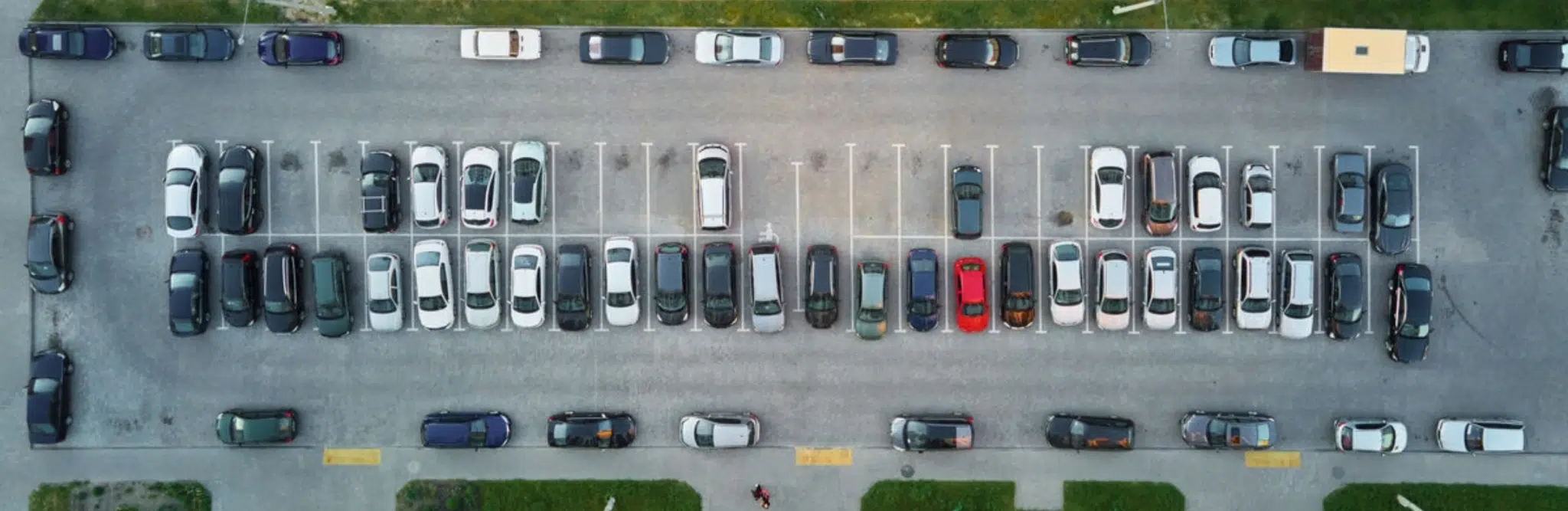



Something happens in your parking lot.
A vehicle is damaged. Property goes missing. Someone reports suspicious activity. An employee or customer says there was an incident outside the building.
One of the first questions is often:
Do we have it on camera?
Someone identifies approximately when the incident occurred, determines which parking lot camera may have captured it, and starts searching through recorded video.
If the camera was functioning, the incident happened within its field of view, and the image provides enough detail, the footage may help establish what happened.
That’s an important job for parking lot video surveillance.
But it also raises another question:
Why did someone have to report the incident before the video became useful?
Recorded footage can be valuable evidence. But modern parking lot surveillance can play a role before an incident is over, too.
The difference isn’t necessarily the video itself.
It’s what happens after the camera captures it.
Job #1: Document What Happened
Recording remains one of the fundamental purposes of video surveillance.
Good parking lot surveillance cameras can create a visual record that helps businesses understand events after they’ve occurred.
Depending on the incident and available camera coverage, footage may help establish when activity occurred, where it took place, what happened, which people or vehicles were visible, and how the event unfolded.
That can make recorded video useful when investigating reported incidents, documenting property damage, or providing relevant footage when appropriate.
There’s nothing inherently wrong with that model.
The limitation is timing.
A camera can capture excellent footage of an incident without anyone knowing the incident is happening.
If the security process begins only after someone reports a problem, the footage is primarily being used to answer:
What happened?
For many businesses, that’s valuable.
But it doesn’t have to be the only job their cameras perform.
Job #2: Detect Relevant Activity While It’s Happening
The next step is changing when video becomes useful.
Traditional recording stores footage so it can be retrieved later. Modern video analytics can help surface defined activity while it is occurring.
Instead of requiring someone to continuously watch every camera, analytics can help identify specific events or activity that meet established criteria.
That distinction matters in a parking lot.
Parking lots are active environments. People walk between vehicles. Employees arrive and leave. Customers come and go. Delivery vehicles stop. Cars enter, park, idle, and exit.
Simply detecting movement isn’t enough.
The objective is to focus attention on activity that may warrant review.
This is where modern parking lot surveillance begins moving beyond evidence collection.
Recording preserves information. Detection changes when that information becomes available.
But detection introduces another question.
Once the system identifies an event, who decides what it means?
Job #3: Put the Video in Front of Someone Who Can Act on It
An alert is not the same thing as a verified security concern.
Something still needs to happen between detection and response.
With professionally monitored parking lot video surveillance, relevant video events can be presented to trained monitoring professionals for review.
The process can look something like this:
Camera Captures → Analytics Surface → Human Verifies → Protocol Guides Response
The camera provides visibility.
Analytics help identify defined activity.
A trained monitoring professional reviews the event and determines what is actually occurring.
Established procedures help determine what happens next.
Depending on the situation and available capabilities, that may include continued observation, live audio intervention, notifying designated personnel, or escalating verified activity.
Technology helps identify the signal.
People determine what it means.
That human verification is particularly important in an environment where a great deal of activity is legitimate.
The footage hasn’t fundamentally changed.
What has changed is when someone sees it and what can still be done once they do.
The Same Parking Lot Camera Can Support Very Different Security Outcomes
A camera doesn’t determine the entire security strategy on its own.
What happens to its video matters just as much.
| Security Model | What Happens to the Video | When Someone Typically Reviews It | Primary Role |
| Recorded surveillance | Footage is stored | After an incident is reported or discovered | Documentation and evidence |
| Alert-based surveillance | Defined activity generates a notification | When the designated user reviews the alert | Awareness |
| Professionally monitored surveillance | Relevant activity is surfaced for trained review | While the event may still be occurring | Verification and opportunity for response |
Each model can serve a purpose.
The important thing is knowing which one you actually have.
A business expecting its parking lot security cameras to help identify activity while it’s occurring needs more than cameras capable of recording high-quality video.
It needs a process for detecting relevant events, reviewing them, and determining what should happen next.
Otherwise, the system may be performing a different job than the organization expects.
Having Footage and Having Useful Footage Aren’t the Same Thing
Whether video is reviewed during an event or afterward, it still needs to show something useful.
Imagine finding the exact recording of an incident only to discover that a parked vehicle blocked the relevant area.
Or that nighttime lighting made the activity difficult to understand.
Or that the camera’s field of view captured the general area but not the location where the event actually occurred.
Or that the camera wasn’t recording when everyone assumed it was.
Technically, the property had surveillance.
Operationally, it didn’t have the visibility it needed.
Useful parking lot security camera footage depends on more than whether a camera exists.
Camera placement, field of view, image quality, lighting, environmental conditions, obstructions, system health, and the purpose of each camera can all influence whether the resulting video is useful.
That’s why camera design should start with a question more specific than:
Where can we mount a camera?
A better question is:
What do we need to understand when we look at this area?
The answer should influence how the surveillance system is designed.
Parking Lots Don’t Look the Same All Day
Parking lot coverage has another challenge: the environment constantly changes.
An almost-empty lot may provide clear sightlines across a wide area.
Fill that same lot with vehicles and the view changes.
Cars and trucks create visual obstructions.
Delivery vehicles temporarily block areas.
Pedestrian patterns change as occupancy rises and falls.
Landscaping grows.
Lighting conditions shift throughout the day.
Construction can alter traffic patterns.
Seasonal activity can change how different portions of the property are used.
A parking lot camera that provides useful visibility under one set of conditions may provide a very different view under another.
That’s why surveillance coverage shouldn’t only be evaluated when cameras are first installed.
It should be evaluated under the conditions in which the property actually operates.
What can the cameras see during the busiest part of the day?
What changes at night?
What happens when the lot is nearly full?
Are important areas regularly obscured?
Has the property changed since the system was designed?
Parking lot surveillance isn’t something to validate once and assume will remain unchanged indefinitely.
The environment moves around it.
What Happens When Fixed Cameras Can’t Cover Everything?
Permanent cameras can provide consistent coverage across many parking environments.
But not every visibility problem has to be solved by installing another permanent camera.
A property may have a temporary blind spot created by construction.
A section of a parking lot may need additional attention during a particular season.
An expansion may create a new area requiring coverage before permanent infrastructure is available.
A remote portion of the property may lack the power or connectivity needed for a traditional installation.
In situations like these, mobile surveillance units can supplement permanent parking lot surveillance cameras by providing temporary or relocatable visibility where it’s needed.
The objective isn’t to choose between fixed cameras and mobile surveillance.
It’s to determine what combination provides the appropriate coverage for the property.
Security infrastructure should follow the need rather than forcing every need into the same type of infrastructure.
Don’t Wait for an Incident to Test Your Parking Lot Footage
There’s a simple way to learn a great deal about an existing surveillance system:
Use it before you need it.
Pull up footage from several parking lot cameras.
Don’t only look at what’s happening right now.
Retrieve footage from yesterday.
Look at the property during a busy period.
Look at it when the lot is nearly empty.
Review daytime footage.
Then review the same area at night.
Choose a specific time and see how quickly you can locate the corresponding video.
As you review it, ask:
Can you clearly understand what’s happening?
Are the areas you expect to see actually visible?
Do parked vehicles create blind spots?
Does nighttime footage provide enough detail?
Are any cameras obstructed or offline?
Could you efficiently find the right footage if someone reported an incident?
Then ask one more question:
If something requiring attention were happening in this footage right now, would anyone know?
That question reveals the difference between having a recording system and having an active video security strategy.
Decide What Job You Want Your Parking Lot Video to Do
Parking lot cameras can perform more than one job.
They can document an incident.
They can help identify relevant activity.
They can provide video for verification.
They can support a defined response while an event may still be unfolding.
But those capabilities don’t happen simply because cameras are present.
They depend on how the broader parking lot video surveillance system is designed.
If the objective is evidence, recorded video may fulfill an important need.
If the objective includes knowing about relevant activity sooner, the system also needs a way to detect and surface it.
If the objective is to determine whether that activity requires action, someone needs to review and verify it.
And if the organization expects a response, procedures need to establish what happens next.
That’s why the most important question isn’t necessarily:
Do we have it on camera?
It may be:
When did someone know it was happening?
What Would Your Parking Lot Footage Tell You Right Now?
Don’t wait until an incident forces you to find out whether your cameras provide the visibility you expect. Review what your system captures, where coverage breaks down, how quickly relevant activity becomes known, and what happens when something requires attention.Talk with ECAM about parking lot video surveillance that combines strategically designed camera coverage, intelligent detection, professional monitoring, and response protocols around your property’s security needs.
Build a Stronger Security Strategy

Download Security Guides
Practical ebooks to help you strengthen your security and solve your challenges.

Discover Industry Security Solutions
See how ECAM protects your industry with solutions designed to deter crime, reduce losses, and keep operations moving.