
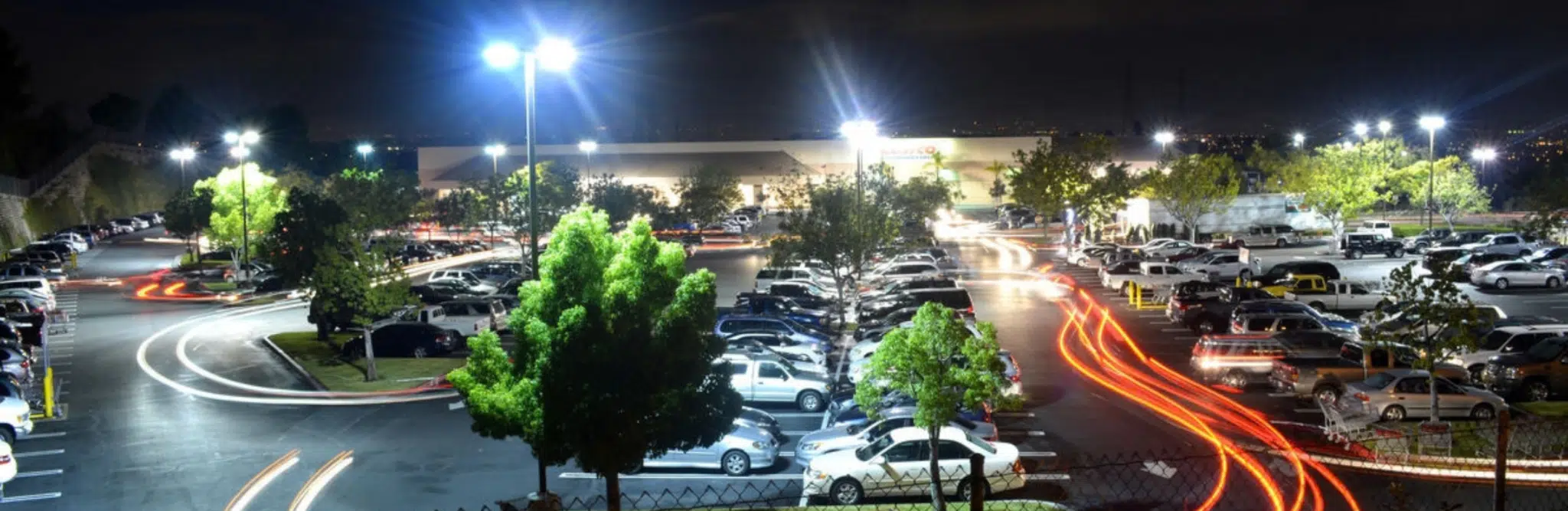



A retail security incident can become a concern for the entire property. A theft inside a store can lead to a confrontation at the entrance. Damage in a parking lot can become a tenant complaint, an insurance matter, and a maintenance expense. Repeated problems at one business can affect confidence in the entire shopping center.
Protecting a retail property means understanding those connections. Storefronts, service entrances, parking areas, and shared spaces need a coordinated approach that supports tenants while keeping the property accessible to customers and employees.
Retail security combines the people, technology, physical safeguards, and procedures used to protect a retail environment. Shopping center video security plays an important role, particularly when cameras connect to a monitoring and response process. Its effectiveness also depends on the surrounding conditions, including lighting, access, maintenance, and communication with the people operating the property.
For property managers, the program needs to work through everyday incidents and tenant concerns. Owners, facilities managers, and portfolio leaders also need confidence that the investment addresses the right risks and can be managed consistently. A complete strategy connects those priorities, from identifying recurring problems to evaluating coverage, response, and ongoing cost.
The Retail Risks That Reach Across a Property
Retail security planning should begin with the incidents affecting the businesses and people on site. Organized theft, repeated trespassing, vandalism, and parking lot incidents can create different security needs, even when they occur at the same property.
Organized retail crime and repeat incidents
Coordinated theft groups and repeat offenders create a problem that extends beyond an individual loss. When incidents recur, retailers and property teams need to understand where the activity develops, how people move through the property, and whether existing security procedures are addressing the pattern.
Incident history helps establish where proactive coverage is most useful. If theft-related activity repeatedly occurs near a service entrance or a particular parking area, the security plan can prioritize those views and the periods in which problems recur.
Live monitoring gives trained operators an opportunity to assess activity in those areas as it develops. When they observe an attempted intrusion, property damage, or escalating behavior, they can follow the property’s response procedures, including live audio intervention where available or contacting on-site security. The resulting footage and incident records can then support investigations and help refine coverage.
Theft escalation and personal safety
Retail theft also creates concerns about confrontation. Employees, security personnel, and customers can be affected when a situation involves threats, aggressive behavior, or a weapon.
Employees need reporting procedures that align with their employer’s policies, including how to request assistance. Property teams and monitoring personnel need clear escalation contacts and an understanding of when on-site security or emergency services should be involved.
Earlier awareness can help the responsible team assess a developing situation and coordinate assistance. The security plan should connect that awareness with an appropriate response, including procedures for urgent threats.
Vandalism and damage in shared spaces
Damage to storefronts, vehicles, doors, and other property creates work that continues after the incident ends. Teams may need to arrange repairs, retrieve footage, respond to tenant concerns, and support insurance documentation.
Recurring problems also affect how tenants view the property. A business that repeatedly experiences damage or threatening activity may question whether its employees and customers are adequately supported. Neighboring tenants may share that concern even if they have not experienced a direct loss.
Tenant confidence therefore belongs in the security discussion alongside physical damage and theft. It gives owners and property teams another reason to address recurring conditions and communicate clearly about the response.
Connecting Retailer and Property Responsibilities
Retailers have their own loss prevention practices and employee procedures. Property security needs to complement those responsibilities by addressing the entrances, exterior areas, and shared spaces that connect individual businesses.
Retailers and property teams should agree on how an incident moves from store-level reporting to property-level response. This is particularly important when activity continues into a shared walkway, service area, or parking lot.
Property managers are often the operational link between tenants, ownership, facilities teams, and security providers. Facilities managers help coordinate equipment and service requirements, while owners and real estate investment trust stakeholders make broader decisions about investment and portfolio standards.
Planning Coverage Around Retail Activity
A useful assessment follows the property through its operating day. Opening, deliveries, peak shopping hours, and closing create different patterns of activity. A restaurant may remain open after neighboring stores close, while an early delivery may bring authorized activity to an otherwise quiet service area.
The layout matters as well. Open-air centers may have multiple storefront approaches and large parking areas. Enclosed centers may combine interior common areas with garages and service corridors. Standalone retail properties may have substantial loading areas or outdoor customer activity.
Across these environments, several locations deserve particular attention.
| Property area | Security concerns | Coverage considerations |
| Storefront entrances | Forced entry, property damage, threatening behavior, and incidents moving outside a store | Views of approaches and doors, tenant hours, lighting, and coordination with store contacts |
| Back doors and service entrances | Unauthorized access, activity near deliveries, and attempts to enter away from public view | Delivery schedules, door condition, authorized access, and coverage during quiet periods |
| Parking lots and garages | Vehicle incidents, vandalism, confrontations, and activity affecting people walking to or from stores | Sightlines, pedestrian routes, parked-vehicle obstructions, lighting, and response arrangements |
Each camera view should have a defined purpose. A wide view can help show where activity is developing, while a closer view may provide detail around a particular entrance. Coverage should be checked under the conditions in which it will be used, including after dark and when the parking lot is occupied.
Physical conditions need attention at the same time. A damaged lock, unsecured service door, or failed light can leave a weakness that additional cameras alone will not resolve. Correcting those conditions supports both day-to-day security and the usefulness of monitoring.
The Building Blocks of a Retail Security Program
Retail security systems need to work with the property’s physical environment and available personnel. The appropriate mix depends on the recurring problems, existing equipment, and duties that require someone on site.
Physical safeguards and maintenance
Working doors and locks help control access, while lighting and unobstructed sightlines support usable camera views. Routine maintenance helps keep those conditions reliable. Faults should have a clear reporting and repair process so an identified weakness does not remain unresolved.
Fixed cameras and existing equipment
Fixed cameras can provide ongoing views of entrances, common areas, and other locations that need consistent coverage. Before adding or replacing equipment, the property should review whether existing cameras provide useful images, remain reliable, and support the intended monitoring arrangement.
Camera quantity provides only part of the picture. Placement, nighttime visibility, obstructions, recording, and connectivity determine whether a view can serve its purpose. An assessment may identify equipment worth retaining alongside specific gaps that need improvement.
Security officers and on-site support
Some duties require a physical presence. Security officers may assist people, patrol areas with limited camera visibility, assess conditions in person, and carry out assigned response procedures.
Video monitoring can support those duties by providing additional visibility and information about developing activity. Officers can use that information to locate an event and assess where their presence is needed.
Mobile Surveillance for Changing Retail Security Needs
Mobile surveillance units give retail properties a flexible way to add camera coverage without committing every location to a permanent installation. That can be valuable in parking lots, near storefront approaches, or around service areas where existing views are insufficient.
Their usefulness comes from matching the deployment to a specific need. A property experiencing repeat incidents in one section of a parking lot may need additional visibility there. Renovations or temporary changes to access may create a different requirement. Mobile coverage can also support a location while longer-term improvements are being evaluated.
Because a mobile unit can be repositioned, the property has options as conditions change. Any move should include a check that the new position provides the intended views.
A unit’s effectiveness depends on placement, camera angles, reliable power, and connectivity. Depending on its configuration, speakers or lighting may support the deployment. Those features need to match the proposed use and site conditions.
Speed matters when a property is dealing with an active problem. A mobile deployment can reduce the need for permanent installation work, but timing still depends on site readiness, equipment availability, and the proposed setup. Establishing those requirements early helps avoid delays.
The unit also needs a defined monitoring and response service. That connection determines how added visibility can lead to action when a developing problem is identified.
How Shopping Center Video Security Supports Earlier Action
Shopping center video security becomes more useful when the property has a defined process for acting on what cameras capture. Recorded footage supports investigations. Live video monitoring adds the ability to review activity as it develops and coordinate a response during the service’s coverage hours.
The process connects detection, human assessment, intervention, and documentation. Each stage needs to work with the property’s layout and operating procedures.
AI helps focus attention on relevant activity
Retail environments generate substantial routine movement. Customers enter stores, vehicles circulate, employees leave after closing, and deliveries arrive at different times. Useful detection needs to account for those conditions.
AI-assisted video analytics can help identify people, vehicles, and activity that meets configured detection criteria. When configured for the location, this can reduce irrelevant alerts and help monitoring personnel focus their attention on events that need review.
The practical value is in supporting timely assessment. Activity at a service entrance after a tenant has closed may warrant attention that the same activity during a scheduled delivery would not. Relevant site information helps operators interpret the alert.
AI detection and human review have different roles. An alert identifies activity for assessment; an operator considers the available video and site context before determining the appropriate next action.
Human response connects visibility with intervention
Once an event has been reviewed, monitoring personnel follow the agreed response procedures. Depending on the circumstances and available capabilities, they may issue a live audio warning, contact on-site security, notify a designated property contact, or call emergency services.
This creates an opportunity to address activity while it is still developing. It also gives on-site teams more information about the location and observed behavior when assistance is requested.
Documentation supports the work after an incident
Property teams need a clear record of what happened and how it was handled. Relevant footage, timestamps, operator actions, and notification records can support incident review, investigations, and insurance documentation.
Organized reporting also helps reveal recurring problems. If reports repeatedly identify the same entrance or time period, the property has a basis for reviewing coverage and procedures. That information can guide practical changes and help ownership understand why an adjustment is needed.
Centralized Oversight Makes Security Easier to Manage
Property teams need a practical way to review video, request service, communicate with monitoring personnel, and update the information guiding day-to-day response. Centralizing these tasks makes it easier to manage changes and follow through on outstanding issues.
That includes keeping tenant schedules and response contacts current, identifying backup contacts, and confirming that approved changes have been applied. If a retailer extends its operating hours, for example, the property needs to know how that change affects coverage and when any adjustment takes effect.
Accountability should extend across system design, installation, monitoring, maintenance, and ongoing support. A provider responsible for these connected functions offers a clear point of contact when something needs attention. Where several organizations are involved, their responsibilities and handoffs should be documented.
The property should be able to follow an issue through to resolution. A reported camera fault needs an assigned owner, a repair plan, and confirmation that the affected coverage is working again.
Controlling Costs While Maintaining Coverage
Retail security spending has to withstand scrutiny from both property teams and ownership. A useful evaluation considers what the service costs, which responsibilities it covers, and how much work remains with the customer.
Two proposals can include similar equipment while providing different levels of service. Monitoring hours, operator actions, maintenance, footage retrieval, and incident reporting all affect the value of the proposed program.
A comparison should establish:
- The areas and hours covered by the service.
- How activity is detected, reviewed, and escalated.
- Which duties remain with property staff or on-site security.
- Responsibility for maintenance, repairs, and service requests.
- The investigation and reporting support included.
- Deployment requirements and charges for later changes.
There may be opportunities to reduce spending by retaining useful equipment, targeting additional coverage to recurring problems, or changing how monitoring and guard resources are deployed.
Where the site’s requirements allow, remote monitoring may take on observation and notification duties that support a reduction in guard hours. Duties requiring a physical presence still need an appropriate on-site resource. The comparison should establish how each responsibility will be covered before a change is made.
Operational effort also belongs in the cost discussion. Time spent searching for footage, following up on unresolved faults, and coordinating multiple providers adds work for property teams. Clear service responsibilities can help reduce that burden.
Consistent Security Across a Retail Portfolio
A portfolio needs common expectations while allowing each property to address its own conditions. Coverage plans will differ with layout, tenant mix, operating hours, and incident history.
Owners and facilities leaders can establish standards for monitoring, escalation, maintenance, and reporting. Property managers then provide the local information needed to apply those standards, including tenant changes and recurring concerns.
Centralized visibility supports that relationship. Portfolio teams can review patterns across locations, while local teams retain the detail needed to explain what is happening at a particular site. That helps direct investment toward properties or areas where additional coverage and operational changes are justified.
For multi-site deployment, advance planning helps align site assessments, equipment availability, installation requirements, and launch priorities. Properties with urgent recurring problems may need attention first, while other locations can be scheduled as part of a phased rollout.
Performance reviews should consider repeat incidents, unresolved equipment issues, response follow-through, and tenant concerns. Those measures help teams assess whether the program is addressing the problems it was designed to solve.
Keeping Retail Security Connected to the Property
A complete retail security strategy gives each part of the program a clear role. Physical safeguards support the site, cameras provide visibility, monitoring connects detection with response, and on-site personnel handle duties that require their presence. Oversight and maintenance keep those resources working together.
The starting point is a practical review of recurring incidents, priority areas, and unclear responsibilities. From there, property teams and ownership can determine where fixed cameras, mobile surveillance, monitoring, or operational improvements will provide the most useful support.
That approach keeps security connected to the outcomes retail properties care about: protecting people, addressing disruptive activity, maintaining tenant confidence, and managing cost.
Build a Stronger Security Strategy

Download Security Guides
Practical ebooks to help you strengthen your security and solve your challenges.

Discover Industry Security Solutions
See how ECAM protects your industry with solutions designed to deter crime, reduce losses, and keep operations moving.