
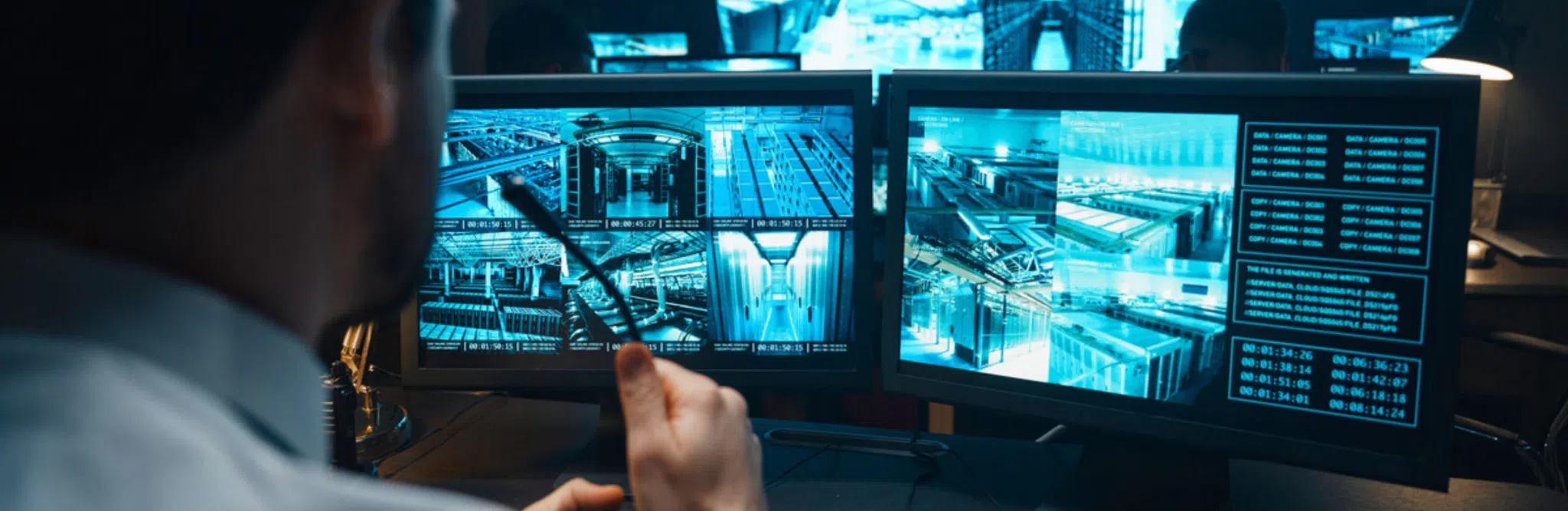



For years, most security systems have operated on the same premise: capture footage, store it, and review it later if something goes wrong.
That model still exists today in many environments. Cameras record continuously, incidents are investigated after the fact, and footage becomes a tool for documentation rather than prevention.
But the expectations around security have changed.
Businesses are no longer satisfied with knowing what happened. They want to understand what is happening in real time, and more importantly, they want the ability to respond while an event is still unfolding. That shift in expectation is what has driven the adoption of live video monitoring.
Rather than functioning as a passive recording system, live video monitoring introduces active oversight into environments where timing and awareness matter.
What a Live Video Monitoring System Actually Does
At a surface level, a live video monitoring system looks similar to a traditional camera setup. Cameras are installed, video feeds are transmitted, and activity is captured across a property.
The difference lies in what happens next.
Instead of video being stored and reviewed later, those feeds are actively observed by trained monitoring professionals. This transforms the system from a static recording tool into a dynamic layer of operational awareness.
A properly implemented live video monitoring system brings together several components:
- Camera infrastructure positioned for coverage and visibility
- A remote monitoring center staffed with trained personnel
- Defined response protocols based on observed activity
- Communication tools that allow real-time intervention
Together, these elements allow organizations to move beyond simple surveillance and into a model where security becomes continuous and interactive.
How Live Remote Video Monitoring Changes the Response Timeline
One of the most significant limitations of traditional surveillance is timing.
In many cases, the sequence looks like this:
An incident occurs → it goes unnoticed → it is discovered later → footage is reviewed → action is taken after the fact.
By the time a response begins, the damage is already done.
Live remote video monitoring fundamentally alters that timeline.
Because activity is being observed in real time, there is an opportunity to intervene earlier. Suspicious behavior can be identified before it escalates, and actions can be taken while individuals are still on site.
This might include issuing a verbal warning, escalating to on-site personnel, or contacting authorities when necessary. The exact response depends on the environment, but the key difference is that response is no longer delayed.
This shift from reactive to proactive is one of the primary reasons businesses are adopting live video monitoring services.
Why Traditional Surveillance Alone Is No Longer Enough
It is not that traditional surveillance has become obsolete. Recorded footage still plays an important role in investigations, liability protection, and documentation.
The limitation is that it operates in isolation.
In environments where activity is constant, where assets are exposed, or where properties are large and difficult to supervise, relying solely on recorded footage creates gaps in awareness. Incidents are not prevented, only documented.
Live video monitoring addresses this gap by layering real-time oversight on top of existing camera infrastructure. Instead of replacing traditional systems, it enhances them, turning passive visibility into active security.
Where Live Video Monitoring Services Create the Most Value
The value of live video monitoring services becomes most apparent in environments where visibility is difficult to maintain through physical presence alone.
In distribution settings, for example, yards and dock areas operate continuously, with trailers moving in and out and cargo staged across large outdoor spaces. Maintaining awareness across those environments in real time can be challenging without centralized monitoring.
In commercial real estate, security teams must oversee common areas, parking structures, and entry points without disrupting tenant experience.
Energy sites present a different challenge entirely, often spanning remote or unmanned locations where consistent on-site staffing is impractical.
Even in retail and multifamily environments, where activity is more visible, the ability to distinguish between normal behavior and emerging risk benefits from real-time observation.
Across all of these use cases, the common thread is not the industry itself, but the need for consistent awareness in environments where activity cannot be easily controlled.
What Separates Live Video Monitoring Companies
As adoption increases, more providers are offering live video monitoring services. However, not all approaches are the same.
The effectiveness of a live video monitoring company depends on how it manages the intersection of technology and human response.
Important differentiators often include:
- How monitoring teams are trained to interpret activity
- The clarity and consistency of response protocols
- The ability to scale monitoring across multiple locations
- Integration with existing security infrastructure
- Reliability of monitoring operations over time
Technology enables visibility, but it is the human layer that determines how that visibility is used.
Organizations evaluating live video monitoring companies are increasingly looking beyond equipment and focusing on how monitoring is executed in practice.
The Broader Shift Toward Real-Time Security
The growth of live video monitoring reflects a broader shift in how organizations think about security.
It is no longer viewed solely as a protective function. It is becoming part of operational awareness.
Knowing what is happening across a property in real time supports better decision-making, faster response, and improved continuity. This is especially important for businesses managing multiple locations or complex environments.
Live video monitoring does not eliminate risk entirely, but it reduces the likelihood that risk goes unnoticed.
And in many cases, that difference is what determines whether an incident is contained or escalates.
Rethinking What Cameras Are Meant to Do
For a long time, cameras were treated as recording devices. Their primary value was in what they captured and stored.
Live video monitoring redefines that role.
Cameras become part of an active system, one that observes, interprets, and responds. Instead of simply documenting events, they contribute to how those events unfold.
This shift may seem subtle, but it has significant implications for how security strategies are designed and how organizations allocate their resources.
The question is not whether you have cameras. It’s how they are being used.
Most organizations already have some form of video surveillance in place. The real opportunity lies in turning that visibility into something more actionable.
If you’re evaluating live video monitoring services or comparing live video monitoring companies, connect with our team to explore how live remote video monitoring can fit into your broader security strategy.
Build a Stronger Security Strategy

Download Security Guides
Practical ebooks to help you strengthen your security and solve your challenges.

Discover Industry Security Solutions
See how ECAM protects your industry with solutions designed to deter crime, reduce losses, and keep operations moving.