


Why Data Center Security Must Extend Beyond the Facility Itself
The race to build AI-ready infrastructure is accelerating.
Hyperscalers, cloud providers, and colocation operators are investing billions of dollars into new data centers to support artificial intelligence workloads, high-density computing, and growing digital demand. But as the pace of development increases, so does a critical security challenge that many organizations overlook:
The infrastructure powering AI is vulnerable long before a data center becomes operational.
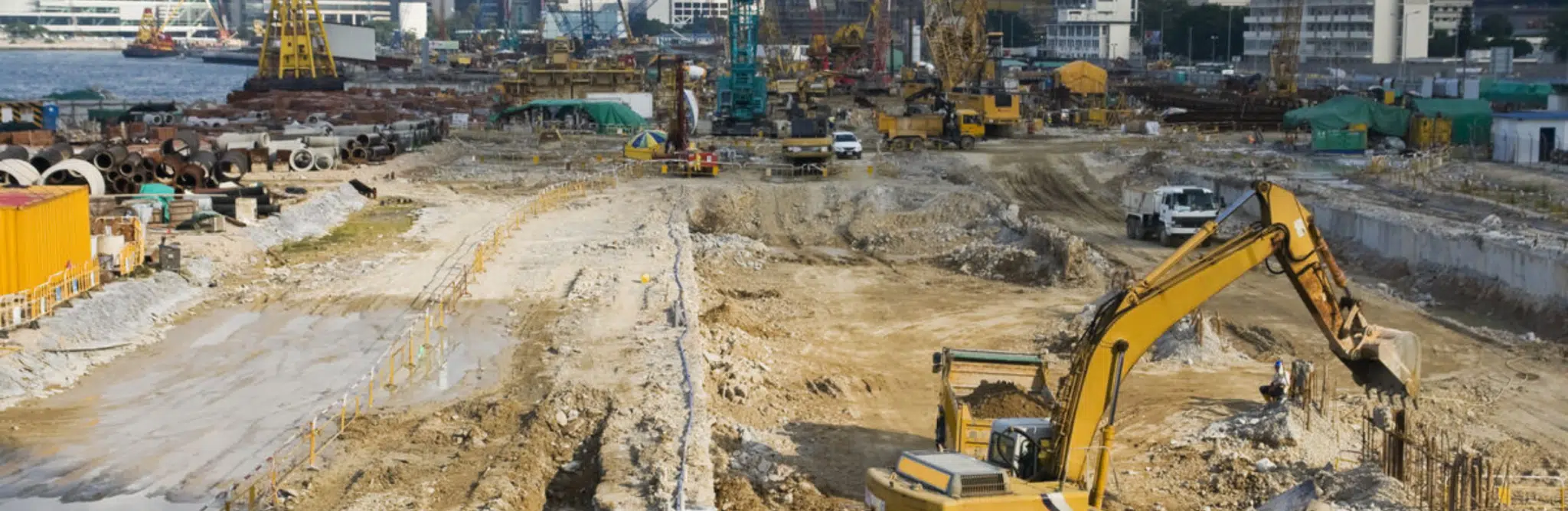
From construction sites and staging yards to transportation networks and commissioning phases, critical assets are exposed throughout the entire lifecycle. As a result, data center construction security has become a mission-critical component of protecting the AI economy.
The Hidden Security Risks Behind Data Center Expansion
Most security strategies focus on protecting operational facilities.
However, some of the greatest vulnerabilities exist before servers are ever powered on.
Modern data center construction projects involve:
- High-value equipment
- Multiple contractors and vendors
- Temporary workforces
- Open construction environments
- Complex transportation networks
- Accelerated deployment schedules
This combination creates opportunities for theft, vandalism, unauthorized access, and operational disruption.
When security gaps occur during construction or logistics, the consequences extend beyond financial loss.
Organizations may face:
- Delayed AI deployments
- Missed project milestones
- Supply chain disruptions
- Increased operational costs
- Compliance concerns
- Reputational damage
In today’s AI-driven economy, delays can become a competitive disadvantage.
Why Construction Sites Are Increasingly Targeted
Data center construction sites contain some of the most valuable infrastructure assets in the technology industry.
These sites often house:
- Copper and electrical materials
- Switchgear
- Backup generators
- Networking equipment
- Power infrastructure
- High-performance computing hardware
- Specialized cooling systems
Unlike operational data centers, construction sites typically have less mature security controls and a constantly changing workforce.
Common security challenges include:
- Open perimeters
- Limited visibility
- After-hours activity
- Contractor access management
- Material theft
- Equipment vandalism
- Inconsistent site procedures
As project footprints grow, traditional security approaches become increasingly difficult to manage.
The Growing Threat to Data Center Logistics and Transportation
The security challenge does not end when equipment leaves the manufacturer.
Transportation and logistics operations have become a major target for organized cargo theft and fraud.
High-value technology shipments are increasingly attractive because of their:
- Significant resale value
- Supply chain importance
- Limited availability
- Strategic business impact
Criminal organizations are becoming more sophisticated, often using:
- Fraudulent carrier identities
- Fake pickup requests
- Documentation manipulation
- Cargo theft schemes
- Supply chain infiltration tactics
Without real-time visibility and chain-of-custody verification, organizations may not discover a problem until critical equipment fails to arrive at its destination.
Why Traditional Security Models Struggle to Scale
Many organizations continue relying on security approaches built for smaller, more static environments.
These models typically include:
- Fixed security posts
- Passive surveillance systems
- Manual reporting processes
- Reactive incident response
- Disconnected security platforms
While these approaches may work for individual sites, they become increasingly difficult to manage across large-scale infrastructure programs.
Modern data center expansion often involves:
- Multiple construction projects simultaneously
- Geographically dispersed facilities
- Complex logistics operations
- Rapid deployment schedules
- Constantly changing threat environments
Scaling traditional security typically requires additional personnel, increasing costs without necessarily improving visibility or effectiveness.
The Shift Toward Intelligence-Led Data Center Security
Leading organizations are moving beyond traditional coverage models and adopting intelligence-driven security strategies.
Instead of focusing solely on guarding assets, they are building security programs around:
- Continuous visibility
- Real-time intervention
- Operational intelligence
- Centralized oversight
- Scalable monitoring
- Proactive threat detection
This approach creates security continuity across every stage of the infrastructure lifecycle.
From groundbreaking to commissioning, organizations gain a clearer picture of risk and operational activity.
Securing Data Center Construction Projects
Modern construction security requires more than cameras and perimeter fencing.
Organizations increasingly rely on layered security solutions that combine AI-powered monitoring, remote oversight, and onsite personnel.
Key priorities include:
Perimeter Protection
Construction sites require continuous monitoring to detect:
- Unauthorized access
- After-hours activity
- Loitering
- Equipment tampering
- Material theft
AI-driven analytics can help identify suspicious activity quickly while reducing false alarms.
Workforce and Access Management
Large construction projects often involve dozens of contractors, subcontractors, and vendors.
Maintaining visibility into who is onsite and where they have access is critical to reducing insider risk and maintaining project security.
Asset Protection
Monitoring high-value materials and equipment throughout the construction process helps reduce shrinkage, project delays, and operational disruption.
Protecting Critical Infrastructure in Transit
As data center projects scale, transportation security becomes just as important as site security.
Organizations need visibility into:
- Staging yards
- Distribution hubs
- Delivery locations
- Vehicle activity
- Driver verification
- Cargo handling processes
Real-time monitoring and documented chain-of-custody procedures help strengthen accountability while reducing opportunities for theft and fraud.
This is especially important when transporting sensitive technology assets that support AI and cloud infrastructure.
Securing the Transition to Operations
One of the most vulnerable phases in any data center project occurs during commissioning and early operations.
Security gaps often emerge as responsibility shifts from construction teams to operational staff.
During this transition, organizations must maintain visibility into:
- Personnel access
- Restricted areas
- Equipment installation
- Operational testing
- Policy compliance
Continuous monitoring helps ensure that vulnerabilities do not emerge during this critical handoff period.
Why Scalable Security Matters for Hyperscale Growth
The world’s largest technology companies are building data centers at an unprecedented pace.
Maintaining consistency across dozens of active projects requires a security strategy that scales efficiently.
Organizations need:
- Centralized visibility
- Standardized procedures
- Rapid deployment capabilities
- Integration with existing systems
- Consistent oversight across geographies
Security must support growth rather than become a bottleneck to expansion.
Protecting the Infrastructure Behind the AI Economy
At the center of every AI initiative is physical infrastructure.
The servers, GPUs, networking equipment, and storage systems powering artificial intelligence represent:
- Significant capital investment
- Competitive advantage
- Intellectual property
- Strategic business assets
Protecting those assets requires security strategies that extend far beyond the walls of the finished data center.
Organizations must secure every phase of the lifecycle, from manufacturing and transportation to construction, commissioning, and operations.
The Future of Data Center Security Starts Before the Data Center Exists
As demand for AI infrastructure continues to accelerate, physical security can no longer be viewed as an operational consideration alone.
It has become a strategic business requirement.
Organizations that invest in data center construction security gain stronger protection against theft, delays, supply chain disruptions, and operational risk.
Because in the race to scale AI infrastructure, success depends not only on how quickly organizations can build, but how effectively they can protect what they build along the way.