
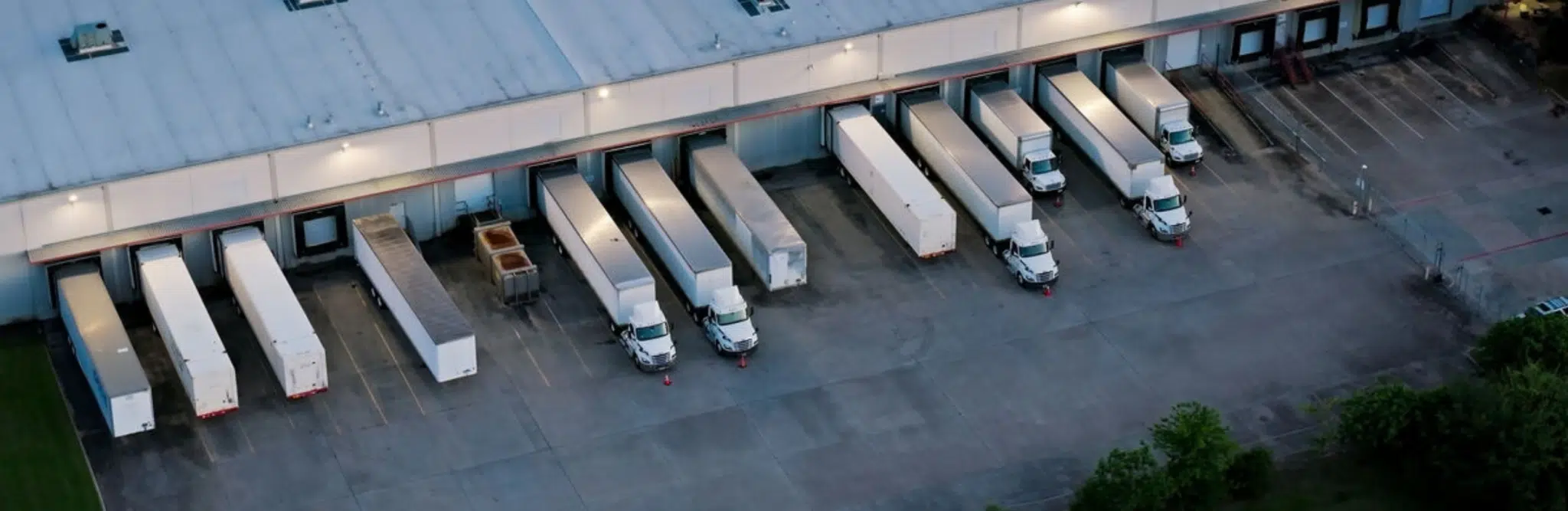



An industrial warehouse may look like one property from the outside.
From a security perspective, it isn’t.
There is the perimeter surrounding the facility. The parking lots and yards beyond the building. Vehicle gates and pedestrian entrances. Loading docks where goods enter and leave. The warehouse floor itself. Storage areas, equipment, inventory, and restricted spaces inside.
Every one of those environments presents a different security challenge.
More importantly, people, vehicles, materials, and inventory are constantly moving between them.
A truck that belongs in the yard doesn’t necessarily belong at every loading dock. A contractor authorized to enter the property may not have a reason to access every part of the building. An employee who belongs inside the warehouse during their shift may stand out if they’re accessing a restricted area after hours.
That’s why effective industrial warehouse security services shouldn’t be designed around the building alone.
They should account for how activity moves through the entire property and what needs to happen as one security zone becomes another.
Zone 1: Start Before Activity Reaches the Building
The warehouse wall shouldn’t be the first place a security program begins paying attention.
For many industrial facilities, the property perimeter creates an earlier opportunity to recognize activity before it reaches buildings, inventory, equipment, or employees.
But industrial perimeters can be challenging environments to cover.
Properties may include long fence lines, multiple access points, storage yards, undeveloped sections, equipment areas, or portions of the perimeter that aren’t easily visible from the building.
Fixed cameras can provide persistent coverage of priority areas. Wireless outdoor industrial security cameras can help extend visibility where conventional infrastructure is difficult to reach. Mobile surveillance units can provide another option when coverage is needed in temporary, changing, or infrastructure-limited areas.
The important question, however, isn’t simply whether a camera can see the fence.
It’s what happens when the camera sees something that matters.
AI-assisted analytics can help identify defined activity and bring relevant events to the attention of trained monitoring professionals. Those professionals can then evaluate what is occurring and follow the site’s established response procedures when action is required.
That turns perimeter coverage from a boundary the organization records into an active first layer of the broader security strategy.
Zone 2: The Yard Is Where Context Becomes Critical
Cross the perimeter and the security environment immediately changes.
Industrial yards and parking areas can be busy places.
Employees arrive for shifts. Trucks enter and leave. Contractors perform work. Vendors make deliveries. Trailers and equipment move through the property.
The presence of a person or vehicle isn’t necessarily unusual.
The more important question becomes:
Does this activity belong here, at this location, at this time?
A vehicle entering an employee parking lot during a shift change may be routine.
The same vehicle entering a restricted equipment yard overnight may warrant attention.
That makes industrial yard security as much about context as visibility.
Cameras and live video monitoring can help maintain awareness across large areas where relying entirely on physical observation can be difficult. Monitoring professionals can evaluate detected activity against expected site conditions and determine whether continued observation or another response is appropriate.
This is also where camera placement matters.
A system designed only around entrances may tell you that a vehicle entered the property without showing where it went next.
Effective industrial security solutions should consider how activity moves after it crosses the perimeter.
Zone 3: Gates and Entrances Require a Different Kind of Security
At a gate or building entrance, the job changes again.
Security is no longer simply trying to determine whether someone is present.
It may need to determine whether that person should be allowed inside.
This is where physical security personnel can continue to provide significant value.
An industrial facility security guard may verify credentials, interact with employees and visitors, communicate with drivers, manage access exceptions, provide directions, or perform other responsibilities that require someone physically onsite.
Similarly, an industrial building security guard can support access procedures at employee or visitor entrances where regular human interaction is part of the job.
Technology can support those responsibilities.
Cameras provide additional visibility. Access control can help manage authorized entry. Monitoring can extend awareness into surrounding areas. Video can provide context when something unusual occurs outside the guard’s immediate field of view.
The objective shouldn’t be to install technology simply to eliminate physical presence.
It should be to determine which security functions benefit from technology and which still require someone onsite.
That’s an important distinction when evaluating an industrial security guard company or a broader security program.
A guard stationed at an entrance and a monitoring professional observing a large perimeter are solving different problems. The strongest strategy allows each to focus on the work they’re best positioned to perform.
Zone 4: Loading Docks Are Where Two Security Environments Collide
Few parts of an industrial warehouse illustrate the importance of security zones better than the loading dock.
A loading dock is simultaneously part of the outside world and part of the warehouse.
Trucks arrive.
Drivers and third parties enter the property.
Doors open.
Employees move between interior and exterior spaces.
Goods enter and leave.
Equipment crosses the boundary throughout the day.
All of that legitimate activity can make loading areas particularly complicated environments to monitor.
Simply having a camera pointed toward the dock doesn’t answer the most important questions.
Which vehicle is there?
Is it expected?
Which dock is it using?
Does the activity match normal operations?
Are people moving into areas where they should be?
Does activity continue after the scheduled loading or unloading process is complete?
The loading dock is a handoff point.
Security coverage should reflect that.
Video monitoring can help provide visibility around dock areas and surrounding approaches while giving monitoring professionals context when activity occurs outside expected patterns.
Interior cameras can then continue that visibility as activity moves into the facility.
The goal is to avoid creating a security gap precisely where the outside environment becomes the inside operation.
Zone 5: Inside the Warehouse, the Problem Changes Again
Once inside the building, unauthorized perimeter access is no longer the only concern.
Now the security strategy has to account for people and activity that may legitimately be inside the facility.
Employees.
Contractors.
Vendors.
Maintenance personnel.
Visitors.
The challenge becomes distinguishing ordinary activity from activity occurring in the wrong place, at the wrong time, or under the wrong circumstances.
Warehouse floors may also contain high-value inventory, specialized equipment, tools, materials, restricted areas, and other assets that require different levels of protection.
That means interior camera coverage shouldn’t simply reproduce the perimeter strategy indoors.
The questions change.
Where are the highest-value assets?
Which areas have restricted access?
Where does inventory move?
Which sections of the facility see little activity after certain hours?
Where would unusual activity be most consequential?
An effective industrial security strategy should become more specific as it moves deeper into the operation.
The Biggest Security Gap May Be Between Two Well-Protected Areas
A warehouse can have excellent security components and still have vulnerabilities.
Imagine a facility with monitored perimeter cameras.
A guarded vehicle entrance.
Interior cameras protecting inventory.
On paper, each major part of the operation appears covered.
But what happens between them?
Perhaps a rear loading area isn’t adequately visible from the perimeter cameras or interior system.
Maybe a storage yard was expanded after the original camera layout was designed.
A temporary equipment area may sit outside permanent coverage.
A guard patrol might inspect a remote section of the property periodically, leaving long intervals between visits.
Operational changes may have created new routes through the facility that the original security design never anticipated.
These are the gaps that can be easy to overlook because they don’t necessarily belong to one system.
Security infrastructure tends to be designed around places.
Industrial operations are built around movement between places.
That’s why organizations should periodically evaluate not only whether each security zone is protected, but whether visibility and responsibility continue as activity moves from one zone to another.
Different Zones Need Different Security Tools
There isn’t one piece of technology or one type of security personnel that solves every challenge across an industrial property.
Different environments call for different capabilities.
| Security Zone | Primary Challenge | Potential Security Layers |
| Perimeter | Unauthorized approach and access | Cameras, analytics, live monitoring, MSUs |
| Yard and parking areas | Large-area visibility and vehicle activity | Cameras, monitoring, patrol |
| Gates and entrances | Access, interaction, and authorization | Guards, access control, cameras |
| Loading docks | Movement of people, vehicles, and goods | Cameras, live monitoring |
| Warehouse interior | Assets, restricted areas, and internal activity | Cameras, analytics, access control |
| Remote or changing areas | Coverage beyond permanent infrastructure | Wireless cameras, MSUs, monitoring |
The objective isn’t to install every security layer in every zone.
It’s to determine what each area requires and build those layers into a connected program.
That is what separates a collection of individual products from comprehensive industrial warehouse security services.
Don’t Make Guards and Technology Compete for the Same Job
Industrial facilities don’t necessarily need to choose between security guards and technology.
They need to determine which responsibilities each can perform effectively.
Guards provide physical presence.
They can interact with employees, visitors, and drivers. They can manage access procedures. They can physically investigate conditions onsite and respond to situations that require someone to be there.
Technology excels at a different set of responsibilities.
Cameras can maintain visibility across multiple locations simultaneously. Analytics can help surface activity that warrants attention. Live monitoring professionals can review events, verify what’s happening, and initiate established response procedures without relying on a patrol being in exactly the right location at exactly the right moment.
A hybrid security model can combine those strengths.
For example, guards might remain focused on a vehicle entrance and other areas where physical interaction matters, while monitored cameras provide continuous coverage around perimeter zones, yards, loading areas, and other parts of the facility.
Instead of using an onsite guard primarily to watch areas technology can observe continuously, the organization can reserve physical personnel for responsibilities where their presence creates greater value.
The result isn’t guards versus technology.
It’s a security program designed around the job that needs to be done.
Walk the Property the Way Activity Moves Through It
Evaluating industrial warehouse security doesn’t have to begin with a product.
Start at the edge of the property.
How would someone or something legitimately move from the perimeter to the warehouse?
Where would a vehicle enter?
Where would it stop?
Which loading area would it approach?
Where would a driver, contractor, employee, or visitor enter the building?
What happens once they’re inside?
Then look at the security handoffs along that path.
Does perimeter coverage continue into the yard?
Can activity be followed from the gate toward a loading area?
Does visibility continue when an exterior door opens into the warehouse?
Are restricted interior areas protected differently from general operating areas?
Where does one camera system, security team, or responsibility stop and another begin?
And most importantly:
What happens in between?
Those transition points can reveal vulnerabilities that aren’t obvious when each security component is evaluated separately.
A Warehouse Doesn’t Operate as One Space. Its Security Program Shouldn’t Either.
Industrial warehouses are dynamic environments.
People arrive and leave. Vehicles cross the property. Goods move through loading docks. Inventory changes locations. Operations expand into new areas. Temporary needs become permanent ones, and spaces originally designed for one purpose begin serving another.
Security has to account for that movement.
The strongest industrial warehouse security services aren’t necessarily defined by having the most cameras, the most guards, or the most technology.
They’re defined by how well the individual layers work together.
Perimeter coverage should connect to yard visibility.
Yard visibility should connect to access points.
Access control should connect to loading areas and interior operations.
And guards, cameras, analytics, live monitoring, mobile surveillance, and other security resources should each be deployed where their capabilities make the most sense.
Because the most important vulnerability may not exist inside any one security zone.
It may exist in the gap between them.
Where Are the Gaps in Your Warehouse Security?
Walk the path from your property perimeter to your highest-value inventory. Consider where coverage changes, where responsibility shifts between systems or teams, and where activity can move from one security zone to another without being noticed.Talk with ECAM about designing industrial warehouse security services that combine cameras, live monitoring, and mobile surveillance around the way your facility actually operates.
Build a Stronger Security Strategy

Download Security Guides
Practical ebooks to help you strengthen your security and solve your challenges.

Discover Industry Security Solutions
See how ECAM protects your industry with solutions designed to deter crime, reduce losses, and keep operations moving.