
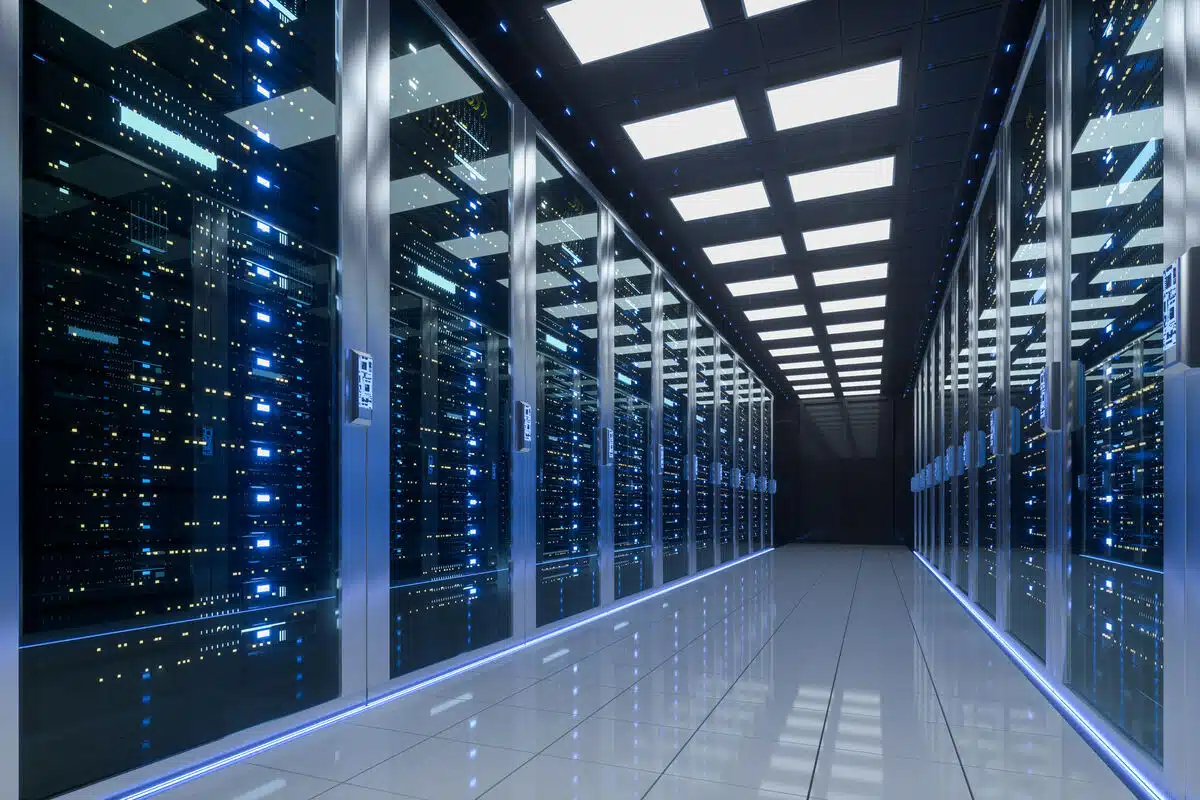



Why Physical Security Has Become a Top Priority for Modern Data Centers
As organizations continue accelerating toward cloud computing, colocation environments, and AI-driven infrastructure, the importance of data center security has never been greater.
While cybersecurity threats like ransomware and DDoS attacks dominate industry headlines, one critical reality is often overlooked:
If someone gains physical access to your infrastructure, every other security layer becomes vulnerable.
Today’s data centers are far more than server facilities. They are mission-critical infrastructure hubs supporting financial systems, cloud platforms, AI workloads, healthcare operations, telecommunications, and global commerce. That makes them a growing target not only for cybercriminals, but also for insider threats, physical breaches, operational sabotage, and environmental disruptions.
As a result, organizations are rethinking how physical security fits into overall operational resilience and risk management strategies.
Why Physical Security Is the Foundation of Data Center Protection
The OSI model places physical security at Layer 1 for a reason.
Without a secure physical environment:
- Access controls can be bypassed
- Critical hardware can be tampered with
- Infrastructure can be disrupted or destroyed
- Sensitive data can be compromised
- Entire operations can be impacted
Cybersecurity depends on physical certainty.
Even the most advanced digital defenses become ineffective if unauthorized individuals can physically access servers, networking equipment, or operational control systems.
That is why modern data center security strategies must go beyond traditional surveillance and adopt continuous, intelligence-driven protection models.
What Modern Data Center Security Should Look Like
Leading operators are moving toward layered physical security architectures that combine intelligent technology, centralized monitoring, and human expertise to create proactive protection across every part of the facility.
Intelligent Access Control and Identity Management
Modern access control systems should do more than simply grant entry.
Effective systems must ensure that access is:
- Role-based
- Continuously monitored
- Restricted to authorized personnel
- Revoked immediately when no longer required
Organizations are increasingly integrating live video monitoring with access events to validate that the correct individual is performing the authorized action in real time.
This additional layer of verification helps reduce insider risk and improve operational accountability.
Why Human Presence Still Matters in Data Center Security
Technology alone does not prevent incidents.
Human judgment, visibility, and response capabilities remain essential components of effective physical security programs.
Highly trained security personnel help:
- Deter unauthorized activity
- Respond quickly to incidents
- Identify behavioral anomalies
- Support visitor management
- Reinforce compliance procedures
When paired with centralized monitoring and real-time intelligence, onsite personnel become significantly more effective than traditional static guard models.
The Shift From Passive Surveillance to Active Monitoring
Traditional surveillance systems often serve as passive recording tools.
Modern facilities require more.
Today’s data center security environments demand:
- Real-time monitoring
- Immediate threat validation
- Rapid intervention capabilities
- Continuous situational awareness
- Secure and redundant video storage
Live, human-verified monitoring helps organizations detect suspicious activity as it happens rather than reviewing footage after an incident has already occurred.
This proactive approach significantly improves response times and operational visibility.
Why Intrusion Detection Must Lead to Action
Alerts alone do not improve security.
Without validation and response, alarm systems simply create noise.
Effective intrusion detection systems should:
- Identify unauthorized access immediately
- Trigger automated escalation workflows
- Integrate with live monitoring teams
- Support coordinated incident response
The ability to validate and act on threats in real time transforms detection into prevention.
This is especially critical in high-security environments where even small delays can create major operational consequences.
Environmental Monitoring and Infrastructure Resilience
Physical security is not limited to unauthorized access.
Data center resilience also depends on protecting infrastructure from environmental risks and operational failures.
Critical areas include:
- Fire detection and suppression
- Thermal monitoring
- Power redundancy
- Cooling systems
- Environmental controls
- Disaster preparedness
Proactive monitoring technologies can help identify overheating equipment, environmental anomalies, or developing risks before they escalate into outages or catastrophic failures.
Behavioral Analytics and Continuous Monitoring
Modern security strategies increasingly focus on behavioral visibility rather than static access control alone.
Organizations need to understand not just who accessed the facility, but how they behave once inside.
Continuous monitoring capabilities may include:
- Access logging
- Behavioral pattern analysis
- Anomaly detection
- AI-assisted threat identification
- Operational activity monitoring
By combining AI-driven analytics with human review, organizations can identify unusual activity earlier and reduce the likelihood of insider threats or operational compromise.
Compliance and Risk Mitigation in Data Centers
Regulatory and compliance requirements continue growing across industries that rely on critical infrastructure.
Depending on the environment, organizations may need to support compliance with standards such as:
- PCI-DSS
- HIPAA and HITECH
- GLBA
- ITAR
- SOC frameworks
- Industry-specific security requirements
Modern physical security systems help support compliance efforts through:
- Video-backed audit trails
- Access verification records
- Incident documentation
- PPE and procedural compliance monitoring
- Evidence-based reporting
These capabilities improve accountability while helping organizations respond more effectively to audits, investigations, and insurance claims.
Why Modern Data Center Security Requires Proactive Risk Prevention
Traditional security models were built around static protection and reactive investigation.
Modern threats require something different.
Today’s leading data center operators are shifting toward:
- Real-time intervention
- Integrated AI and human monitoring
- Continuous risk assessment
- Centralized operational visibility
- Proactive threat prevention
This evolution allows organizations to improve response times, standardize security operations, and scale protection more efficiently across multiple locations.
The Future of Data Center Security Is Intelligence-Led
As digital infrastructure becomes increasingly critical to global operations, physical security must evolve from isolated systems into connected intelligence platforms.
Organizations need security architectures capable of:
- Detecting threats early
- Validating activity in real time
- Coordinating rapid response
- Maintaining continuous visibility
- Scaling efficiently across environments
Modern data center security is no longer just about adding more layers of protection.
It is about ensuring every layer is intelligent, connected, and actively monitored.
Why Physical Security Is a Strategic Advantage
Physical security has become a core operational risk management strategy for mission-critical infrastructure.
Organizations that combine AI-driven analytics, centralized monitoring, and trained personnel gain stronger visibility, faster response capabilities, and greater resilience against evolving threats.
Because in today’s data center environment, security is no longer just about keeping threats out.
It is about identifying, validating, and stopping them before impact occurs.
Build a Stronger Security Strategy

Download Security Guides
Practical ebooks to help you strengthen your security and solve your challenges.

Discover Industry Security Solutions
See how ECAM protects your industry with solutions designed to deter crime, reduce losses, and keep operations moving.