
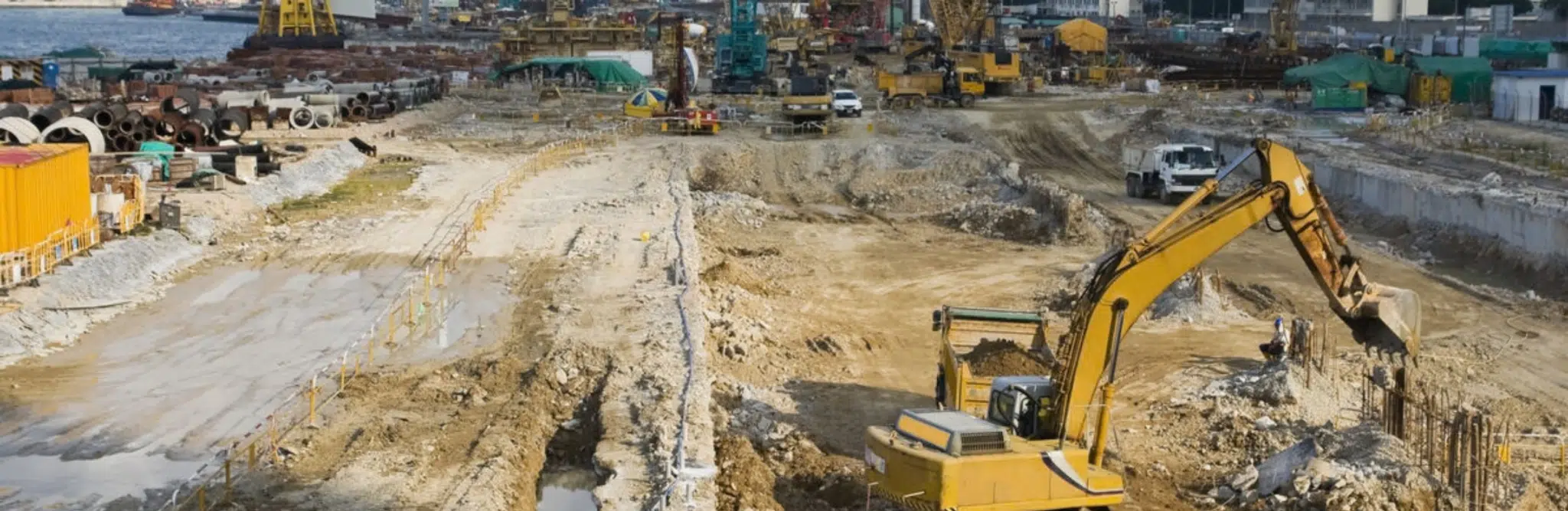



The infrastructure powering the artificial intelligence revolution is being built at an extraordinary scale.
Across North America, developers are constructing new data centers, expanding existing campuses, and investing in the equipment needed to support AI, cloud computing, and increasingly demanding digital workloads. These projects represent enormous investments in technology, energy, construction, and logistics.
Yet much of the conversation around data center security focuses on protecting facilities after they become operational.
That overlooks a critical period of vulnerability.
Before servers are installed, networks are activated, or computing operations begin, every data center starts as a construction site. And those sites often contain millions of dollars in copper, generators, transformers, batteries, networking equipment, and other valuable assets.
Data center construction security must therefore address more than traditional jobsite theft and vandalism. It must protect the physical foundation of critical infrastructure while that infrastructure is still being built.
The security strategy should begin long before the facility becomes operational.
Why AI Infrastructure Construction Requires a Different Security Approach
Traditional construction security programs have generally focused on deterring theft, detecting unauthorized access, and documenting incidents.
Those objectives remain important, but the scale and complexity of modern data center construction introduce additional challenges.
Unlike an operational facility with established boundaries and permanent security infrastructure, an active construction site changes continuously.
Perimeters expand as new phases begin. Temporary access roads are introduced. Contractors and vendors move between buildings. Deliveries arrive at different times, and valuable equipment is relocated between storage areas and installation zones.
For security teams, these changes create an environment where yesterday’s coverage plan may no longer address today’s vulnerabilities.
Common challenges include:
- Changing perimeters: New construction phases can create gaps in existing surveillance coverage.
- Temporary access points: Gates and entrances may be relocated as site operations evolve.
- High contractor volume: Large numbers of workers, vendors, and delivery personnel complicate access management.
- Expanding equipment storage: High-value materials may be staged in locations outside established security zones.
- Multiple construction schedules: Activity across different shifts makes it more difficult to distinguish authorized movement from suspicious behavior.
These conditions require a security program that can adapt alongside the project rather than relying exclusively on fixed infrastructure.
Temporary Security Plays a Critical Role in Permanent Infrastructure
One of the most important distinctions in data center construction is that temporary security does not mean temporary risk.
A mobile surveillance unit deployed for several months may be protecting millions of dollars in electrical equipment. A temporary gate may serve as the primary entrance to a hyperscale construction campus. A camera overlooking a remote laydown yard may provide the only visibility into assets awaiting installation.
Although these security measures may eventually be removed or relocated, the infrastructure they protect is essential to the finished facility.
This makes temporary surveillance an important component of critical infrastructure security.
Mobile Surveillance Units (MSUs), temporary cameras, and remote monitoring can help establish protection before permanent security systems are installed.
They can also provide flexibility throughout the construction lifecycle, allowing security coverage to change as the site develops.
The objective is to maintain visibility over critical areas without requiring the entire security infrastructure to be redesigned whenever construction progresses.
How Mobile Surveillance Adapts to Changing Construction Sites
Construction sites rarely remain static long enough for a single security configuration to provide consistent coverage throughout the project.
An area that requires monitoring during initial site preparation may become less vulnerable once construction shifts elsewhere. Meanwhile, newly opened work zones, equipment staging areas, and temporary entrances may introduce additional risks.
Mobile surveillance allows security teams to adjust coverage as these conditions change.
For example, an MSU may initially monitor the perimeter of an undeveloped property. As construction progresses, it can be repositioned to cover a temporary equipment yard or newly established access point.
This flexibility is particularly valuable when:
- New construction phases expand the site footprint.
- Temporary roads or entrances change traffic patterns.
- Valuable equipment is moved to new staging areas.
- Building construction creates camera blind spots.
- Work begins in previously inactive sections of the property.
- Permanent security infrastructure is not yet available.
Rather than treating security coverage as a fixed installation, mobile surveillance allows organizations to align protection with the evolving risk profile of the site.
Moving Beyond Cameras With AI-Powered Video Monitoring
Installing cameras around a construction site can provide visibility, but visibility alone does not guarantee effective security.
Large data center projects may generate thousands of hours of surveillance footage every day. Expecting security personnel to continuously review every camera feed is neither practical nor efficient.
AI-powered video analytics can help address this challenge by identifying activity that may warrant further attention.
For example, intelligent analytics can help detect people or vehicles entering monitored areas, identify potential perimeter intrusions, and flag activity occurring outside expected operating conditions.
However, detecting activity is only the first step.
Construction environments contain constant movement, and not every unexpected event represents a threat.
A contractor entering a storage area during an approved work period may be conducting routine business. An unknown individual entering the same location after hours may require immediate investigation.
The difference is context.
Combining AI analytics with trained monitoring professionals allows security teams to evaluate events before determining the appropriate response.
This human-verified approach helps reduce unnecessary alarms while enabling faster intervention when suspicious activity is confirmed.
Why Gate Management Is Essential to Data Center Construction Security
The construction gate is one of the most important operational control points on a large infrastructure project.
It is where employees, contractors, deliveries, vehicles, and security procedures intersect.
For data center construction projects receiving frequent shipments of high-value equipment, managing that movement is particularly important.
Traditional access control may establish whether a person or vehicle is authorized to enter. However, effective gate security also requires understanding what happens during the access event.
Video monitoring, license plate recognition, and gate management technologies can help provide additional visibility into vehicle activity and access procedures.
For example, security teams may need to determine:
- Whether an arriving vehicle is expected.
- Whether the vehicle is using the appropriate entrance.
- Whether a delivery is arriving during its scheduled window.
- Whether unauthorized vehicles are attempting to enter.
- Whether access procedures are being followed.
- Whether suspicious activity occurs around the gate.
When supported by live monitoring, these technologies can help security personnel verify activity and escalate potential issues according to established procedures.
The result is a more informed approach to managing access without unnecessarily disrupting the movement of workers, vehicles, and materials.
Protecting High-Value Equipment Throughout the Construction Supply Chain
The security challenges associated with AI infrastructure extend beyond the construction perimeter.
Before equipment reaches its final installation location, it may pass through manufacturers, warehouses, distribution facilities, transportation providers, and temporary staging areas.
Many of these assets are expensive, difficult to replace, and essential to maintaining project schedules.
Critical equipment may include:
- Transformers and switchgear
- Backup generators
- Copper cable and electrical distribution components
- Battery systems
- Cooling equipment
- Networking infrastructure
- Specialized computing hardware
Some components may remain in temporary storage for extended periods before installation.
That creates opportunities for theft, unauthorized access, tampering, and other disruptions.
A comprehensive construction security strategy should therefore consider not only the primary jobsite, but also the surrounding locations where valuable materials are delivered, stored, and prepared for installation.
Remote video monitoring and mobile surveillance can help protect staging yards, equipment storage areas, and delivery zones where permanent security infrastructure may be limited.
This broader approach recognizes that protecting critical infrastructure requires visibility into the assets that make construction possible, not simply the perimeter surrounding the project.
Building a Scalable Security Strategy for Large Data Center Projects
Modern data center developments frequently involve multiple buildings, construction phases, and geographically distributed locations.
A security strategy that works for one construction zone may not be sufficient when that zone expands into a larger campus.
For developers and general contractors managing multiple projects, consistency becomes another important consideration.
A scalable construction security program may combine several capabilities:
| Security capability | Role in construction security |
| Mobile Surveillance Units | Flexible coverage for temporary perimeters, staging areas, and changing work zones |
| Fixed surveillance cameras | Monitoring established locations and critical access points |
| AI-powered video analytics | Identifying activity that requires further investigation |
| Live remote monitoring | Verifying events and initiating appropriate escalation procedures |
| License plate recognition | Providing additional visibility into vehicle activity |
| Gate management and access control | Supporting authorized movement through construction entrances |
| Centralized security oversight | Improving visibility across multiple sites and construction phases |
The value comes from how these capabilities work together.
Rather than operating as disconnected security measures, they can support a coordinated approach that combines detection, verification, and response.
For organizations managing multiple construction projects, centralized monitoring can also help establish more consistent security procedures across locations.
Planning Construction Security From the Beginning
Security is often treated as a consideration that follows construction planning.
However, the earliest stages of development can establish vulnerabilities that become more difficult to address as the project expands.
Integrating physical security into initial project planning allows developers and contractors to evaluate risks before valuable equipment arrives and construction activity intensifies.
Important considerations include:
Asset protection: Which materials and equipment will be most valuable or difficult to replace, and where will they be stored?
Perimeter development: How will site boundaries change throughout construction, and what areas will require temporary monitoring?
Access management: Where will employees, contractors, and delivery vehicles enter, and how will authorized activity be verified?
Equipment movement: How will high-value shipments be monitored as they arrive, move between staging areas, and await installation?
Incident response: Who will verify suspicious activity, and what escalation procedures will be followed?
Security scalability: How will monitoring coverage expand as additional buildings and construction phases begin?
Addressing these questions early helps organizations develop security programs that can evolve with construction rather than reacting to vulnerabilities after they emerge.
From Construction Security to Critical Infrastructure Protection
The infrastructure supporting artificial intelligence may be digital in purpose, but its foundation is physical.
Data centers depend on buildings, electrical systems, cooling equipment, networking infrastructure, transportation networks, and the people responsible for bringing these elements together.
Protecting that infrastructure requires a security strategy that recognizes the connection between construction risk and long-term operational resilience.
AI-powered analytics, mobile surveillance, remote monitoring, and human verification can help organizations maintain visibility throughout the construction process.
Together, these capabilities support a shift from passive surveillance toward proactive physical security, where suspicious activity can be identified, assessed, and addressed before it develops into a more serious incident.
For data center developers and contractors, the goal is not simply to protect a construction site until the facility opens.
It is to protect the critical infrastructure investment from its earliest stages.
The data center of tomorrow begins as a construction site today. Its security strategy should begin there, too.
Build a Stronger Security Strategy

Download Security Guides
Practical ebooks to help you strengthen your security and solve your challenges.

Discover Industry Security Solutions
See how ECAM protects your industry with solutions designed to deter crime, reduce losses, and keep operations moving.