
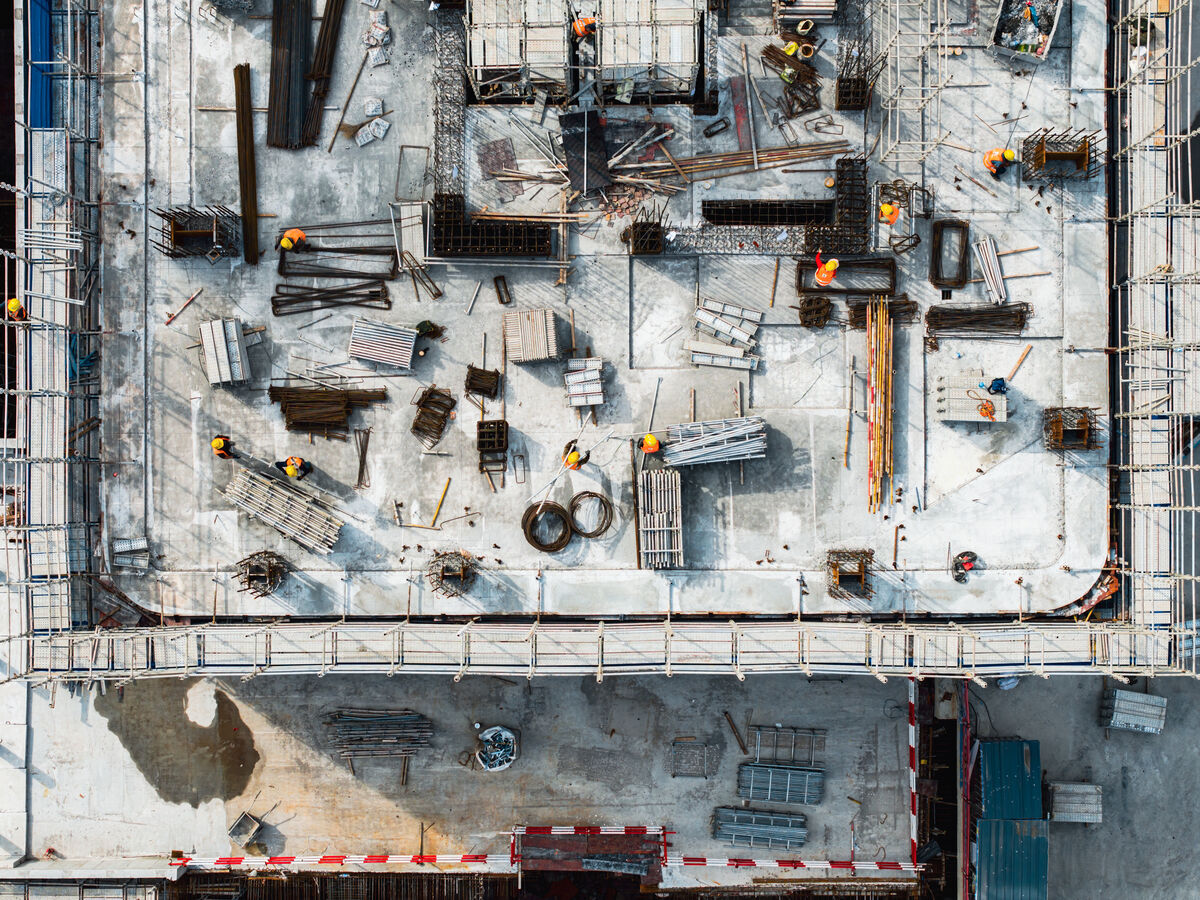



Most construction security proposals look similar at first glance. They list cameras, mobile units, monitoring hours, installation costs, and a monthly service rate. When several vendors appear to offer comparable equipment, it is easy to treat the decision as a straightforward comparison of camera counts and price.
The differences become clearer after the system is deployed.
A camera may technically cover an entrance while missing the route intruders actually use. An alarm may generate an alert without anyone verifying what caused it. A mobile unit may provide strong visibility at groundbreaking but remain pointed toward an outdated risk area as the structure rises. A recorded video system may show exactly how equipment disappeared while doing nothing to interrupt the theft.
In each of these situations, the site has security coverage. What it lacks is a complete protection strategy.
Effective construction site security systems connect physical site design, detection technology, trained monitoring, incident response, ongoing service, and clear accountability. They are designed around how the jobsite actually operates, then adjusted as access points, materials, infrastructure, and risk change throughout the build.
For project managers, superintendents, safety leaders, and owner-developers, the central question is therefore not simply, “Do we have cameras?” It is:
Will this system perform when the site is empty, conditions have changed, and an incident is unfolding?
Answering that question requires looking beyond equipment specifications and evaluating the full chain of protection.
What Makes a Construction Site Security System Complete?
A construction site security system is the coordinated combination of physical controls, surveillance technology, monitoring procedures, response protocols, maintenance, and documentation used to protect an active jobsite.
At a basic level, every system should be able to support three objectives:
- Deter unauthorized activity before it begins
- Detect and verify suspicious behavior early
- Enable an appropriate response before the incident escalates
A complete system must also remain operational as the project changes and provide a reliable record of what happened when an incident, claim, or dispute requires review.
That means effective construction site security systems generally include more than cameras. Depending on the site, the program may combine:
- Fencing, gates, lighting, locks, and controlled access
- Fixed cameras, mobile surveillance units, and other detection devices
- Live or remote monitoring
- Audio deterrence and escalation protocols
- Defined contacts for site leadership and law enforcement
- Equipment-health oversight and maintenance
- Camera re-aims and coverage adjustments
- Incident reports, video records, and service documentation
- Procedures aligned with applicable Builders Risk requirements
Each component serves a different purpose. Physical controls slow entry. Cameras create visibility. Analytics and alarms identify activity. Monitoring adds context. Response protocols turn information into action. Service and documentation keep the program effective and accountable over time.
The value does not come from any one layer. It comes from how reliably those layers work together.
Why Camera Count and Monthly Price Are Incomplete Measures
Construction security systems are often purchased as though the hardware were interchangeable. One proposal includes four cameras, another includes six, and the lower monthly rate appears to offer better value.
That comparison overlooks the factors that determine whether those cameras will produce a useful security outcome.
For example, six poorly positioned cameras may provide less meaningful coverage than three cameras selected and placed around the site’s true vulnerabilities. A low-cost monitoring service may receive an alert but lack the site context, escalation authority, or trained personnel required to interpret it. A less expensive installation may become costly when changing site conditions require service, relocation, or repeated coordination among multiple vendors.
A more useful evaluation considers the full cost and performance of the system:
- Does the proposal reflect a physical assessment of the site?
- Are cameras positioned around likely intrusion routes and high-value areas?
- Is the system actively monitored or only recorded?
- Who verifies alarms and determines the appropriate response?
- How are equipment faults detected and addressed?
- Who repositions cameras when the site changes?
- What documentation is provided after an event?
- Is responsibility divided among vendors or owned by one accountable provider?
Price remains an important project consideration, but it should be evaluated alongside the cost of coverage gaps, unaddressed alarms, service delays, stolen equipment, schedule disruption, and claim complications.
A lower monthly rate is not a savings if the system fails at the moment it is needed.
Start With the Jobsite, Not a Remote Equipment Estimate
A strong construction security system begins with the physical realities of the site.
Site plans and satellite imagery can provide useful initial context, but they do not always reveal the conditions that determine camera performance. Elevation changes, temporary structures, fencing layouts, easements, vegetation, neighboring properties, lighting conditions, and active work zones can all influence what a camera can see and how an intruder might move through the property.
A physical site assessment should examine areas such as:
- Vehicle and pedestrian entrances
- Fence lines and informal access routes
- Connex boxes, trailers, and tool-storage areas
- Fuel, generators, and heavy equipment
- Copper, appliances, and other high-value materials
- Delivery and laydown areas
- Interior zones that will become vulnerable as the structure closes
- Locations where audio deterrence can be heard clearly
- Available power, connectivity, and mounting options
This is where construction security camera systems move from a product selection exercise to a site-design discipline.
The goal is not to point cameras everywhere. It is to understand what needs to be seen, what could obstruct that view, and what activity should trigger attention. A well-designed system should create usable visibility at the places where people, vehicles, materials, and risk intersect.
Camera capabilities must also be understood realistically. Pan-tilt-zoom technology, high-resolution imagery, and advanced analytics can improve coverage, but no camera can see through walls, around every obstruction, or across an entire project from one position. Good design is based on the real field of view, not the assumption that footage can always be enhanced or redirected after an incident.
How Detection, Verification, and Response Work Together
Coverage becomes protection when the system connects detection to action.
Consider an individual entering a restricted area after hours. A basic motion sensor may generate an alarm. A camera may record the person crossing the site. Neither result necessarily stops the incident.
A monitored system follows a more complete sequence:
- Detection: A camera, analytic, or alarm identifies activity in a defined area.
- Verification: A trained operator reviews the available video and site context to determine whether the activity appears authorized, harmless, or suspicious.
- Intervention: When appropriate, the operator may issue a live audio warning designed to interrupt the behavior.
- Escalation: If the activity continues or the threat warrants it, the operator follows the site’s protocol by contacting designated personnel, security resources, or law enforcement.
- Documentation: The system records the event, operator actions, calls, footage, and outcome for later review.
This sequence matters because construction sites generate legitimate activity that can resemble a threat. Deliveries run late. Crews arrive outside normal hours. Animals, weather, equipment, and lighting changes can generate motion. Artificial intelligence can help identify people, vehicles, and movement patterns, but human verification adds the context needed to determine what should happen next.
The quality of remote video monitoring therefore depends on more than whether someone receives an alert. Buyers should understand who reviews events, how operators are trained, what site information they can access, which actions they are authorized to take, and how quickly the response protocol begins.
A system that detects activity without a clear verification and escalation process may create more notifications, but not more protection.
Why Security Coverage Must Change With the Build
Construction sites do not remain static long enough for a one-time camera plan to stay effective.
During early sitework, the primary concerns may include open perimeters, equipment storage, temporary access roads, and the absence of permanent power or network infrastructure. Mobile surveillance units can provide self-contained coverage using solar power, battery storage, generator options, and wireless connectivity.
As the project advances, the risk profile shifts. Materials begin arriving in larger quantities. Storage locations move. Structures create new blind spots. Entrances change. Temporary fencing is relocated. Interior spaces become accessible, and installed appliances, wiring, fixtures, and finishes create new targets.
Near completion, the project may face another transition. Contractors, inspectors, vendors, future occupants, and property-management teams may all require access. Temporary construction protection may need to coordinate with, or transition into, the permanent building security environment.
Effective construction site surveillance systems account for these changes through regular reassessment. That may involve:
- Repositioning mobile surveillance units
- Re-aiming fixed cameras
- Adding or removing coverage zones
- Updating alarm schedules
- Revising authorized-person and vehicle information
- Changing contact and escalation protocols
- Expanding coverage into structures or new work areas
- Coordinating the transition to permanent security
This is why service cannot be treated as an afterthought. Even well-designed construction site security systems will lose effectiveness if no one is responsible for maintaining alignment between the cameras and the evolving site.
The strongest programs treat security as a living part of project operations, not an installation that remains untouched until demobilization.
Builders Risk, Documentation, and Claims Readiness
For many projects, security decisions are influenced by Builders Risk insurance requirements. These requirements can affect whether certain protective measures must be in place, how they should be documented, and what records may be needed if a loss occurs.
Requirements vary by carrier, policy, project, location, and stage of construction. Contractors should confirm the applicable conditions with their insurance carrier, broker, and risk team rather than assuming that one standard applies universally.
However, several planning principles are broadly useful.
Security should be discussed early enough to:
- Review project-specific insurance expectations
- Include security costs in the bid and budget
- Establish coverage before high-value assets arrive
- Document the system’s installation and monitoring structure
- Define who maintains the system throughout the project
- Avoid last-minute deployment after a request or incident
Documentation is particularly important. A contractor may need to demonstrate not only that equipment was installed, but that the system was monitored, maintained, and operating as intended.
Useful records may include:
- Site-assessment and coverage documentation
- Installation dates and equipment locations
- Monitoring schedules and response protocols
- Alarm and incident reports
- Maintenance and service records
- Camera adjustment or relocation history
- Relevant video clips and event timelines
- Contact and escalation logs
These records do not guarantee insurance compliance, claim approval, or a particular outcome. They do, however, create a clearer and more defensible account of the protective measures in place and the response taken when an incident occurred.
A documented construction site security plan can help organize these responsibilities before they become urgent.
The Business Value Extends Beyond Theft Prevention
Equipment and material theft often begins the construction security conversation, but it is not the only source of financial exposure.
The same construction site security cameras used to monitor entrances, equipment yards, and storage areas may also help establish an objective record when questions arise about:
- A workplace injury
- A workers’ compensation claim
- A conflict between employees or subcontractors
- A missing or incomplete material delivery
- Damage attributed to a vendor
- The timing of an operational disruption
- Unauthorized access to an unfinished area
- Conditions surrounding a liability claim
Video does not replace a formal investigation, and footage must be collected, accessed, retained, and used in accordance with applicable policies and laws. When governed appropriately, however, it can reduce uncertainty by helping teams determine what occurred, when it happened, who was present, and how the site responded.
For project managers, this added visibility can reduce the time spent reconstructing events from incomplete accounts. For safety and risk leaders, it can support more consistent reviews across incidents and projects. For owner-developers, the documentation may also contribute to a more organized transition from the construction phase to permanent property operations.
The system’s value is therefore broader than the replacement cost of stolen equipment. It can support project continuity, liability management, delivery validation, dispute resolution, and operational oversight.
Who Owns Uptime, Maintenance, Re-Aims, and Service?
A security proposal should make accountability unmistakable.
Construction projects involve enough vendors, schedules, dependencies, and communication chains already. When the security program divides installation, connectivity, monitoring, maintenance, and service among separate organizations, responsibility can become unclear.
A camera may stop communicating, but the monitoring team assumes the installer will respond. The installer may determine that connectivity belongs to another vendor. A camera may need to be re-aimed, but no one knows whether that work is included. The site team is left coordinating the resolution while also managing the project.
A more accountable model establishes clear ownership for:
- Installation and commissioning
- Camera and device health
- Connectivity
- Monitoring
- Alarm verification
- Response protocols
- Preventive maintenance
- Repairs
- Camera re-aims and relocations
- Incident reporting
- Insurance-related documentation
- Project closeout or transition
This does not mean every service must be performed by the same individual. It means the contractor should have one clear structure responsible for the outcome.
When evaluating construction security systems, buyers should ask whether the provider monitors system health, how faults are escalated, what service response looks like, and who owns the issue from identification through resolution.
A complete system should not require the project manager to become its service coordinator.
What Incident Transparency Should Look Like
When an incident occurs, the quality of the provider relationship becomes immediately visible.
A contractor should not have to settle for a vague statement that “the alarm was handled” or “the camera captured the event.” The provider should be able to explain the sequence clearly and support that explanation with records.
A useful incident review should answer questions such as:
- What activity triggered the event?
- Which camera, device, or analytic detected it?
- When was the event presented to monitoring personnel?
- What did the operator observe?
- Was a live audio warning issued?
- Were site contacts or law enforcement notified?
- What information was provided during escalation?
- How long did each stage of the response take?
- Did the equipment function as intended?
- What was the final outcome?
- Should placement, protocols, or coverage be adjusted?
This level of transparency serves two purposes. First, it gives the construction team a defensible account for internal, insurance, or law-enforcement review. Second, it creates a feedback loop that can improve the system.
For example, an incident may reveal that a delivery route was not reflected in the current monitoring schedule, that a camera’s view had become obstructed, or that the contact list was outdated. Transparent reporting allows those issues to be corrected rather than repeated.
Construction security should not become a black box the moment an alarm activates. Accountability requires visibility into both the event and the decisions made in response.
How to Compare Construction Security Proposals
Two proposals can use similar equipment names while offering very different levels of protection. A disciplined comparison should examine each layer of the program.
1. Site assessment
Was the system designed after a physical site walk or solely from plans and imagery? Does the proposal account for elevation, obstructions, storage, access routes, lighting, and project phases?
2. Coverage strategy
What specific risks and locations does each camera address? Are blind spots acknowledged? Is the proposal based on useful visibility or simply a higher camera count?
3. Detection technology
Which events can the system detect? How are alarm zones configured? Can settings be updated as site activity changes?
4. Monitoring model
Who monitors the system? Are they trained employees, a third party, or an automated notification service? What context do operators receive about the jobsite?
5. Intervention and escalation
Can operators issue audio warnings? Who contacts project leadership or law enforcement? Are procedures customized to the project?
6. System reliability
How is equipment health monitored? What happens when a camera, power source, or connection fails? Is the site notified, and who initiates service?
7. Ongoing adaptation
Are camera re-aims, relocations, and coverage changes included? How often is the system reviewed as construction advances?
8. Documentation
What reports, footage, logs, and service records are available? Can the provider explain the complete timeline after an incident?
9. Accountability
Is one provider responsible for installation, monitoring, maintenance, and performance, or will the contractor need to coordinate several parties?
10. Total value
Does the price reflect only equipment rental, or does it include the services required to keep the system effective? What exclusions could create additional cost or operational burden later?
This evaluation moves the conversation from “How many cameras do we get?” to “How will this construction security system protect the project?”
Questions to Ask Before Choosing a Security Provider
Before selecting a provider, project leaders should ask direct questions about how the proposed system will operate in real conditions:
- Will you physically walk the site before finalizing the design?
- How do you identify entry routes, high-value zones, and likely blind spots?
- Which parts of the system are fixed, mobile, or self-contained?
- Who monitors the cameras and alarms?
- How are legitimate site activities distinguished from suspicious behavior?
- Can monitoring personnel issue live audio warnings?
- What determines whether law enforcement or a site contact is called?
- How do you detect equipment or connectivity failures?
- Who performs maintenance, repairs, re-aims, and relocations?
- How does the system adapt as structures rise and access changes?
- What incident documentation will we receive?
- Can the program support our project-specific Builders Risk requirements?
- Who is accountable when something does not perform as expected?
- What services are included in the quoted price?
- How will the security program transition at project completion?
The answers should be specific. General assurances about “24/7 coverage,” “advanced AI,” or “complete protection” mean little without an explanation of how those claims translate into design, monitoring, response, maintenance, and reporting.
The Real Standard Is Protection That Keeps the Project Moving
The purpose of construction security is not to accumulate devices around the perimeter. It is to protect the project from preventable disruption.
Theft may remove a piece of equipment. Vandalism may damage completed work. Trespassing may create a safety or liability issue. Arson or a major destructive event may jeopardize months of progress. Even a relatively contained incident can delay subcontractors, complicate insurance claims, create replacement costs, and demand hours of attention from the project team.
Effective construction site security systems are designed with those consequences in mind.
They begin with a realistic understanding of the site. They connect detection to trained verification and response. They move as the project moves. They remain operational through active service and system-health oversight. They document both the incident and the actions taken. Most importantly, they establish clear accountability for the complete security outcome.
That is the difference between having coverage and having protection.
Build Security Around the Realities of Your Site
No two construction projects share the same layout, schedule, infrastructure, insurance requirements, or risk profile. A security system should reflect those differences from the beginning and continue adapting through project completion.
ECAM works with construction teams to assess real site conditions, design layered coverage, establish monitored response protocols, and manage installation, service, maintenance, and system adjustments through one accountable structure.
Build a Stronger Security Strategy

Download Security Guides
Practical ebooks to help you strengthen your security and solve your challenges.

Discover Industry Security Solutions
See how ECAM protects your industry with solutions designed to deter crime, reduce losses, and keep operations moving.