
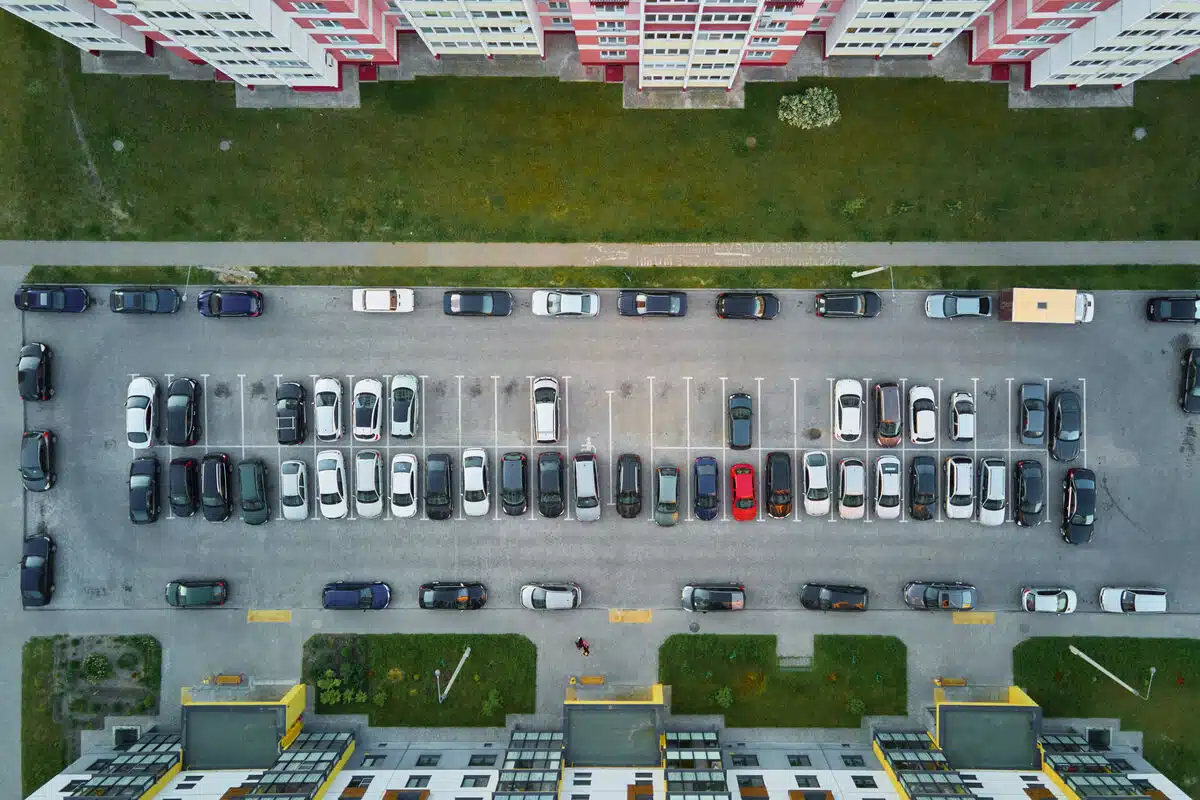



A camera detects movement in a multifamily parking garage late at night. Is it a resident returning home, a guest looking for the right building, or someone checking vehicle doors?
The movement itself does not provide the answer. The surrounding context does.
Multifamily properties remain active around the clock. Residents come and go, deliveries arrive, vehicles enter parking areas, and shared spaces stay in use after the leasing office closes. This makes residential communities fundamentally different from properties where almost any overnight activity may be considered suspicious.
For property teams evaluating multi-family residential live video monitoring, the monitoring method matters as much as the cameras themselves. Systems that rely primarily on individual motion-triggered events can struggle in environments where legitimate movement is constant. Live monitoring gives trained operators more immediate context, helping them distinguish routine activity from situations that may require attention.
That does not mean event-based monitoring has no role in multifamily security. It means the monitoring model should be matched to the activity level and purpose of each area.
Why Multifamily Properties Generate So Many Video Events
Multifamily communities are high-motion environments by design. Unlike an office building, construction site, or retail location that may become mostly inactive at a predictable time, an apartment community is always someone’s home.
Even during overnight hours, cameras may capture:
- Residents returning from work
- Guests arriving or departing
- People walking pets
- Vehicles entering and exiting
- Rideshare and food delivery drivers
- Residents retrieving mail or packages
- People using laundry rooms or gyms
- Maintenance or service personnel
- Residents gathering in common areas
Most of this movement is harmless. However, the same cameras may also capture someone loitering near an entrance, following a vehicle through a gate, looking inside parked cars, entering a closed amenity, or attempting to access a package room.
The security challenge is not simply detecting that someone moved. It is determining whether that person’s behavior is normal for the time, location, and circumstances.
This is why context is so important to multi-family residential video monitoring. A monitoring system must be able to handle frequent legitimate activity without allowing potentially meaningful behavior to become lost in the volume.
What Is Event-Based Video Monitoring?
Event-based video monitoring begins when a camera or connected analytic detects a programmed condition. Depending on the system, that condition might include motion, a person entering a defined area, a vehicle crossing a boundary, or activity occurring during specified hours.
The event generates an alarm that enters a queue for operator review. The operator may receive a recorded video clip, a series of images, or access to the associated camera.
This approach can be effective when:
- Activity is relatively rare
- Any movement is unusual
- The monitored area has predictable operating hours
- Detection rules can be defined narrowly
- Operators receive a manageable volume of alarms
For example, movement inside an amenity that has been locked and closed for the night may be meaningful. If nobody should be present, an event-based alert can direct attention to a potentially unauthorized entry.
Problems arise when the same model is applied to areas where activity is frequent and varied.
Why Motion Alerts Struggle in High-Activity Environments
Motion alerts do not inherently explain intent.
A person walking through a parking garage could be heading to their vehicle or checking several vehicles for unlocked doors. Someone standing near an entrance could be waiting for a resident or attempting to follow one inside. A group near a pool could be approved residents during operating hours or non-residents using the amenity after it has closed.
If every movement creates an event, busy multifamily areas can generate a significant number of alarms. Those alarms must be processed, prioritized, and reviewed. As the volume increases, operators may have less time to evaluate each event while the activity is still unfolding.
There can also be a delay between the moment the camera detects movement and the moment an operator reaches the event in the queue. By that point, the person may have moved to another area, entered a building, damaged property, or left the camera’s view.
AI analytics can improve detection by distinguishing people and vehicles from environmental movement. But even a correctly identified person may be a resident, guest, delivery driver, trespasser, or potential offender. Detection is only the first step. The system still needs enough context to determine what the person is doing.
Event-based systems are not inherently ineffective. Their limitations become more apparent when they are asked to manage an environment where movement is continuous and only a small portion of that activity warrants intervention.
How Multi-Family Residential Live Video Monitoring Works
With multi-family residential live video monitoring, relevant camera activity is presented to trained operators in real time. Instead of relying solely on a recorded clip that must be opened and reviewed after an event enters a queue, the operator can observe the camera feed as the situation develops.
AI may still help identify people, vehicles, or other programmed activity. The difference is how that information reaches the operator and how the operator evaluates it.
A typical workflow may include:
- A camera or analytic identifies relevant activity.
- The live camera view is presented to a trained operator.
- The operator evaluates the person’s location and behavior.
- The operator determines whether the activity appears routine, unusual, or threatening.
- If intervention is appropriate, the operator follows the property’s established response procedures.
- The event and response are documented for the property team.
Depending on the situation and service design, the response may include issuing a live audio warning, contacting an on-site guard or property representative, or escalating to law enforcement.
The operator can also continue observing the situation, follow the person across available camera views, and provide updated information to responders.
This combination of analytics, live visibility, human judgment, and defined response procedures turns cameras into a more active security tool.
Why Real-Time Context Improves Detection and Response
Behavior often becomes meaningful only when it is observed over time.
Walking past one parked car may be normal. Moving from vehicle to vehicle and looking through windows suggests something different. Standing near a package room may be harmless. Attempting the door several times and waiting to follow a resident inside may require attention.
Multi-family residential real-time video monitoring allows operators to consider behavioral patterns instead of evaluating a single isolated frame or short clip.
Real-time context can help operators answer questions such as:
- How did the person enter the property?
- Have they remained in one location for an unusual amount of time?
- Are they interacting with residents or avoiding them?
- Are they attempting multiple doors or vehicles?
- Is the amenity currently open?
- Does the activity appear consistent with normal property use?
- Has the person moved into another camera’s view?
- Is the situation escalating?
This information supports more informed decision-making. It can reduce unnecessary interventions involving routine resident activity while helping operators respond more quickly when behavior indicates a potential problem.
Context also improves communication with on-site personnel or law enforcement. Rather than reporting only that motion was detected, operators may be able to describe the individual, location, direction of travel, observed behavior, and current camera view.
Where Live Monitoring Adds the Most Value
The strongest use cases for multi-family residential live security monitoring are typically spaces with frequent movement and a meaningful risk of unwanted activity.
Parking lots
Parking lots contain residents, guests, vehicles, pedestrians, and delivery activity throughout the evening. They can also experience vehicle break-ins, vandalism, unauthorized parking, loitering, and illegal dumping.
Live monitoring helps operators evaluate how someone is moving through the area rather than reacting to every person or vehicle that enters a camera view.
Parking garages
Garages present similar challenges but may include multiple levels, ramps, access gates, stairwell entrances, and structural obstructions.
Someone walking directly to a vehicle may not require attention. Someone moving between several parked vehicles, concealing their face, or attempting door handles may warrant a response. Observing that pattern in real time can be more valuable than reviewing a series of disconnected alarms.
Entrances and gates
Vehicle and pedestrian entrances experience constant legitimate activity. Residents may use access credentials, guests may wait to be admitted, and delivery drivers may need temporary entry.
Operators can watch for behaviors such as tailgating, climbing a gate, attempting several doors, or remaining near an entrance to follow someone inside.
Live monitoring does not replace functional gates, locks, or access controls. It adds visibility into how those systems are being used or bypassed.
Sidewalks and exterior common areas
A person walking past a property is typically not a concern. Someone repeatedly approaching resident vehicles, entering restricted areas, or remaining near a building entrance late at night may be.
Live monitoring helps distinguish activity occurring near the property from activity that affects the property.
Mail and package areas
Package rooms and mail areas can experience normal resident traffic alongside unauthorized access or theft. A person retrieving their own delivery may look similar to someone removing multiple packages until the behavior becomes clear.
Real-time observation allows operators to consider how the individual entered, how long they remained, and what they did inside the area.
Active amenities
Pools, gyms, clubhouses, laundry rooms, and rooftops can remain active outside traditional business hours. The monitoring approach should reflect each space’s rules and normal usage.
A 24-hour gym may need contextual live observation, while any activity in a locked pool area after closing may justify an immediate event-based alert. The most effective model depends on what should normally be happening in the space.
Where Event-Based Monitoring May Still Make Sense
Live monitoring may be the stronger option for high-motion areas, but not every multifamily camera requires the same approach.
Event-based monitoring can make sense in controlled or low-activity locations where detection rules are clear. Examples may include:
- A pool that is locked overnight
- A rooftop that closes at a defined time
- A restricted maintenance area
- A vacant building or unit
- A storage area with limited authorized access
- A pedestrian entrance that should not be used during certain hours
In these environments, movement may be unusual enough to justify an alert on its own. The lower activity volume can also make the resulting alarm queue more manageable.
A multifamily property may therefore benefit from a blended model. Live monitoring can cover active parking areas, entrances, and exterior spaces, while event-based monitoring supports closed or restricted locations.
The decision should be based on how each area functions, not on a desire to force every camera into one operating model.
Questions to Ask a Multifamily Video Monitoring Provider
The phrase “live monitoring” is not always used consistently. Some providers may describe a service as live because a person reviews an alarm, even if that operator initially receives a recorded clip.
Property teams should ask detailed questions about how the service actually works.
Are operators reviewing recorded alarm clips or a live camera feed?
This is one of the clearest ways to understand the monitoring model. If the operator begins with a recorded clip, the system is likely event-based. If the live camera view is presented as activity unfolds, the model is closer to genuine live monitoring.
Is there a defined clip length?
Ask whether operators receive an eight-second, ten-second, or otherwise time-limited video clip. A predefined length indicates that the system packages activity as a recorded event.
A live feed does not have the same fixed endpoint because the operator can continue watching the situation.
How are high alarm volumes handled?
Ask what happens when many events occur at once. Does the queue continue growing? Are events automatically dismissed? How are higher-priority events identified? How long does it typically take for an operator to review an event?
The provider should be able to explain how its system performs during periods of heavy activity.
How does the provider distinguish routine activity from unwanted behavior?
Technology may identify a person or vehicle, but the provider should explain how it evaluates context. Ask what training operators receive and whether property-specific information, such as amenity hours and restricted areas, is incorporated into monitoring procedures.
What happens after suspicious activity is identified?
Detection has limited value without a response. Ask whether the provider can:
- Issue live audio warnings
- Contact on-site guards
- Notify property personnel
- Escalate to law enforcement
- Track activity across multiple cameras
- Document the event
- Retrieve related footage
- Build an incident timeline
The answer should reflect both the provider’s capabilities and the response protocols agreed upon with the property.
Who is responsible for the complete system?
If different vendors provide cameras, installation, monitoring, and maintenance, ask how accountability is managed. When something goes wrong, the property should not be left navigating disagreements over whether the issue involved camera placement, connectivity, equipment, or operator performance.
Choosing the Right Monitoring Model for Each Area
The decision between live and event-based monitoring should not be made at the property level alone. It should also be made camera by camera and area by area.
A parking garage with continuous resident movement has different requirements from a locked pool. A 24-hour gym has different operating patterns from a restricted equipment room. A busy vehicle entrance requires more context than a door that should remain closed overnight.
Before selecting a model, property teams should evaluate:
- Normal activity levels
- Hours of authorized use
- Common resident complaints
- Recent security problems
- Existing camera placement
- Lighting and image quality
- Access control conditions
- Available on-site personnel
- Appropriate intervention methods
- Reporting and investigation needs
A property-specific assessment may determine that some areas require multi-family residential live monitoring, while others can be effectively managed through event-based alerts or recorded video.
The objective is not to declare one monitoring method universally superior. It is to give every area the level of context, oversight, and response that its activity and risk require.
Match Your Monitoring Strategy to Your Property
Multifamily communities are too active and varied for a one-size-fits-all monitoring plan. ECAM can assess your property’s recurring problems, activity patterns, cameras, amenities, entrances, and on-site resources to determine where live, event-based, or blended monitoring makes the most sense. Speak with an ECAM expert to build a monitoring strategy around how your community actually operates.
Build a Stronger Security Strategy

Download Security Guides
Practical ebooks to help you strengthen your security and solve your challenges.

Discover Industry Security Solutions
See how ECAM protects your industry with solutions designed to deter crime, reduce losses, and keep operations moving.