
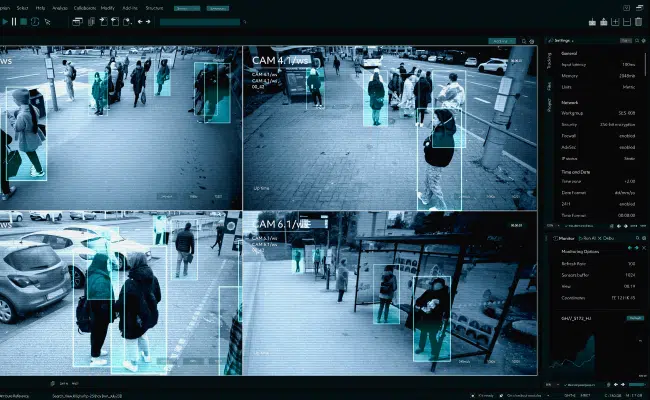



At first glance, the term remote video guarding sounds straightforward.
Many people assume it simply means moving a security guard from the front gate to a remote monitoring center, where they spend their day watching camera feeds instead of walking a property.
That’s an understandable assumption.
It’s also an outdated way of thinking about modern security.
Today’s remote video guarding isn’t about relocating guards. It’s about combining intelligent technology, live monitoring, and trained security professionals into a coordinated system that helps businesses identify potential issues, verify what’s happening, and respond appropriately in real time.
That distinction matters because the role of guarding has fundamentally changed.
Modern Guarding Is About Making Better Decisions
Traditional guarding has always depended on physical presence.
A guard patrols a property, observes activity, and responds when something appears unusual. While that approach continues to play an important role in many environments, it also has natural limitations. One person can only be in one place at a time, and large properties or multiple locations can create significant visibility challenges.
Remote video guarding approaches the problem differently.
Instead of relying solely on where a person happens to be standing, it extends awareness across an entire property through strategically placed cameras, intelligent analytics, and live monitoring.
The goal isn’t to watch more cameras.
It’s to make better decisions when something actually requires attention.
AI Doesn’t Replace People. It Helps Them Focus on What Matters
One of the biggest misconceptions surrounding remote video surveillance monitoring is that artificial intelligence replaces human judgment.
In reality, modern systems are designed to support it.
AI security camera software can recognize patterns, identify unusual activity, and flag events that deserve review far faster than someone manually scanning dozens or even hundreds of camera feeds.
Experienced monitoring professionals then evaluate those events, apply context, and determine whether intervention is appropriate based on established response procedures.
Technology provides speed.
People provide judgment.
Together, they create a far more effective approach than either could achieve independently.
What Remote Video Guarding Actually Looks Like
Modern remote video monitoring services are built around coordinated workflows rather than constant observation.
Instead of watching every camera every second, monitoring specialists receive verified events generated by intelligent analytics and assess whether action is required.
Depending on the situation, that response may include:
- Live audio intervention to address unauthorized activity
- Contacting on-site personnel
- Escalating verified incidents to law enforcement
- Documenting events for operational follow-up
- Continuing to monitor situations as they develop
This allows organizations to maintain meaningful oversight without overwhelming personnel with unnecessary alerts or requiring someone to manually monitor every camera throughout the day.
In many cases, a security video monitoring service works with an organization’s existing camera infrastructure, adding an active layer of monitoring without requiring an entirely new security program.
Where Live Security Monitoring Creates the Greatest Value
Every organization has different security priorities, but many face similar operational challenges.
Large facilities often include areas that aren’t continuously occupied.
Businesses with multiple locations can’t have managers everywhere at once.
After-hours activity may occur long after employees have gone home.
Remote assets may receive only occasional in-person visits.
Construction sites, distribution centers, apartment communities, retail properties, manufacturers, and critical infrastructure operators all experience these challenges in different ways.
Live security monitoring helps extend awareness across these environments, allowing organizations to respond more quickly when meaningful activity occurs while avoiding unnecessary responses to routine operations.
The value isn’t tied to a particular industry.
It’s tied to the need for better visibility.
Why Remote Video Guarding Is Becoming Part of Modern Security Strategies
Businesses today operate differently than they did even a decade ago.
Facilities are larger.
Operations run longer.
Organizations manage more locations with leaner teams.
Security strategies have evolved alongside those changes.
Rather than viewing guarding as a single person protecting a single location, many organizations now think about security as a coordinated network of technology and expertise working together.
Remote video guarding fits naturally into that model.
It expands awareness, supports faster decision-making, and allows trained professionals to focus their attention where it creates the greatest value.
Rethinking What It Means to Guard a Property
The word “guarding” often brings to mind someone standing at an entrance or walking a perimeter.
Modern security has expanded that definition.
Today’s remote video guarding is less about replacing traditional guarding and more about extending its reach. By combining intelligent analytics with experienced monitoring professionals, organizations gain broader visibility and more informed responses across the places that matter most.
Because effective guarding has never been about watching everything.
It’s about recognizing the moments that deserve attention and acting with confidence when they occur.
Build a Stronger Security Strategy

Download Security Guides
Practical ebooks to help you strengthen your security and solve your challenges.

Discover Industry Security Solutions
See how ECAM protects your industry with solutions designed to deter crime, reduce losses, and keep operations moving.