



When organizations think about parking lot security, the conversation often starts with cameras.
Where should they be installed? How many are needed? What areas should they cover?
Those are important questions, but they overlook a more fundamental challenge.
In many parking environments, the biggest obstacle is not camera coverage. It is infrastructure.
Large parking lots, overflow areas, temporary parking zones, retail parking fields, and remote sections of a property are often difficult or expensive to secure using traditional surveillance systems. Power, networking, trenching, and installation costs can quickly turn a straightforward security project into a major infrastructure undertaking.
As a result, security gaps frequently emerge long before cameras are ever deployed.
The Infrastructure Problem in Parking Lot Security
Traditional parking lot security cameras are typically designed around permanent installations.
They rely on fixed power sources, network connectivity, and carefully planned infrastructure. When those elements are available, fixed systems can provide effective coverage.
The challenge is that many parking environments are not static.
Parking layouts change. Overflow lots are activated during peak periods. Retail centers adjust traffic patterns seasonally. Construction projects temporarily alter how vehicles move through a property.
In these situations, the areas requiring visibility are often the same areas where traditional infrastructure is hardest to deploy.
This creates a common security dilemma.
Organizations know where coverage is needed but struggle to justify the time, cost, or complexity required to install permanent systems.
Why Wireless Parking Lot Security Cameras Are Gaining Attention
Wireless parking lot security cameras address this challenge by removing many of the infrastructure requirements associated with traditional deployments.
Rather than relying on fixed power and networking, modern systems can be deployed in locations where permanent installations would be difficult, expensive, or impractical.
However, the term “wireless camera” can be somewhat misleading.
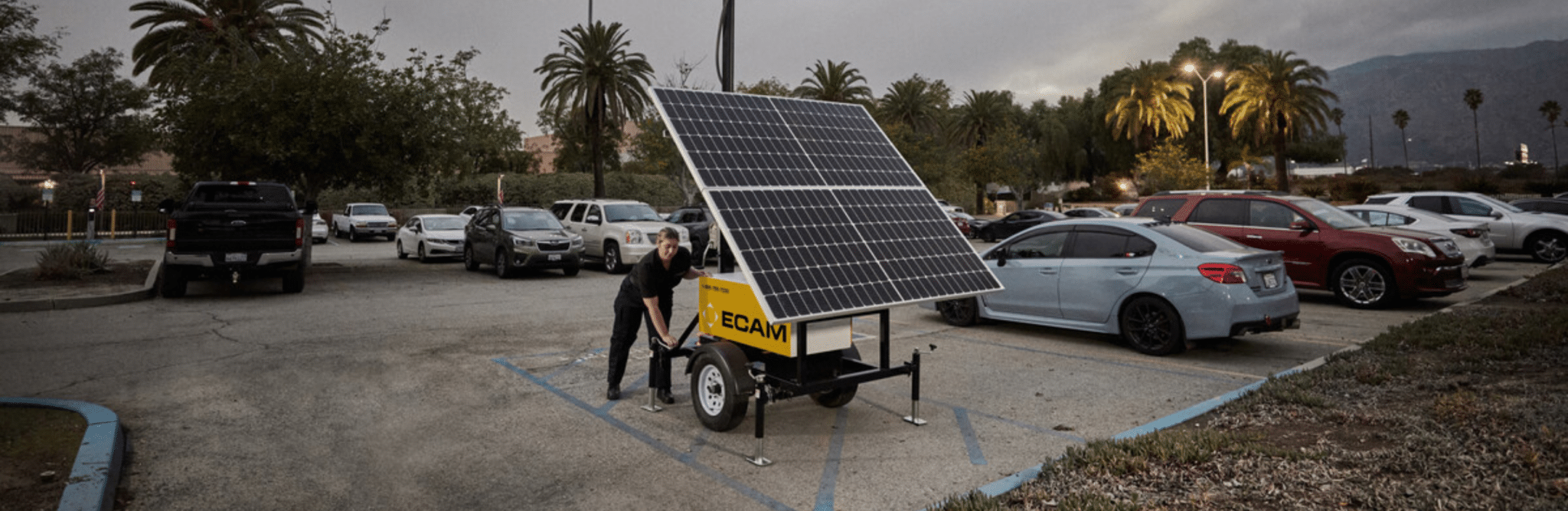
For many commercial properties, the real solution is not simply a wireless camera. It is a complete mobile security platform that combines cameras, connectivity, power, analytics, and monitoring into a single deployable system.
This is where mobile surveillance units have become increasingly important.
Mobile Surveillance Units Extend Security Beyond Fixed Infrastructure
Mobile surveillance units allow organizations to deploy security where it is needed rather than where infrastructure already exists.
Instead of building permanent systems around every parking area, property managers can position cameras strategically based on current risk, activity levels, or operational needs.
This flexibility is particularly valuable in environments such as:
- Retail parking lots
- Shopping center overflow parking
- Event parking areas
- Mixed-use developments
- Temporary or seasonal parking operations
As parking conditions change, coverage can change with them.
The result is a more adaptable approach to parking lot security.
Why Mobility Alone Is Not Enough
A common misconception is that adding cameras automatically improves security.
In reality, visibility and security are not the same thing.
A parking lot camera may capture activity, but unless that activity is identified, evaluated, and addressed, incidents can still develop unnoticed.
This is why many wireless parking lot security camera deployments now incorporate:
- Live monitoring
- AI-driven analytics
- Real-time event verification
- Defined response workflows
Together, these components help transform surveillance from a recording function into an active security capability.
Reducing Reliance on Traditional Security Guard Coverage
Parking lot security has traditionally relied heavily on physical patrols.
Security guard services remain valuable in many environments, particularly where customer interaction or on-site response is required. However, maintaining consistent visibility across large parking areas can be difficult through patrols alone.
A guard can only be in one place at a time.
Mobile surveillance systems help extend awareness across broader areas by providing continuous visibility between patrols and during periods when personnel may be focused elsewhere.
For many organizations, the goal is not to replace security personnel, but to help them operate more effectively by expanding visibility across the property.
Building a More Flexible Parking Lot Security Strategy
The most effective parking lot security strategies are increasingly built around flexibility.
Rather than treating security infrastructure as permanent and fixed, organizations are adopting systems that can adapt as properties evolve.
Wireless parking lot security cameras, mobile surveillance units, analytics, and monitoring all contribute to this approach.
Together, they allow organizations to deploy security where it is needed today while maintaining the ability to adjust tomorrow.
That flexibility is becoming increasingly important as parking environments continue to change.
Rethinking Parking Lot Security
The challenge facing many parking lots is not a lack of cameras.
It is the assumption that security must be tied to permanent infrastructure.
Modern parking lot security solutions are increasingly proving otherwise.
By combining mobile deployment, wireless connectivity, live monitoring, and proactive response, organizations can extend visibility into areas where traditional systems often struggle to reach.
In many cases, the future of parking lot security is not about installing more cameras.
It is about making security more adaptable.
Build a Stronger Security Strategy

Download Security Guides
Practical ebooks to help you strengthen your security and solve your challenges.

Discover Industry Security Solutions
See how ECAM protects your industry with solutions designed to deter crime, reduce losses, and keep operations moving.