


Why Cargo Theft Requires a New Approach From Logistics Leaders
Cargo theft continues to rise across the transportation and logistics industry, creating operational and financial pressure for organizations working to keep freight moving without disruption. Recent data shows 229 reported theft incidents, totaling more than 9.5 million dollars in losses, and an average loss of more than 151,000 dollars per event. For security decision-makers who oversee freight, warehouse operations, or fleet assets, these numbers represent more than a trend, they reflect a shifting threat landscape that requires new levels of visibility and preparation.
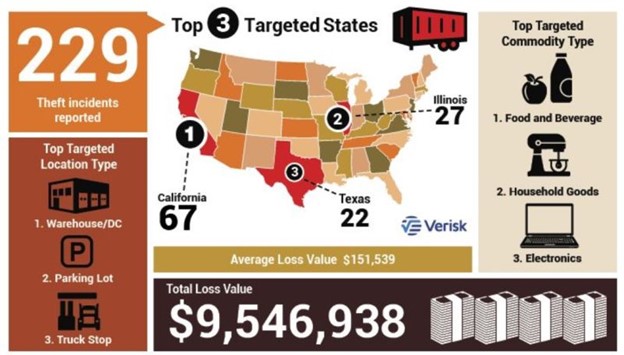
Data provided by CargoNet
As theft patterns change across the supply chain, the technologies and strategies used to prevent them must keep pace. This is where solutions like ECAM’s proactive monitoring have shown measurable impact across modern logistics environments.
The Hotspots: Where and What Thieves Target
Understanding how and where theft occurs is essential for designing a security strategy that aligns with real operational risks. Current data reveals consistent patterns that many logistics leaders encounter within their own facility networks and transit routes.
Top Targeted States
- California: 67 incidents
- Illinois: 27 incidents
- Texas: 22 incidents
These states serve as national freight corridors. Their high throughput increases exposure to organized theft groups. If your operations touch these regions, enhanced awareness becomes even more important.
Most Targeted Locations
- Warehouses and distribution centers
- Parking lots
- Truck stops
These locations often involve periods when trailers, containers, or equipment remain unattended. Even short windows of inactivity can create opportunities for theft crews.
Most Targeted Commodity Types
- Food and beverage
- Household goods
- Electronics
High demand and fast resale value make these categories especially vulnerable. For companies that move these commodities, risk mitigation is not optional. It is central to protecting customer relationships and operational reliability.
How Proactive Monitoring Reduces Cargo Theft Risks
Modern logistics environments move too quickly for traditional reactive security models. Today’s operators benefit from systems that can detect unusual activity, interpret risks in real time, and support rapid response before a loss occurs.
ECAM’s remote monitoring framework was designed with these operational demands in mind. It provides support for security teams at the locations where vulnerabilities most often appear.
1. Real Time Monitoring That Reduces Opportunity for Crime
Large yards, continuously active distribution centers, and dimly lit parking areas all contain natural blind spots. Real time monitoring reduces those blind spots by enabling:
- Live oversight by trained security operators
- Immediate recognition of unauthorized access or suspicious behavior
- Fast escalation to internal teams or responding agencies
Improved situational awareness helps organizations close the gaps that criminals frequently rely on.
2. Security Coverage in Locations Traditional Measures Rarely Reach
Cargo theft often occurs in the quiet margins of the supply chain. These are areas where staffing is limited and sightlines are inconsistent:
- Remote parking areas
- Drop lots
- Open yard staging zones
- Unattended truck stops
Mobile and fixed monitoring systems help extend visibility into these harder to secure spaces. This gives operators greater control and insight even in areas where on site resources are minimal.
3. Verified Activity Strengthens and Accelerates Law Enforcement Response
False alarms can strain internal teams and slow law enforcement response. Visual verification helps improve outcomes by providing:
- Confirmed evidence of active threats
- Clear escalation protocols
- A stronger basis for prioritization by law enforcement
Verification is especially valuable in high theft regions. It supports faster intervention and increases the likelihood of recovering stolen goods.
4. Visible Monitoring Creates a Natural Deterrent
Experienced thieves tend to avoid environments with active security. When they see visible camera systems, illumination, audio warnings, or signs of live monitoring, many choose to move on. Although deterrence cannot eliminate all incidents, it serves as an effective first layer of defense and signals that a site is actively protected.
5. Visibility Across High Risk Commodity Areas
High theft commodities often move quickly once stolen. Proactive monitoring provides targeted oversight at the locations where these items are most vulnerable, including:
- Warehouse access points
- Loading and unloading zones
- Trailer doors
- Trailer pools
- Staging and dock areas
This continuous visibility helps shrink the window in which theft can occur.
6. Reducing Losses and Insurance Exposure Through Prevention
The true financial impact of cargo theft extends far beyond the value of the stolen goods. Shipment delays, customer service disruptions, operational downtime, and insurance implications all contribute to total loss. By reducing the frequency and severity of incidents, organizations can often achieve:
- Fewer insurance claims
- Improved coverage terms
- Greater customer confidence
- More predictable operations
Proactive security becomes both a protective measure and a resilience strategy for the business.
Why Logistics Leaders Are Prioritizing Proactive Security Models
As freight movement accelerates, the security landscape demands approaches that match its pace. Decision-makers face increasing pressures such as:
- High activity across major freight corridors
- Long dwell times in yards and staging areas
- Complex multi party handoffs
- Continuous facility operations
- Theft crews using coordination and planning
Proactive monitoring models provide a level of consistency, oversight, and response capability that traditional guard based or alarm based systems cannot match.
Strengthening Your Supply Chain Against Evolving Theft Risks
Cargo theft is not slowing down. Logistics organizations, however, are not without options. By adopting proactive monitoring strategies that improve visibility and reduce response time, leaders can better safeguard freight, facilities, and fleet assets while protecting the reliability of their supply chain.
Solutions like ECAM support this shift by offering tools that align with the scale and complexity of modern logistics. They provide clarity where blind spots once existed and timely intervention where delays once occurred.
Next Steps for Strengthening Your Security Strategy
If cargo theft is affecting your operations or if you want clearer visibility across your facilities, now is the right time to assess your security approach. ECAM works with logistics leaders to help identify vulnerabilities and determine where proactive monitoring can provide meaningful protection.