
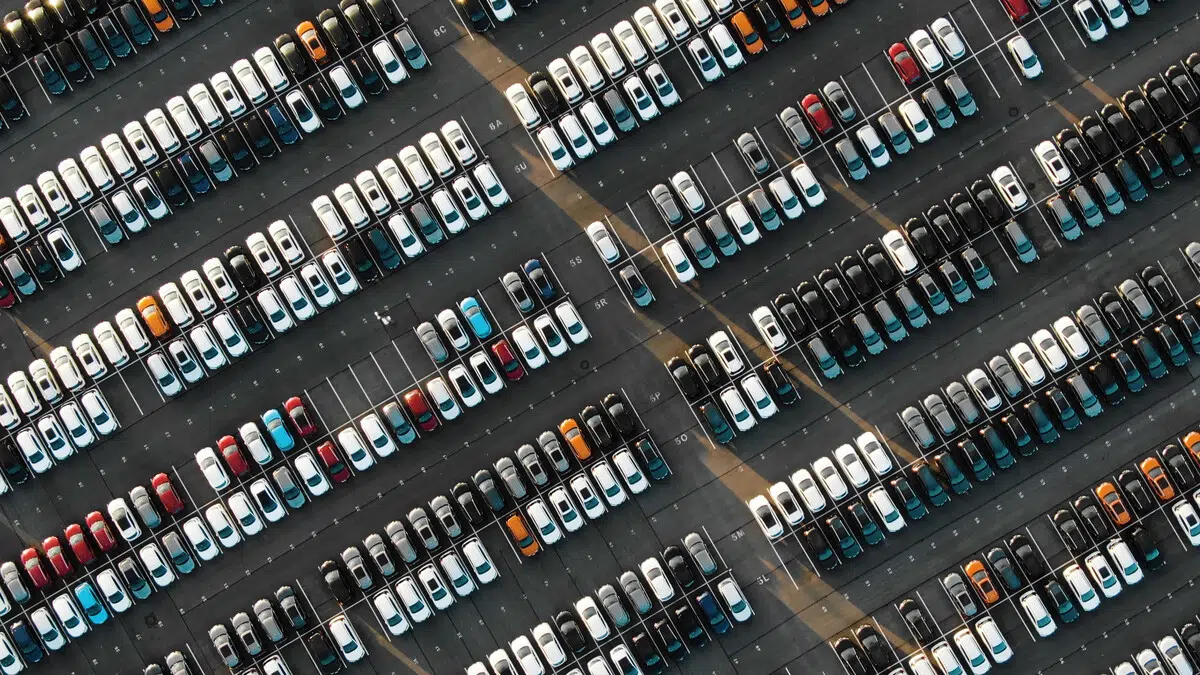



Automotive dealerships face a distinct set of security challenges. Large outdoor lots, high-value inventory, limited overnight staffing, and reduced visibility create ideal conditions for theft and vandalism. Even dealerships with security cameras in place often experience repeated after-hours incidents, raising an important question: why does automotive dealership security surveillance so often fall short at night?
To answer that, it helps to look at how dealerships are typically secured and where the gaps exist.
Why automotive dealerships are high-risk environments
Unlike enclosed retail spaces, automotive dealerships manage expansive outdoor properties. Dozens or even hundreds of vehicles may be parked across multiple rows, often far from the main building. This layout makes it difficult to maintain full visibility, especially at nighttime.
Common after-hours risks include:
- Vehicle theft or attempted break-ins
- Catalytic converter theft
- Wheel and tire theft
- Vandalism and property damage
- Trespassing that escalates into criminal activity
These incidents rarely happen during business hours. Most occur overnight, when no staff are present and activity on the lot may go unnoticed for extended periods of time.
The limitations of traditional automotive dealership video surveillance
Many dealerships rely on automotive dealership video surveillance as their primary security measure. While cameras are an important part of any security strategy, they are often used in a passive way.
Standard video security systems record activity but do not respond to it. Footage is typically reviewed after an incident has already occurred. In these cases, video surveillance helps with documentation but does little to prevent loss.
This creates a false sense of security. Dealerships may feel protected because cameras are installed, yet incidents continue because there is no real-time intervention.
Why after-hours surveillance security is harder to manage
After hours, several factors make dealership security more complex:
- No on-site personnel to identify or challenge suspicious behavior
- Reduced lighting across large outdoor areas
- Blind spots between vehicle rows and perimeter fencing
- Delayed response once an alarm is triggered
Even when alarms or motion sensors activate, they often do so after damage has already been done. This delay highlights a key weakness in many automotive dealership surveillance security setups: visibility without action.
Moving from video security to active prevention
Automotive dealership video security becomes far more effective when it is paired with real-time oversight. Instead of simply recording activity, live monitoring allows trained operators to watch camera feeds as events unfold.
With this approach, suspicious behavior can be identified early. Verbal warnings can be issued to deter trespassers, and law enforcement can be contacted when a situation escalates. This proactive response helps stop incidents before they result in loss or damage.
The difference is significant. Video surveillance alone provides evidence. Active monitoring focuses on prevention.
Common mistakes dealerships make with security camera solutions
When evaluating automotive dealership security camera solutions, dealerships often focus on equipment rather than outcomes. Common missteps include:
- Installing cameras without monitoring support
- Assuming alarms alone will deter criminals
- Overlooking blind spots on large outdoor lots
- Relying on footage review instead of real-time response
Without a strategy that addresses how incidents are handled after hours, even high-quality cameras can fail to deliver meaningful protection.
What to look for in effective dealership security surveillance
A stronger approach to automotive dealership security surveillance prioritizes both visibility and response. Dealerships should consider solutions that include:
- Continuous or event-based monitoring of camera feeds
- Clear coverage of lot perimeters and inventory areas
- Immediate response protocols for after-hours activity
- Integration with existing security camera monitoring systems
- Flexibility to scale coverage as inventory changes
By focusing on how incidents are detected and handled, dealerships can reduce repeat losses and improve overall security performance.
Rethinking after-hours protection for automotive dealerships
After-hours security remains one of the biggest vulnerabilities for automotive dealerships. Large outdoor lots and valuable inventory require more than cameras that record what has already happened. Effective automotive dealership security surveillance combines video visibility with timely response to stop incidents before they escalate.
As theft and vandalism continue to impact dealerships nationwide, more operators are reevaluating how they approach surveillance security and looking for solutions that actively protect their lots when no one is on site.
Learn more about protecting your dealership after hours
Every automotive dealership faces different security challenges based on lot size, layout, and risk exposure. Understanding where vulnerabilities exist is the first step toward building a more effective after-hours security strategy.
If you’re exploring ways to strengthen automotive dealership security surveillance or want to understand how live monitoring could support your existing cameras, speak to one of our auto security experts who can help you evaluate the right approach for your property.

