
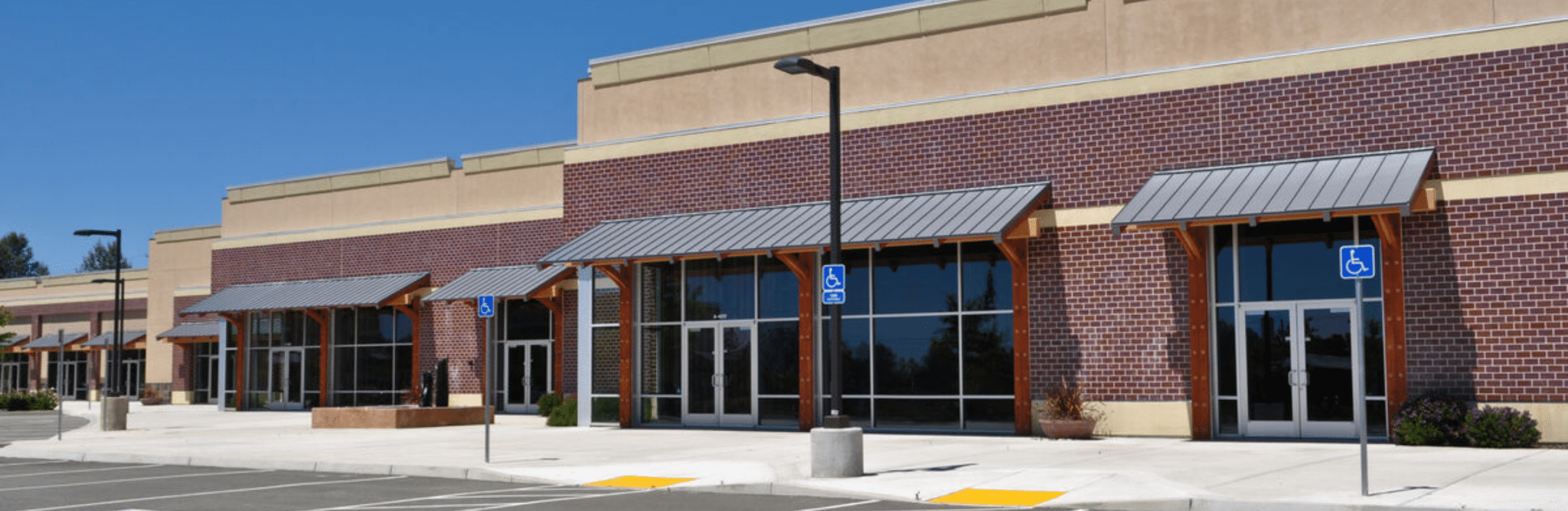



For most commercial property managers, security conversations start the same way. Not with coverage. Not with technology. With cost. A budget is already in place. Ownership is watching expenses closely. Every line item needs to be justified, and security is often one of the largest and most visible operational costs.
At the same time, the risk has not gone away. Vacant office buildings still attract break-ins. Retail properties still deal with organized theft. Parking lots and entrances remain the most common locations for incidents. When something happens, the cost is rarely small, and the impact extends beyond repairs into tenant relationships and overall property performance.
That creates a difficult position. Security needs to improve, but spend cannot increase. Understanding commercial property security cost is not just about comparing prices. It is about understanding what each approach actually delivers, where it falls short, and how it impacts total cost over time.
How Commercial Property Security Costs Are Evaluated
Security in commercial real estate is not evaluated the same way as other operational expenses. In many cases, property managers are not the ones ultimately paying for security. Costs are passed through to ownership, but the responsibility for performance sits with the property team.
That creates a dual pressure. On one side, there is a need to control cost and justify spend. On the other, there is a need to prevent incidents that lead to damage, disruption, and tenant dissatisfaction.
Because of this, security cost is best understood in two parts:
- Direct cost: the monthly or annual expense of guards, systems, or services
- Indirect cost: the financial impact of incidents, including damage, downtime, and operational burden
The lowest-cost option is not always the most cost-effective if it fails to prevent incidents.
The Cost of Security Guards
Security guards have been the traditional approach for decades, and they are still widely used across commercial properties. At a surface level, guard services are straightforward. A property pays for a physical presence on site, often covering specific hours or locations.
The challenge is cost. Guard coverage is typically billed hourly, and for properties requiring 24/7 presence, those costs add up quickly over the course of a year. Even for partial coverage, labor costs remain one of the largest contributors to overall security spend.
Beyond cost, there are limitations in coverage. A single guard can only be in one place at a time. On larger properties, this creates gaps, particularly in parking lots, garages, and exterior areas where incidents frequently occur. Consistency can also vary depending on staffing, training, and turnover.
This does not mean guards have no role. In certain environments, a physical presence is still valuable. However, relying on guards as the primary layer of security often results in high cost without full coverage.
The Cost of Cameras and Traditional Systems
Security cameras are often viewed as a lower-cost alternative to guard coverage. Once installed, cameras provide continuous visibility across the property with relatively low ongoing cost. This makes them an attractive option from a budget perspective.
However, cameras on their own have a fundamental limitation. They record activity. They do not respond to it. Without monitoring, cameras function as a forensic tool. They help explain what happened after an incident, but they do not prevent it. This can lead to a false sense of security, where coverage exists but outcomes do not improve.
There are also upfront costs to consider, including equipment, installation, and maintenance. For larger properties, these costs can be significant, especially when fixed infrastructure is required.
Cameras are an important component of commercial property security systems, but on their own, they rarely deliver the level of protection needed to reduce incidents.
The Cost of Monitoring and Modern Security Approaches
Live video monitoring introduces a different cost structure and a different outcome. Instead of paying for physical presence or passive recording, monitoring focuses on real-time visibility and response.
When systems are actively monitored, suspicious activity can be identified as it occurs. Interventions can be made through audio warnings or escalation, and incidents can often be stopped before they result in damage or loss.
From a cost perspective, monitoring is often positioned as a way to reduce reliance on guard coverage while improving overall effectiveness. It also works particularly well when combined with flexible solutions such as mobile surveillance units, which can be deployed quickly and adjusted as property needs change.
This combination allows properties to:
- Expand coverage across high-risk areas
- Maintain visibility without adding labor cost
- Adapt to changing conditions such as vacancy or tenant turnover
Rather than replacing one cost with another, monitoring shifts how resources are used, focusing spend on prevention rather than response.
Comparing Commercial Security Pricing
When comparing commercial security pricing, it is important to look beyond the surface-level numbers. Each approach delivers a different balance of cost, coverage, and outcome.
Guard-based models tend to have the highest direct cost, driven by labor, and may still leave gaps in coverage depending on property size and layout.
Camera-only systems have lower ongoing cost but limited impact on incident prevention without active monitoring.
Monitoring-based approaches introduce a more balanced model, where cost is tied to visibility and response rather than physical presence, often resulting in better coverage across larger areas.
The most effective strategies are not built around a single solution. They combine elements of each approach to create a system that aligns with the property’s risk profile and operational constraints.
What Drives Total Security Cost Over Time
To fully understand commercial property security cost, it is important to consider what happens after an incident.
A break-in at a vacant office space can lead to:
- Damage to HVAC systems
- Loss of materials such as copper
- Repair costs that extend well beyond the initial event
- Delays in leasing or occupancy
In retail environments, repeated incidents can impact tenant confidence and contribute to turnover, which has its own financial implications.
These indirect costs are often far greater than the monthly cost of security itself. That is why the most effective security strategies are designed to reduce incidents, not just respond to them.
How to Choose the Most Cost-Effective Approach
Choosing the right approach to commercial property security is not about selecting the cheapest option. It is about aligning cost with performance based on commercial property security best practices. A few key considerations help guide that decision.
First, identify where incidents are most likely to occur and ensure those areas are properly covered. This prevents over-investing in low-risk areas while leaving high-risk zones exposed.
Second, evaluate how quickly incidents can be detected and addressed. Faster response times lead to better outcomes and lower overall cost.
Third, consider how flexible the solution is. Commercial properties change over time, and security needs to adapt without requiring constant reinvestment.
Finally, look at scalability. For portfolios with multiple properties, the ability to deploy a consistent, repeatable model across sites can significantly improve both cost efficiency and operational simplicity.
Final Thoughts
Commercial property security cost is often framed as a choice between spending more or accepting more risk. In reality, the goal is to reduce both.
The most effective approaches focus on prevention, align coverage with real-world risk, and use resources in a way that improves outcomes rather than simply adding cost. For property managers, this creates a more controlled environment where security supports both operational performance and financial goals.
Evaluate Whether Your Security Spend Is Actually Delivering Value
Security is one of the few operational expenses where cost and outcome are closely tied. If incidents are still occurring, if coverage gaps exist, or if costs continue to rise without clear improvement, it may be time to reassess the current approach.
A structured security assessment can help:
- compare current spend against performance
- identify areas where cost can be reduced
- highlight opportunities to improve coverage and response
Request a commercial property security assessment to understand whether your current investment is delivering the level of protection your property requires.
Build a Stronger Security Strategy

Download Security Guides
Practical ebooks to help you strengthen your security and solve your challenges.

Discover Industry Security Solutions
See how ECAM protects your industry with solutions designed to deter crime, reduce losses, and keep operations moving.