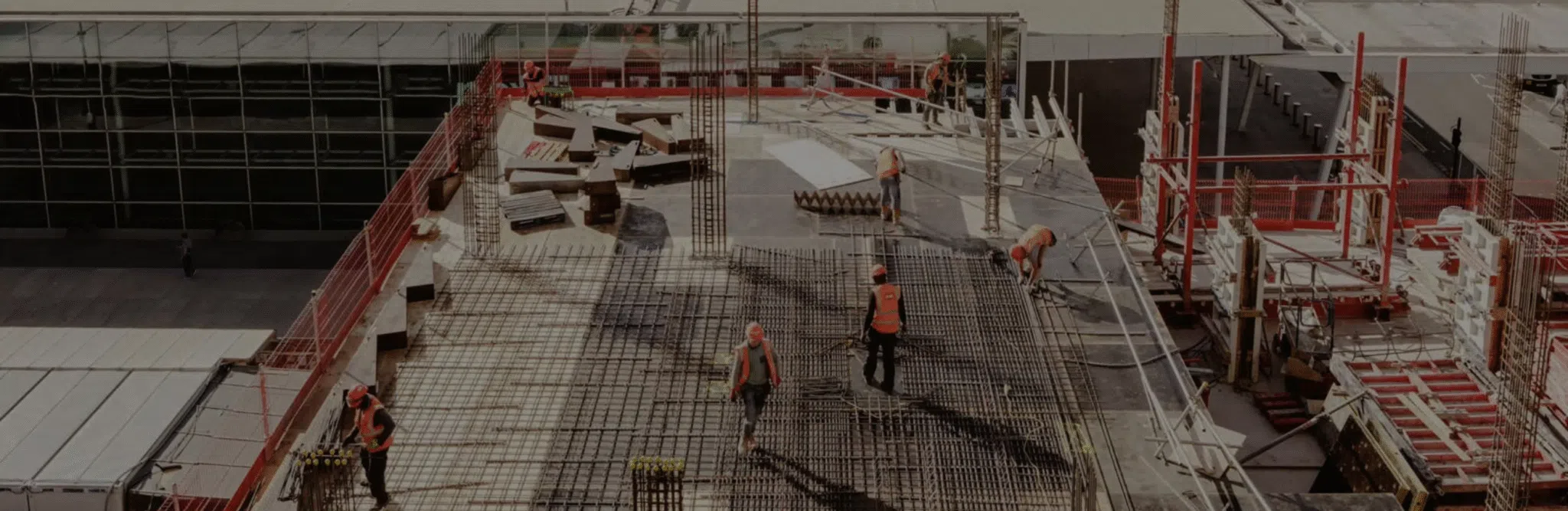



Every construction project carries risk. What separates controlled risk from costly disruption is how early and how deliberately security is addressed.
Across commercial, multifamily, and mixed-use developments, the same pattern appears repeatedly. Security is often treated as a secondary concern, addressed reactively after an incident rather than built into the project plan from the beginning. By the time stakeholders begin asking, what are construction site security measures, and which ones actually reduce risk on active jobsites, the exposure has already begun.
While theft is the most common issue on construction sites, it is rarely the most damaging. Project leaders are increasingly focused on preventing catastrophic disruption: large-scale vandalism, arson, prolonged trespassing, or a single uncontrolled event that halts work entirely. Incidents like these do more than remove materials. They trigger insurance claims, delay subcontractors, strain budgets, and create reputational risk that extends well beyond the site itself.
For this reason, experienced teams integrate construction site security measures during pre-construction rather than layering them in after problems surface. When security is planned early and aligned with the realities of the build, incident rates and schedule disruptions tend to decrease significantly over the life of the project.
This guide approaches construction site security from that operational perspective. Rather than listing tools in isolation, it explains how effective construction site security measures work together to protect assets, maintain compliance, and preserve project continuity from groundbreaking through closeout.
What are construction site security measures in practice?
Construction site security measures are the physical, technological, and procedural controls used to protect a jobsite from theft, trespassing, vandalism, and safety incidents. While the definition is straightforward, effectiveness depends entirely on how these measures are applied and maintained over time.
In practice, mature security strategies are designed to address three realities experienced teams understand well:
- Construction sites are temporary and evolve continuously
- Supervision drops sharply outside of working hours
- High-value materials and equipment are stored in exposed, transitional conditions
Construction site security measures that fail to account for these conditions often create a false sense of protection. Measures that succeed are built to deter opportunistic activity, detect unauthorized behavior early, and enable response before losses escalate.
Builders Risk insurance compliance and construction site security
For many projects, construction site security measures are not implemented solely to prevent theft. They are implemented to satisfy Builders Risk insurance requirements.
Most Builders Risk policies require contractors to maintain defined site protection standards throughout the lifecycle of the build. These standards often include perimeter controls, documented monitoring, and evidence of proactive risk mitigation. Failure to maintain compliance can jeopardize coverage or complicate claims if a loss occurs.
As a result, construction site security planning increasingly begins during pre-construction or even at the bidding stage. Contractors and owner-developers want to:
- Build security costs into the project budget
- Demonstrate compliance with carrier mandates
- Avoid reactive deployment after an incident
Security that aligns with insurance expectations does more than deter crime. It protects coverage, reduces claim friction, and supports long-term project viability.
Why construction sites require a layered security approach
Unlike permanent facilities, construction sites are not designed for protection. Perimeters shift as the build progresses, access points multiply, and work zones expand and contract. These dynamics create predictable vulnerabilities across nearly every type of building site security environment.
This is why experienced teams rely on layered construction site security measures rather than single-point solutions. Each layer is designed to compensate for the limitations of the others, ensuring that when one control is bypassed, another is still effective.
A layered approach also allows security to evolve alongside the jobsite, rather than becoming outdated as conditions change.
Physical controls establish boundaries, not full protection
Perimeter fencing is often the first construction site security measure implemented, and it plays an important role in defining the jobsite and discouraging casual trespassing. However, fencing alone rarely prevents determined theft or vandalism.
Its effectiveness increases significantly when paired with controlled access and consistent enforcement. On active jobsites, that typically includes:
- Clearly defined and limited entry points
- Secure gates or monitored access areas
- Procedures governing after-hours access
As subcontractor counts grow and schedules compress, access control becomes less about restriction and more about accountability. Without it, even well-installed physical barriers lose their value.
Lighting as a security force multiplier
Lighting is one of the most underestimated construction site security measures, yet it directly influences the performance of nearly every other control. Proper lighting reduces concealment, increases perceived risk for intruders, and improves situational awareness across the site.
Effective lighting strategies tend to prioritize:
- Entry and exit points
- Material laydown and storage areas
- Equipment yards and high-value zones
Lighting plans should shift as the site changes. Static lighting layouts often fail to cover emerging risk areas, particularly as materials move and structures take shape.
Construction site cameras as the operational backbone
Construction site cameras have become central to modern jobsite security because they address a fundamental challenge: limited visibility when no one is physically present.
When deployed thoughtfully, construction site cameras provide continuous oversight, deter criminal activity, and create documented evidence that supports insurance claims, investigations, and operational decision-making. In many cases, a single construction site camera placed at a high-risk access point can dramatically improve visibility during off-hours.
Their effectiveness depends on both technology and planning. Camera strategies should account for:
- Coverage of access points and perimeter vulnerabilities
- Monitoring of high-value materials and equipment
- Minimization of blind spots as site conditions change
Rather than viewing cameras as static installations, experienced teams treat them as adaptable tools that move and scale with the jobsite.
Types of construction site cameras
There are several types of construction site cameras commonly used today:
- Pan-tilt-zoom cameras for flexible monitoring
- Time-lapse cameras for progress documentation
The right mix depends on site layout, power availability, and security goals.
Camera placement considerations
Camera placement is critical to effectiveness. Cameras should be positioned to:
- Cover access points and perimeter lines
- Monitor material storage and equipment areas
- Avoid blind spots and obstructions
- Capture usable footage in low-light conditions
Poor placement can undermine even the most advanced technology.
Why monitoring matters more than recording alone
A common mistake in construction site security is assuming that recording video equates to protection. Passive surveillance systems document incidents after they occur, but they do not prevent loss.
Live monitoring fundamentally changes the role of construction site cameras. With active oversight, trained operators can identify suspicious behavior in real time, issue verbal warnings, and escalate incidents before theft or vandalism is completed. Whether footage is captured by a fixed camera or a mobile jobsite camera, monitoring is what turns visibility into action.
Live monitoring allows trained operators to:
- Identify suspicious behavior as it happens
- Issue audio warnings to deter intruders
- Escalate incidents to on-site contacts or law enforcement
As a construction site security measure, live monitoring shifts security from documentation to intervention, which is where meaningful risk reduction occurs.
Security beyond theft: hidden ROI drivers buyers overlook
While theft prevention often initiates the conversation around construction site security measures, many of the most significant financial impacts occur in less obvious areas.
Recorded and monitored oversight can support:
- Workers compensation dispute resolution
- Verification of injury claims and on-site incidents
- Documentation of workplace conflicts
- Delivery validation for materials and equipment
- Resolution of subcontractor disputes
In volatile or high-traffic jobsite environments, video documentation frequently becomes a neutral source of truth. The ability to verify what occurred, when it occurred, and how it was handled can reduce fraudulent claims, limit liability exposure, and prevent costly disputes.
For many stakeholders, these secondary benefits become the most compelling long-term value drivers once they are understood.
The evolving role of guards on construction sites
Security guards remain a viable component of construction site security, particularly on large or high-traffic projects. Guards can control access, perform patrols, and respond physically to incidents when present.
That said, guard coverage is constrained by cost, staffing availability, and human limitations. For this reason, many teams now integrate guards into a broader system of construction site security measures, using cameras and monitoring to extend coverage beyond what patrols alone can realistically provide. Moreover, modern construction site security measures often include remote site security solutions that allow teams to monitor jobsites even when they are located far from urban infrastructure.
This blended approach allows resources to be deployed more strategically.
Why a construction site security plan is essential
A construction site security plan ties individual measures into a coordinated system. Without one, even well-funded security efforts tend to become fragmented as responsibilities shift and project phases change.
An effective construction site security plan typically outlines:
- Risk priorities by construction phase
- Roles and escalation procedures
- Construction site camera placement and monitoring protocols
- Guidelines for adapting security as conditions evolve
Projects that establish a security plan early are better positioned to maintain consistent protection rather than reacting after losses occur.
Layered security is what actually reduces exposure
When professionals are asked what are construction site security measures, the most accurate answer is not a product or service. It is a layered system designed to anticipate failure points.
In practice, that system often includes:
- Physical barriers to slow and discourage entry
- Lighting to eliminate concealment
- Construction site cameras for visibility
- Monitoring to enable rapid response
- Policies and planning to ensure consistency
Each layer reinforces the others. Remove one, and the integrity of the entire system weakens.
For layered security to perform consistently across an evolving jobsite, many construction teams prioritize providers that deliver installation, monitoring, service, and system adjustments under a single accountable structure rather than coordinating multiple vendors throughout the project lifecycle.
Security should evolve with the jobsite
The risks present during early excavation differ significantly from those that emerge near project completion. Materials, access patterns, and liability exposure all change over time.
Effective construction site security measures evolve accordingly, guided by periodic reassessment rather than static assumptions. Teams that revisit security throughout the project lifecycle tend to experience fewer disruptions and better outcomes overall.
Final Thoughts
Construction site security measures are not about slowing progress or adding unnecessary complexity. They are about controlling exposure in an environment defined by constant change.
Teams that approach security as a living system, built around visibility, monitoring, and adaptability, protect more than physical assets. They protect schedules, budgets, and stakeholder confidence.
For modern construction projects, layered security is no longer optional. It is the operational baseline.
Plan Security Before the Build Begins
Construction site security measures are most effective when they are planned early, aligned with Builders Risk compliance requirements, and structured around the realities of the project.
Engaging security during pre-construction allows teams to:
- Assess site-specific risk before exposure begins
- Align monitoring and access control with insurance mandates
- Build costs into the project budget
- Avoid reactive deployment after incidents occur
Early planning reduces disruption, protects coverage, and establishes accountability from day one.